8 Min Read
The Treadmill Test (TMT) or stress test is a diagnostic procedure designed to evaluate how your heart responds to increasing physical exertion. The basic principle is simple: as you walk or run on a treadmill, the body requires more oxygen, so the heart pumps more blood by increasing heart rate and blood pressure. Suppose there are blockages in the coronary arteries (the major blood vessels supplying the heart), the increased demand for oxygenated blood cannot be met, leading to signs of stress that can be detected during the test.
Synopsis
Why Do You Need a TMT Test?
The primary purposes of performing a cardiac test like the TMT are:
-
Diagnosing Coronary Artery Disease (CAD): This is the most common reason for doing a TMT test. CAD is characterised by the narrowing of the coronary arteries due to plaque buildup (atherosclerosis). A TMT can induce symptoms or ECG changes suggestive of reduced blood flow (myocardial ischemia), indicating a high likelihood of CAD.
-
Evaluating Symptoms: If a patient reports symptoms such as chest pain (angina), shortness of breath (dyspnea), or heart palpitations, the TMT helps determine if these symptoms are indeed heart-related and are being triggered by physical activity.
-
Assessing Heart Rhythm (Arrhythmias): Some irregular heart rhythms only manifest when the heart is working hard. The TMT can capture these exercise-induced arrhythmias, helping the cardiologist determine the appropriate treatment.
-
Determining Exercise Capacity: The test measures an individual’s tolerance for physical exertion (often quantified in METs, or metabolic equivalents), which is a powerful predictor of overall cardiovascular risk and helps in prescribing safe exercise levels.
-
Monitoring Treatment Effectiveness: For patients who have undergone procedures like angioplasty or bypass surgery, or are on medication for heart disease, a TMT can monitor how well the treatment is working over time.
-
Pre-Surgical Clearance: It may be used to assess the heart's fitness before a non-cardiac surgery.
Signs You Need a Stress Test
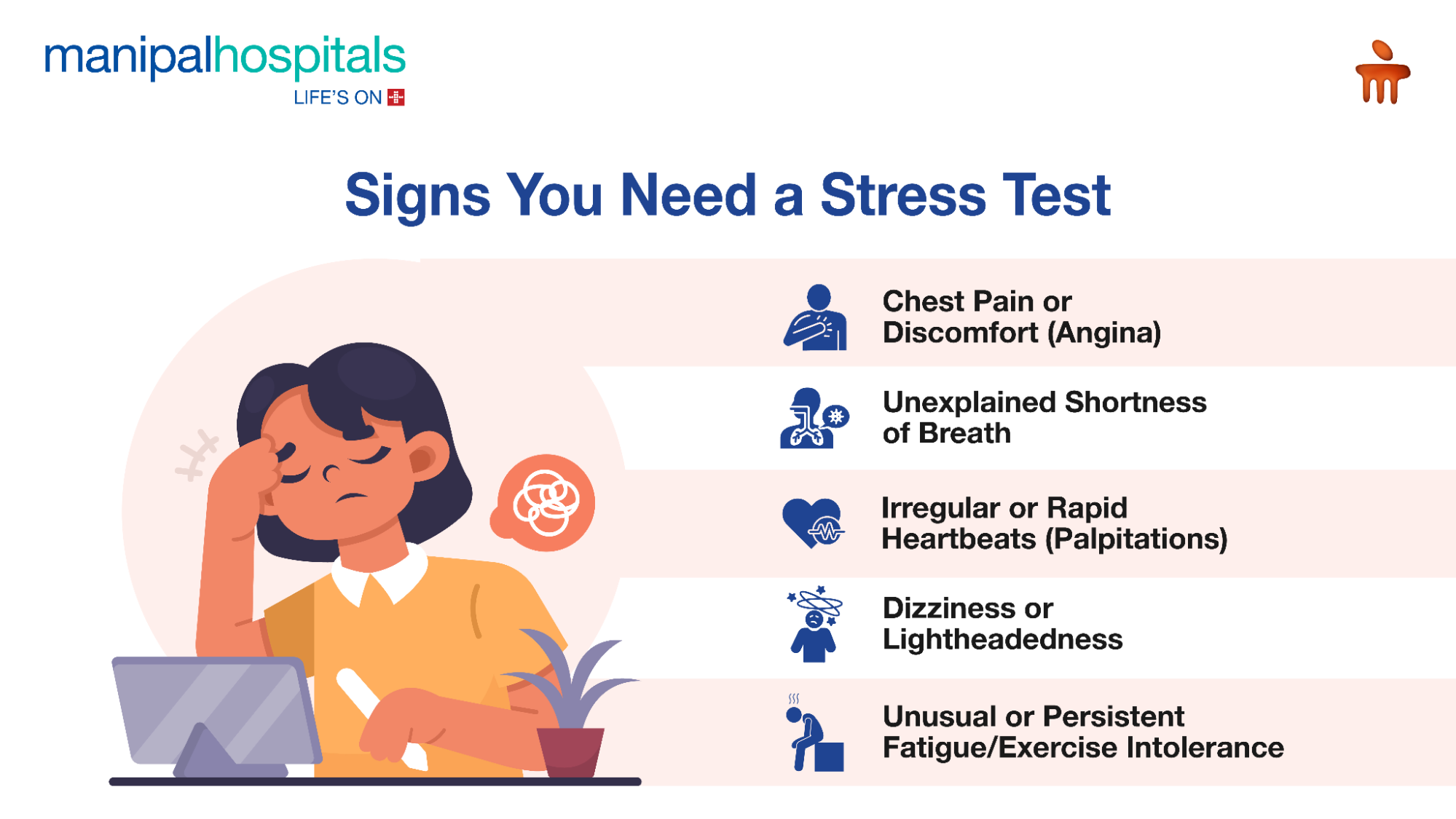
While the TMT test is generally not recommended for low-risk individuals without symptoms, it becomes a crucial diagnostic step if you present with certain symptoms or possess significant risk factors. Knowing the signs that you need a stress test can be a life-saving awareness.
-
Chest Pain or Discomfort (Angina): This is the most classic symptom. If you experience a feeling of pressure, tightness, heaviness, or burning in your chest—especially if it occurs or worsens with physical activity and subsides with rest—your doctor will likely order a TMT to check for CAD.
-
Unexplained Shortness of Breath: Experiencing difficulty breathing or an uncomfortable awareness of breathing during minor exertion or at rest, which isn't attributed to lung disease or being significantly out of shape, can be a sign that the heart is struggling to pump sufficient blood.
-
Irregular or Rapid Heartbeats (Palpitations): A persistent feeling of a "skipped beat," "fluttering," or a racing heart, particularly if it happens during exercise, warrants an investigation to rule out exercise-induced arrhythmias.
-
Dizziness or Lightheadedness: Fainting or feeling faint (presyncope) during physical activity could signal an issue with blood flow to the brain due to underlying heart problems, such as a drop in blood pressure or an unstable heart rhythm.
-
Unusual or Persistent Fatigue/Exercise Intolerance: Feeling disproportionately exhausted during activities you used to perform easily can be a subtle but critical sign of reduced cardiac output, indicating that the heart isn't delivering enough oxygenated blood to the muscles.
Risk Factors That May Warrant a Stress Test:
Your cardiologist may also recommend a stress test if you have multiple risk factors, even with mild or vague symptoms, to assess your overall risk:
-
Diabetes
-
High blood pressure (Hypertension)
-
Strong family history of premature heart disease
-
Current or past smoking history
The TMT Test Procedure: What to Expect
The TMT is typically performed in a hospital or specialised clinic setting under the direct supervision of a trained cardiologist/physician and technician.
Preparation
Proper preparation is essential for accurate results and safety.
-
Medications: Inform your doctor about all medications you take, as some—particularly beta-blockers—may need to be temporarily stopped (usually the night before or the morning of the test) to allow your heart rate to respond appropriately to exercise.
-
Attire: Wear comfortable, loose-fitting clothing and walking or running shoes.
The Procedure
The TMT procedure is a methodical process designed to safely increase the heart's workload:
-
A technician will clean areas of your chest and attach small, sticky patches called electrodes. These electrodes are connected to an ECG (Electrocardiogram) machine, which continuously records the heart's electrical activity. A blood pressure cuff is placed on your arm. Resting vital signs (heart rate, blood pressure, and ECG) are recorded.
-
You will begin walking on the treadmill at a slow, easy pace. Following a standardised protocol (most commonly the Bruce Protocol), the speed and incline of the treadmill are increased incrementally every three minutes. The goal is to safely push your heart to a target heart rate, usually about 85% of your maximum predicted heart rate (calculated as 220 minus your age).
-
Throughout the exercise, your ECG, blood pressure and heart rate will be monitored, and look for symptoms like chest pain and dizziness.
-
The test is stopped when you reach your target heart rate, develop concerning symptoms, or show significant changes in your ECG or blood pressure that suggest an abnormality.
-
After the treadmill stops, you will be monitored as you cool down. The monitoring of the ECG and blood pressure continues until they return to your resting baseline. The heart's recovery is a critical component of the overall assessment.
What do the TMT test results mean?
The results of a TMT test are typically categorised as:
Negative TMT (Normal): This means you were able to reach your target heart rate without experiencing significant symptoms and without showing concerning changes in your ECG or blood pressure. This suggests a low likelihood of major blockages in the coronary arteries.
Positive TMT (Abnormal): This indicates that you developed significant changes in your ECG or other concerning signs (like severe symptoms or a dangerous drop in blood pressure) before reaching your target heart rate. A positive result is suggestive of Coronary Artery Disease (CAD), meaning blood flow to the heart muscle is likely restricted during exertion.
Inconclusive TMT: This occurs if the test had to be stopped prematurely due to non-cardiac reasons (like leg pain or fatigue) before you reached your target heart rate. In this case, the cardiologist may recommend a different type of stress test, such as a pharmacological stress test or a stress echocardiogram.
Benefits of the Treadmill Test
The TMT is a foundational tool in modern cardiology due to its numerous advantages:
-
Non-Invasive and Cost-Effective: Unlike more complex imaging tests (like a nuclear stress test or coronary angiogram), the TMT is entirely non-invasive, involving no needles (beyond the initial IV for potential emergency use) and no exposure to radiation. This makes it a relatively safe, simple, and cost-effective cardiac test that can be easily repeated to monitor disease progression.
-
Dynamic Assessment of Heart Function: The key benefit is its ability to create and analyse the heart's performance under its most demanding condition—stress.
-
Early Detection: It can detect blood flow limitations (blockages) that may be entirely silent at rest. Early detection of CAD allows for timely lifestyle modifications and medical intervention, which significantly reduces the risk of a future heart attack.
-
Prognostic Value: The results, especially the achieved exercise capacity (METs) and the speed of heart rate recovery, provide powerful prognostic information that helps stratify your risk of future cardiovascular events.
-
Guides Treatment and Lifestyle: A normal (negative) result can offer significant reassurance, suggesting that your symptoms are not due to severe CAD. Conversely, a positive TMT guides your doctor toward necessary further investigations, such as a coronary angiogram, or helps them adjust your medication regimen. Furthermore, the test data is invaluable for establishing a safe and effective exercise program tailored to your unique cardiac capacity.
Conclusion
The treadmill test is a simple yet super informative diagnostic procedure. By revealing the heart's hidden strengths and weaknesses under the stress of physical activity, the TMT test empowers both patients and cardiologists to make informed decisions, translating directly into better outcomes and a stronger, healthier heart. If you have any of the mentioned symptoms or relevant risk factors, please discuss with our expert Cardiology team at Manipal Hospital, Goa. They will help with understanding your symptoms better and also create the appropriate treatment plan for your medical condition.
FAQ's
TMT (Treadmill Test) / Exercise Stress Test: These terms are interchangeable. They involve exercising on a treadmill (or sometimes a stationary bike) while your heart's electrical activity (ECG), blood pressure, and symptoms are continuously monitored. The goal is to evaluate heart function under physical stress.
ECG (Electrocardiogram): This is a simple, quick, non-invasive test that records the heart’s electrical activity while you are at rest. A resting ECG can detect certain issues, but it cannot reveal problems that only occur when the heart is working hard. The TMT is essentially a continuous ECG performed under stress.
Consult your cardiologist, as they may ask you to stop certain heart medications, like beta-blockers, 24 to 48 hours before the test. Never stop a prescribed medication without your doctor's explicit instruction. And wear comfortable, loose-fitting clothes and proper walking or running shoes.
The entire process, including preparation, the test itself, and the mandatory cool-down/recovery period, typically takes about 45 minutes to one hour. The actual exercise time on the treadmill is relatively short, until you reach your target heart rate or develop symptoms.
Yes, the TMT test is considered safe. It is performed in a controlled clinical environment under the direct supervision of a trained cardiologist/physician and a cardiac technician. They have access to emergency equipment and are prepared to stop the test and intervene immediately if any concerning symptoms (like chest pain, severe dizziness, or significant ECG changes) occur.
A positive TMT result is not a diagnosis, but rather a strong indication that you may have underlying heart disease. Your cardiologist will likely recommend further, more definitive testing, which may include:
-
Coronary Angiogram: An invasive test to directly visualise the inside of the coronary arteries for blockages.
-
Stress Echocardiogram: Ultrasound pictures of the heart taken before and immediately after exercise.
-
Nuclear Stress Test: Uses a radioactive tracer to visualise blood flow to the heart muscle.
Share this article on: