7 Min Read
Although produced within the body and even necessary, high levels of cholesterol become detrimental to health. If left unchecked, it becomes one of the primary drivers of cardiovascular disease and heart attacks.
Synopsis
What is Cholesterol?
Your body actually needs cholesterol. It is a waxy, fat-like substance produced by your liver and found in certain foods. Your body uses it to build cell membranes, produce certain hormones, and synthesise Vitamin D.
The problem isn't cholesterol itself; it’s the balance and quantity. Because cholesterol is a fat (lipid), it cannot traverse the blood on its own. It travels on proteins called lipoproteins, which are of two kinds:
-
Low-Density Lipoprotein (LDL): Often referred to as "bad" cholesterol, LDL transports cholesterol to the parts of the body that require it. However, if you have too much LDL in your bloodstream, it can adhere to the walls of the arteries, potentially leading to clogging.
-
High-Density Lipoprotein (HDL): Also known as "good" cholesterol, HDL collects cholesterol from other parts of the body and transports it to the liver for removal. From there, the cholesterol is converted into bile (for digestion) or excreted.
High cholesterol levels often indicate either an excessive amount of LDL or a deficiency of HDL. This makes your arteries susceptible to fat accumulation, which can further narrow or block them, preventing blood from reaching the heart and increasing the risk of heart attacks.
Why is High Cholesterol a "Silent" Risk Factor?
You can never know for certain if you have high cholesterol. Unless you have a lipid profile test done, there are no specific symptoms of high cholesterol to help you determine whether your levels are off.
Most people only discover they have a problem during a routine blood test or after experiencing an emergency like a heart attack or stroke. Only in rare cases do extremely high levels of cholesterol manifest as physical symptoms, such as xanthomas (fatty deposits under the skin) or arcus senilis (a gray-white ring around the cornea of the eye).
The Lipid Profile Test
The primary method for monitoring your cholesterol levels is through a lipid profile test. This is a comprehensive blood test that measures four specific types of fats in your blood:
-
Total cholesterol levels: The overall amount of cholesterol in your blood.
-
LDL cholesterol
-
HDL cholesterol
-
Triglycerides: Another type of fat in the blood is often associated with high sugar intake and an increased risk of heart disease.
Knowing your total cholesterol levels can help you understand where you need to make adjustments and when you need to visit a doctor:
|
Category |
Total Cholesterol Level (mg/dL) |
|
Desirable |
Below 200 |
|
Borderline High |
200 – 239 |
|
High |
240 and above |
Note: These numbers are general. If you have other risk factors like high blood pressure, diabetes, or a history of smoking, your doctor may want your LDL levels to be significantly lower than the standard average.
How High Cholesterol Leads to a Heart Attack
When there is an excess of LDL in your blood, it begins to settle on the inner lining of your arterial walls. Your immune system recognises this as an "injury" and sends white blood cells to clean it up. These cells consume the fat, turn into "foam cells," and eventually die, leaving behind a hard, fatty substance called plaque, which results in atherosclerosis.
Over the years, this plaque narrows the arteries, restricting blood flow. In some cases, if a piece of that plaque becomes unstable and ruptures, a blood clot may form. If that clot is large, it can completely block the artery. If the blockage happens in an artery supplying the heart, it causes a heart attack. If it happens in an artery supplying the brain, it causes a stroke.
What are the Causes of High Cholesterol?
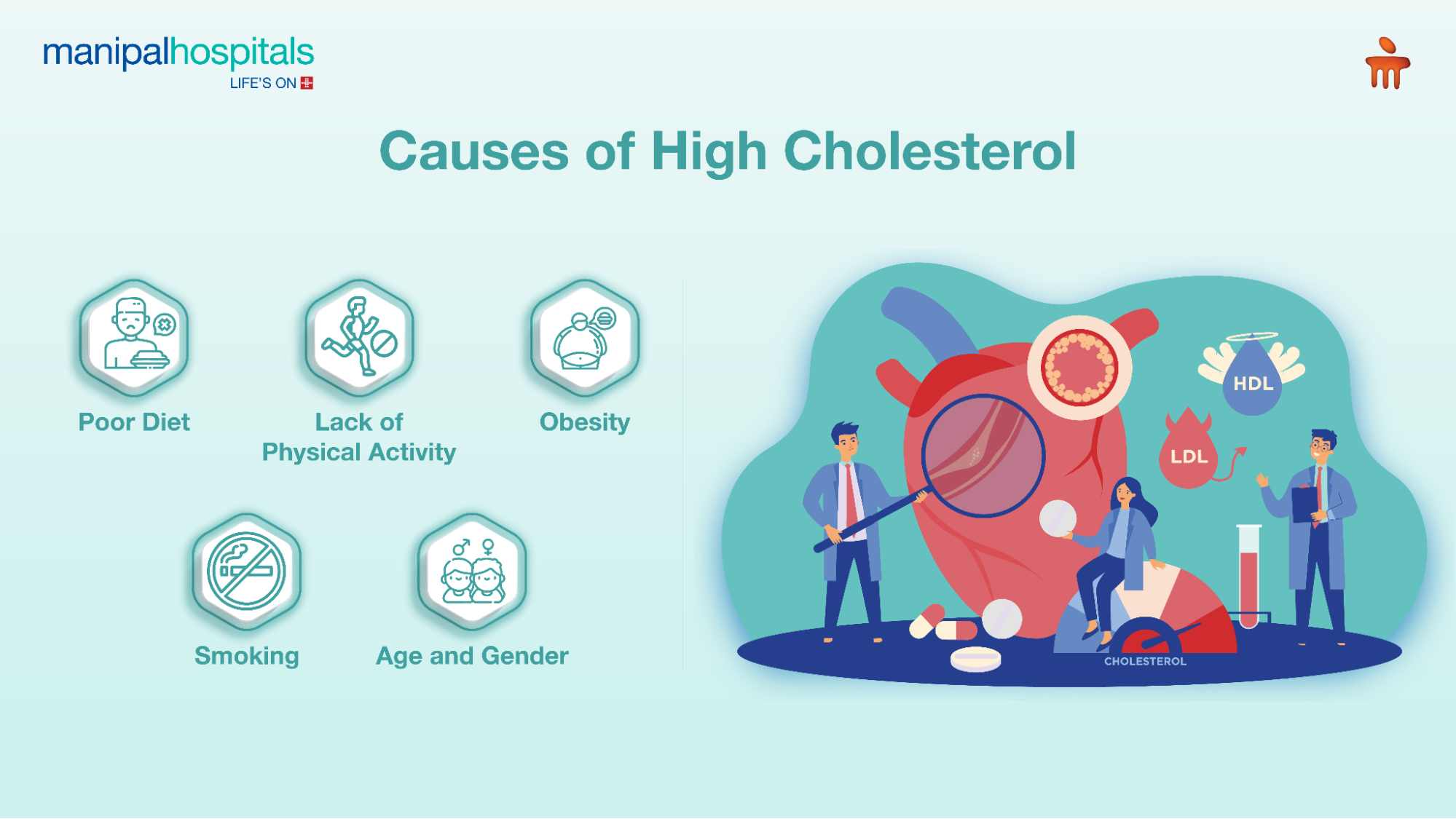
While some people are genetically predisposed to high levels (a condition called Familial Hypercholesterolemia), for many, it is a combination of lifestyle factors. Common causes include:
-
Poor Diet: Consuming too much saturated fat (found in fatty meats and full-fat dairy) and trans fats (often found in processed snacks).
-
Lack of Physical Activity: Exercise helps boost your "good" HDL cholesterol.
-
Obesity: Having a high BMI or a large waist circumference is strongly correlated with higher triglyceride levels and lower HDL levels.
-
Smoking: Chemicals in cigarettes damage the walls of your blood vessels, making them more likely to collect fatty deposits. It also lowers your HDL levels.
-
Age and Gender: As we age, our cholesterol levels naturally tend to rise. For women, cholesterol levels often spike after menopause.
Diet to Lower Cholesterol Levels
High cholesterol is one of the most manageable risk factors for heart disease, and modifying your diet can be a simple step toward improving heart health.
Components of a cholesterol-lowering diet include:
-
Soluble Fibre: Found in oats, barley, beans, lentils, and fruits like apples and pears.
-
Healthy Fats: Replacing butter and lard with olive oil, avocados, and nuts can help lower LDL levels.
-
Omega-3 Fatty Acids: Found in fatty fish like salmon, mackerel, and walnuts, these can significantly reduce triglycerides.
-
Plant Sterols and Stanols: Available in many plants, these components mimic the structure of cholesterol and block its absorption.
Foods to Limit:
-
Red Meat: Specifically marbled cuts and processed meats like sausages or bacon.
-
Full-Fat Dairy: Try switching to 1% or skim milk and reduced-fat cheeses.
-
Fried Foods: These are often high in trans fats, which can raise LDL levels and lower HDL levels.
Exercise to Reduce Cholesterol
Engaging in regular exercise helps stimulate enzymes that move LDL from the blood (and blood-vessel walls) to the liver. Moreover, exercising helps with weight reduction, which in turn can reduce cholesterol levels. The current recommendation is at least 150 minutes of moderate-intensity aerobic activity per week. This could include:
-
A brisk 30-minute walk five days a week.
-
Cycling to work.
-
Swimming laps.
-
Resistance training twice a week (lifting weights also helps improve your lipid profile).
For some individuals, especially those with genetic factors or other conditions like type 2 diabetes, diet and exercise routines may not be enough to lower cholesterol to safe levels. In these cases, doctors may prescribe medical intervention through medication.
Conclusion
Living with high cholesterol means you must keep track of your heart health. Scheduling a lipid profile test at least once a year, focusing on a diet rich in fibre and healthy fats, committing to regular exercise, and quitting smoking can help maintain your cholesterol levels and, by extension, your heart health.
To take better care of your heart health and cholesterol levels, the experts at the Department of Cardiology at Manipal Hospitals, Goa, can provide the necessary guidance. They will offer the solutions you need to manage cholesterol and ensure your heart health is protected from heart attacks.
FAQ's
LDL is often referred to as "bad" cholesterol because it can accumulate on artery walls, while HDL is considered "good" cholesterol because it carries excess fat back to the liver for removal. Maintaining a high level of HDL and a low level of LDL is essential for heart health.
It is generally recommended to get a lipid profile test at least once a year to monitor your heart health effectively. Your doctor may suggest more frequent testing if you have existing risk factors like diabetes or high blood pressure.
For many, a diet high in soluble fibre and healthy fats can significantly lower LDL levels. However, those with genetic conditions or other health complications may require medication alongside lifestyle changes.
Physical activity stimulates enzymes that help move LDL from the bloodstream to the liver for excretion. Regular exercise also helps with weight management, which is directly linked to improved lipid profiles.
Statins are the most commonly prescribed medication, working by blocking the liver enzyme responsible for producing cholesterol. This reduces the amount of cholesterol circulating in your blood and helps stabilise arterial plaque.
Share this article on:


12.png)