6 Min Read
Schizophrenia is a complex, chronic mental health condition that affects how a person thinks, feels, and behaves. While often misunderstood, it is a manageable condition, and with early detection and consistent support, individuals can lead fulfilling lives. Understanding the early signs and embracing effective long-term management strategies are crucial steps toward recovery and improved quality of life.
Early intervention strategies have shown remarkable promise, with studies indicating that timely and appropriate treatment can improve long-term outcomes for many patients. This underscores the profound impact of prompt diagnosis and sustained therapeutic efforts.
Synopsis
Understanding Schizophrenia: Causes and Risk Factors
The exact causes of schizophrenia are not fully understood, but research suggests a combination of genetic, brain chemistry, and environmental factors contributes to its development.
-
Genetics: It runs in families, but not in a simple way. Over 100 different genes have been linked to an increased risk. If one identical twin has the condition, the other has about a 50% chance of developing it.
-
Brain Chemistry: The "Dopamine Hypothesis" remains a leading theory. It suggests that an overactive dopamine system in certain parts of the brain leads to hallucinations and delusions, while a lack of dopamine in other areas contributes to "negative" symptoms like lack of motivation.
-
Brain Structure: Neuroimaging often shows physical differences in the brains of those with schizophrenia, such as enlarged ventricles (fluid-filled cavities) and reduced grey matter in certain regions.
-
Environmental Triggers: High-stress environments, prenatal exposure to viruses, or significant substance use (particularly high-potency cannabis) during teen years can act as a "trigger" for those already genetically predisposed.
Recognising Schizophrenia Symptoms
Schizophrenia symptoms often emerge gradually, typically appearing in late adolescence or early adulthood. It often begins with a "prodromal phase"—a period of subtle changes that occur months or even years before a full psychotic episode. Recognising these signs early is vital for managing schizophrenia through effective diagnosis and intervention.
Prodromal Phase
These subtle changes can precede a full-blown psychotic episode by months or even years:
-
Social withdrawal and isolation.
-
Decline in academic or work performance.
-
Unusual thoughts or beliefs, suspiciousness.
-
Lack of motivation or energy.
-
Changes in sleep patterns.
-
Increased irritability or anxiety.
-
Neglect of personal hygiene.
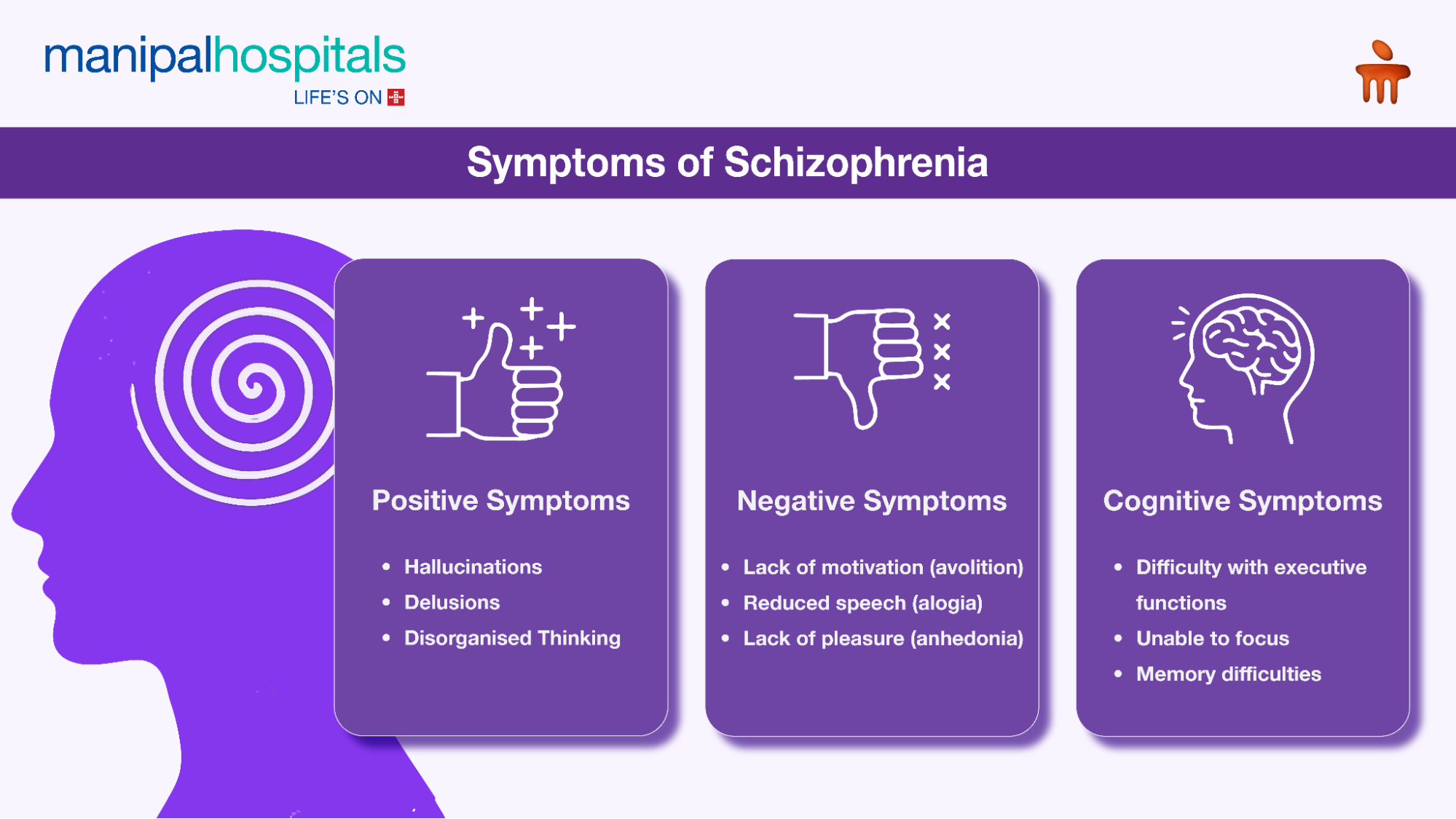
1. The "Positive" Symptoms
In clinical terms, "positive" doesn't mean "good"; it means symptoms that are added to a person’s experience. The most common are:
-
Hallucinations: Sensory experiences that aren't real. While auditory (hearing voices) is most common, they can also be visual, tactile, or even olfactory.
-
Delusions: Fixed, false beliefs that aren't based in reality. This might include delusions of grandeur or "paranoia.
-
Disorganised Thinking: Difficulty connecting thoughts, leading to or switching topics abruptly, leading to rambling or incoherent speech.
2. The "Negative" Symptoms
These are often the hardest to treat and have the biggest impact on long-term functioning:
-
Lack of motivation (avolition)
-
Reduced speech (alogia)
-
Lack of pleasure (anhedonia)
-
Social withdrawal
-
Flat affect (reduced expression of emotions)
3. Cognitive Symptoms
These involve problems with memory and attention. For many, these are the early signs that interfere with school or work performance long before hallucinations appear.
-
Difficulty with executive functions (understanding information, making decisions).
-
Problems focusing or paying attention.
-
Memory difficulties.
Schizophrenia Diagnosis
Diagnosing schizophrenia involves a thorough medical and psychiatric evaluation. There isn't a single test for schizophrenia; instead, clinicians look for a pattern of symptoms over time. These include
-
A physical exam to rule out other medical conditions
-
Blood tests and brain imaging (MRI, CT scans) may be used to rule out other causes of symptoms, such as tumours or substance abuse.
-
A psychiatric evaluation to assess symptoms, thoughts, moods, and behaviours against diagnostic criteria. According to the DSM-5-TR, a person must exhibit at least two of the primary symptoms (one of which must be delusions, hallucinations, or disorganised speech) for a significant portion of time over one month, with general disturbance lasting at least six months. The doctor will also rule out other neurological conditions such as Bipolar disorder with psychotic features, substance-induced psychosis, and brain tumours.
Schizophrenia Treatment Options
Effective schizophrenia treatment is a long-term process involving a combination of approaches. The goal is to manage symptoms, prevent relapses, and support the individual in achieving a state of functioning and independence. Successfully managing schizophrenia requires a multidisciplinary approach.
Medications: The specialist may prescribe medications for rebalancing brain chemistry to help manage the positive symptoms of schizophrenia, such as hallucinations and delusions.
Therapy for Schizophrenia (Psychosocial Interventions)
-
Cognitive behavioural therapy (CBT) helps individuals identify and change distorted thinking patterns and cope with symptoms.
-
Family therapy provides education and support to families, improving communication and problem-solving skills. This also helps with mental health awareness in the family by destigmatising the condition.
-
Social skills training teaches individuals to improve social interactions and participate in community activities.
-
Vocational rehabilitation and supported employment help individuals find and maintain employment, promoting independence and self-esteem.
Holistic Support and Managing Schizophrenia
Along with treatment and therapy, having some holistic strategies, such as a daily routine and being a part of a support group, can help with overall well-being and managing schizophrenia symptoms. Studies show that consistent engagement with treatment and support systems can reduce relapse rates, allowing individuals to maintain stability and progress towards their goals.
|
Strategy Component |
Purpose |
Action Item |
|
Medication Adherence |
Prevents relapse and hospitalisation |
Use pill organisers or long-acting injectables (LAIs) |
|
Social Support |
Combats isolation and depression and destigmatises the condition |
Joining support groups |
|
Routine & Structure |
Stabilises the brain's internal clock |
Maintain regular sleep/wake cycles and meal times |
|
Substance Avoidance |
Prevents "triggering" psychotic episodes |
Avoid alcohol and recreational drugs, especially stimulants |
Conclusion
If you or a loved one is experiencing symptoms that might suggest schizophrenia, it's crucial to seek timely medical advice. Early intervention significantly improves outcomes. To discuss your concerns and explore personalised care options, consult with our experts at the Department of Psychiatry at Manipal Hospital, Goa. Our specialists will help you understand your condition and formulate a treatment plan to help you navigate your daily life.
FAQ's
While there is currently no "cure" for schizophrenia in the traditional sense, it is a highly treatable condition. With consistent treatment and support, many individuals can achieve significant symptom reduction, manage their condition effectively, and lead fulfilling lives.
Stress alone does not cause schizophrenia. However, significant stress can act as a trigger for individuals who are already genetically predisposed to the condition. It can also worsen symptoms or lead to a relapse in someone already diagnosed.
Schizophrenia is a chronic condition, and treatment is typically long-term, often lifelong. Consistent medication and psychosocial therapies are crucial for managing symptoms, preventing relapses, and maintaining stability.
The vast majority of people with schizophrenia are not violent or dangerous, especially when they are receiving appropriate treatment. Media portrayals often perpetuate harmful stereotypes. Violence is more likely to occur if the person also has a substance use disorder or is not receiving treatment, but even then, the risk is still low compared to the general population.
Family plays a vital role in the long-term management of schizophrenia. Providing a supportive and understanding environment, encouraging treatment adherence, participating in family therapy, and learning about the condition can significantly improve outcomes and reduce relapse rates.
Yes, lifestyle changes are an important complementary part of managing schizophrenia. A balanced diet, regular exercise, adequate sleep, avoiding illicit substances, and stress management techniques can improve overall well-being, reduce symptom severity, and enhance the effectiveness of other treatments.
Share this article on: