7 Min Read
Pulmonary embolism (PE) is a serious medical condition that occurs when a blood clot, most commonly originating in the deep veins of the legs, travels to the lungs and obstructs one or more pulmonary arteries. This obstruction can significantly impede blood flow, leading to a cascade of life-threatening complications if not promptly diagnosed and treated. At Manipal Hospitals, we understand the urgency and complexity involved in managing such critical conditions. Our radiologists in Ghaziabad are equipped with state-of-the-art diagnostic tools and advanced therapeutic strategies to provide comprehensive care. Early and accurate diagnosis, often facilitated by expert interpretation of imaging studies, is paramount for improving patient outcomes.
Understanding pulmonary embolism symptoms, causes, and the various treatment pathways available is crucial for both patients and their families. This article aims to shed light on this serious condition, outlining the latest in pulmonary embolism treatment, from essential medications to advanced clot removal procedures, and guiding you through the recovery process.
Synopsis
Understanding Pulmonary Embolism (PE)
Pulmonary embolism is essentially a blockage in one of the pulmonary arteries in your lungs. The most common cause is deep vein thrombosis (DVT), where a blood clot forms in a deep vein, usually in the leg or pelvis. If a piece of this clot (an embolus) breaks off, it can travel through the bloodstream to the heart and then to the lungs, where it gets lodged in a smaller artery, blocking blood flow. This sudden reduction in blood supply to parts of the lung can lead to lung damage, decreased oxygen levels in the blood, and put immense strain on the heart, potentially leading to heart failure.
Approximately 1 in 1,000 individuals annually are affected by pulmonary embolism, making it a condition of significant public health concern. Recognising the signs and understanding the underlying mechanisms of pulmonary embolism causes are the first steps towards effective management.
What are the Pulmonary Embolism Symptoms?
Recognising pulmonary embolism symptoms is vital for seeking immediate medical attention. The presentation can vary widely depending on the size of the clot and the individual's overall health. Common signs of a blood clot in the lungs include:
-
Sudden Shortness of Breath: This is often the most common symptom and can appear suddenly, even at rest.
-
Chest Pain: Often sharp and stabbing, it may worsen with deep breathing, coughing, eating, or bending.
-
Cough: May produce bloody or blood-streaked sputum.
-
Rapid Heartbeat (Tachycardia): The heart tries to compensate for the lack of oxygen by beating faster.
-
Light-headedness or Dizziness: Due to reduced oxygen supply to the brain.
-
Sweating: Often accompanies the other symptoms.
-
Fainting: In severe cases, loss of consciousness can occur.
-
Leg Pain or Swelling: Symptoms of DVT (deep vein thrombosis) in the leg, such as pain, swelling, warmth, or tenderness, may precede or accompany a PE.
If you experience any of these symptoms, especially if they are sudden and unexplained, seek emergency medical care without delay. Timely intervention can be life-saving.
Understanding Pulmonary Embolism Causes
Pulmonary embolism primarily stems from deep vein thrombosis (DVT). Several factors can increase your risk of developing DVT and, subsequently, PE:
-
Prolonged Immobility: Long periods of inactivity, such as extended bed rest, long flights, or car rides, can slow blood flow and increase clot risk.
-
Surgery: Particularly orthopaedic surgeries (hip or knee replacement) and major abdominal surgery, which involve immobility and tissue trauma.
-
Cancer: Certain cancers and their treatments can increase the risk of blood clots.
-
Heart Disease: Conditions like heart failure and atrial fibrillation can make you more susceptible to clots.
-
Inherited Clotting Disorders: Genetic conditions that make blood more prone to clotting.
-
Pregnancy: Increased pressure on pelvic veins and hormonal changes during pregnancy and the post-partum period elevate risk.
-
Obesity: Increases pressure on the veins in the pelvis and legs.
-
Smoking: Damages blood vessel linings, making clots more likely.
Diagnosis of Pulmonary Embolism
Accurate and swift diagnosis is critical. At Manipal Hospitals, our diagnostic process for a suspected pulmonary embolism involves a combination of clinical assessment and advanced imaging:
-
Physical Examination and Medical History: Doctors will assess your symptoms, risk factors, and vital signs.
-
Blood Tests: A D-dimer test can indicate the presence of blood clots, though a positive result requires further investigation.
-
CT Pulmonary Angiography (CTPA): This is the gold standard imaging test. It uses a contrast dye and X-rays to create detailed images of the pulmonary arteries, allowing our expert radiologists in Ghaziabad to identify clots with high precision.
-
Ventilation-Perfusion (V/Q) Scan: Used when CTPA is not suitable (e.g., kidney problems or allergy to contrast dye).
-
Ultrasound of the Legs: To detect deep vein thrombosis (DVT) if suspected as the source of the clot.
Pulmonary Embolism Treatment: Medications, Clot Removal & Recovery
The primary goals of pulmonary embolism treatment are to prevent the clot from growing, stop new clots from forming, and, in severe cases, remove or dissolve the existing clot. Manipal Hospitals offers a spectrum of advanced treatment options tailored to each patient's specific condition.
1. Pulmonary Embolism Medications (Anticoagulants)
The cornerstone of pulmonary embolism treatment for most patients is anticoagulant medication, commonly known as blood thinners. These medications do not dissolve existing clots but prevent them from enlarging and significantly reduce the risk of new clots forming. This gives the body's natural processes time to break down the existing clot. Treatment typically begins immediately upon diagnosis and continues for several months, often between 3 and 6 months, or sometimes longer, depending on the cause and individual risk factors. Adherence to these medications is crucial; studies show that consistent anticoagulant therapy can reduce the risk of PE recurrence by 80-90%.
-
Initial Treatment: Often involves fast-acting injectables followed by oral medications.
-
Long-Term Management: Oral anticoagulants are prescribed for extended periods to prevent recurrence.
Regular monitoring and careful management by your physician are essential to ensure the correct dosage and minimise potential side effects.
2. Clot Removal Procedures (Interventional Treatments)
For patients with massive or sub-massive pulmonary embolisms that cause significant haemodynamic instability (e.g., low blood pressure, shock), or when medication alone is insufficient, more aggressive interventions may be necessary. These procedures are often performed by our interventional radiologists or cardiologists with specialised expertise.
-
Thrombolysis (Clot Busters): These potent medications are administered directly into a vein or, in some cases, directly into the pulmonary artery via a catheter. They actively dissolve the blood clot. While highly effective, they carry a higher risk of bleeding and are reserved for severe cases. Modern approaches using lower doses delivered directly to the clot have shown to reduce bleeding risks while maintaining efficacy, with studies demonstrating successful clot dissolution in over 85% of carefully selected patients.
-
Catheter-Assisted Thrombectomy/Embolectomy: In this procedure, a thin, flexible tube (catheter) is threaded through blood vessels to the pulmonary arteries. Specialised devices on the catheter can then either physically break up the clot and remove the fragments (thrombectomy) or use suction to aspirate the clot (embolectomy). This minimally invasive approach offers a targeted method for clot removal, often leading to rapid improvement in symptoms.
-
Surgical Pulmonary Embolectomy: In very rare, life-threatening cases where other treatments are not feasible or have failed, open-heart surgery may be performed to directly remove the blood clot from the pulmonary arteries. This is a major operation reserved for the most critical patients.
-
IVC Filter Placement: For patients who cannot take anticoagulants or whose PE recurs despite adequate anticoagulation, a filter may be placed in the inferior vena cava (IVC). This filter acts like a small basket to catch blood clots before they can reach the lungs, though it does not treat existing clots.
Recovery from Pulmonary Embolism
Recovery from a pulmonary embolism is a journey that typically involves several stages. Most patients, with appropriate treatment, begin to feel better within days to weeks. However, full recovery can take several months. Key aspects of recovery include:
-
Continued Medication: Adherence to anticoagulant therapy is paramount to prevent recurrence.
-
Regular Follow-up: Frequent appointments with your doctor are necessary to monitor your condition, adjust medication, and assess for any long-term complications. This ensures continued optimal care and helps manage any post-PE syndrome symptoms.
-
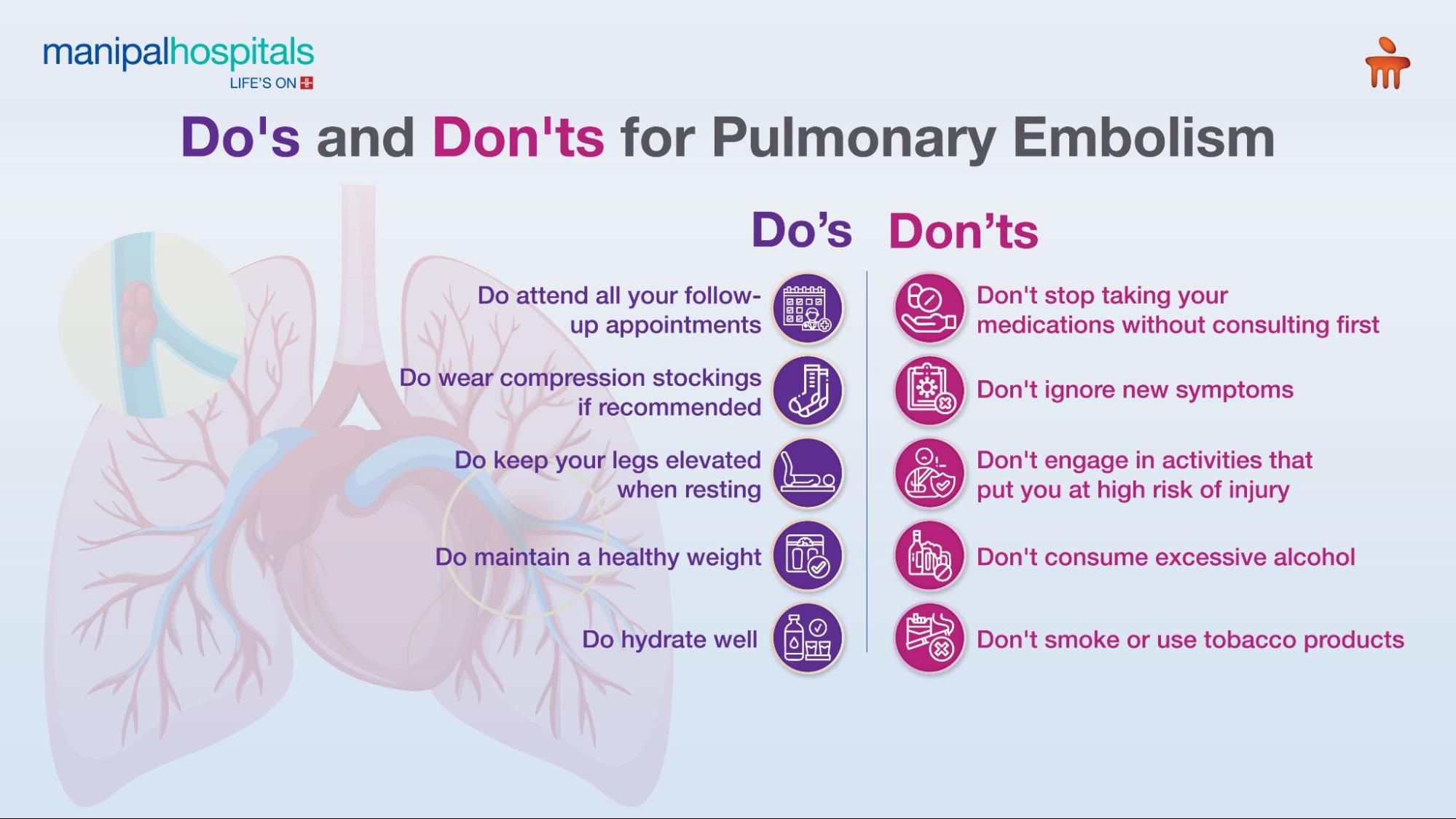
Lifestyle Modifications: Adopting a healthy lifestyle, including regular exercise, a balanced diet, and smoking cessation, is crucial for long-term health and prevention.
-
Managing Post-PE Syndrome: Some individuals may experience persistent symptoms like shortness of breath, fatigue, or reduced exercise capacity even after successful treatment. This is known as post-pulmonary embolism syndrome and requires ongoing management.
-
Gradual Return to Activity: Your doctor will guide you on a safe and gradual return to normal activities, including work and exercise.
If you or a loved one is experiencing symptoms that suggest a pulmonary embolism, it's crucial to seek timely medical advice. Early diagnosis and expert intervention are key to a successful recovery. Book an appointment with our expert specialists at Manipal Hospitals today for comprehensive care and advanced treatment options.
FAQ's
Pulmonary embolism (PE) is a serious condition where a blood clot, typically originating from a deep vein in the leg (deep vein thrombosis or DVT), travels to the lungs and blocks an artery, impeding blood flow.
Common symptoms include sudden shortness of breath, chest pain that worsens with deep breaths, coughing (sometimes with bloody sputum), rapid heartbeat, and light-headedness. If you experience these, seek immediate medical attention.
Diagnosis typically involves a physical exam, blood tests (like D-dimer), and imaging tests such as CT pulmonary angiography (CTPA) or a ventilation-perfusion (V/Q) scan. Expert assessment by our specialist radiologists in Ghaziabad is crucial for accurate diagnosis.
Treatment usually involves blood-thinning medications (anticoagulants) to prevent clot growth and new clots. In severe cases, procedures to remove the clot or break it up (e.g., thrombolysis or catheter-assisted thrombectomy) may be necessary.
Yes, prevention focuses on reducing the risk of DVT. This includes staying active, wearing compression stockings if advised, elevating legs, and sometimes taking prophylactic anticoagulants during periods of high risk, like long flights or post-surgery.
Share this article on: