8 Min Read
Peripheral Artery Disease (PAD) is a common yet often overlooked condition where narrowed arteries reduce blood flow to the limbs, most commonly the legs. This reduction in blood flow, often leading to poor blood circulation in legs, can cause a range of symptoms, from mild discomfort to severe pain and life-threatening complications. While it affects over 200 million people globally, a significant number remain undiagnosed due to its often silent or atypical peripheral artery disease symptoms. At Manipal Hospitals, our dedicated team, including our cardiologists in Ghaziabad, is committed to raising awareness and providing comprehensive care for this critical vascular condition.
Synopsis
- What is Peripheral Artery Disease (PAD)?
- Unveiling Peripheral Artery Disease Symptoms
- Understanding Peripheral Arterial Disease Causes and Risk Factors
- Modifiable and Non-Modifiable Risk Factors
- Diagnosing PAD: Early Detection is Key
- Effective Peripheral Artery Disease Treatment Options
- Medical Therapies
- Advanced Interventions for Blocked Leg Arteries
- Take Control of Your Vascular Health
- Conclusion
What is Peripheral Artery Disease (PAD)?
Peripheral Artery Disease occurs when plaque builds up in the arteries that carry blood to your head, organs, and limbs. This condition, also known as atherosclerosis, causes the arteries to narrow and harden, severely restricting blood flow. While it can affect arteries in the arms, stomach, or kidneys, it is most common in the legs, leading to blocked leg arteries. Early diagnosis and intervention are vital, as untreated PAD can significantly increase the risk of heart attack, stroke, and amputation. Studies show that patients with PAD have a 2-3 times higher risk of cardiovascular mortality compared to those without PAD, highlighting the urgency of effective peripheral artery disease treatment.
Unveiling Peripheral Artery Disease Symptoms
Recognising peripheral artery disease symptoms can be challenging, as they often manifest subtly or are mistaken for other conditions. However, understanding these signs is the first step toward effective management.
Common Signs of Poor Blood Circulation in Legs
The hallmark symptom of PAD is claudication – muscle pain or cramping in the legs or arms that starts with activity and subsides with rest. This indicates poor blood circulation in legs due to narrowed arteries.
-
Leg pain during walking or exercise: This is classic claudication, often felt in the calves, thighs, or buttocks. The pain typically resolves after a few minutes of rest.
-
Numbness or weakness in the leg: A consistent feeling of pins and needles or general weakness can be among the key peripheral artery disease symptoms.
-
Coldness in the lower leg or foot: Compared to the other limb, the affected leg might feel noticeably colder due to reduced blood flow.
-
Sores on the toes, feet, or legs that won't heal: These non-healing ulcers are a serious sign of critical limb ischemia (CLI), a severe form of PAD, indicating severely blocked leg arteries. Over 25% of patients with CLI may face amputation within a year if not treated promptly.
-
A change in the colour of your legs: Pale or bluish skin, especially when elevated, signifies insufficient blood supply.
-
Hair loss on the legs or slow nail growth: These are subtle yet indicative signs of chronic poor blood circulation in legs.
-
Shiny skin on the legs: The skin may appear tight and shiny, often accompanied by hair loss.
-
Erectile dysfunction in men: This can be an early indicator of peripheral artery disease symptoms, especially if caused by blocked leg arteries affecting pelvic blood flow.
Atypical and Silent Symptoms
Sometimes, peripheral artery disease symptoms are not classic claudication or are completely absent, making early detection more difficult.
-
Leg discomfort mistaken for arthritis or "getting old": Many attribute their leg pain to normal ageing, delaying diagnosis of peripheral artery disease symptoms.
-
Pain at rest: This is a severe peripheral artery disease symptom, indicating critical limb ischemia (CLI), where blood flow is so restricted that even at rest, the tissues are not receiving enough oxygen. This condition requires immediate peripheral artery disease treatment to prevent limb loss.
-
Fatigue in legs: A general feeling of tiredness or heaviness in the legs can also be a sign of poor blood circulation in legs.
-
Asymptomatic PAD: Up to 40% of PAD patients may experience no peripheral artery disease symptoms at all, especially those with diabetes. This underscores the importance of regular screenings, particularly for high-risk individuals, to catch early blocked leg arteries.
Understanding Peripheral Arterial Disease Causes and Risk Factors
Understanding the peripheral arterial disease causes is crucial for both prevention and effective peripheral artery disease treatment strategies.
Primary Causes Leading to Blocked Leg Arteries
The primary cause of peripheral arterial disease is atherosclerosis, a progressive condition where fatty deposits (plaque) build up inside the arteries.
-
Atherosclerosis: This hardening and narrowing of the arteries is the most common cause of peripheral arterial disease causes. Plaque buildup restricts blood flow and can lead to severely blocked leg arteries.
-
Vessel inflammation: Conditions like vasculitis can cause inflammation of blood vessels, which can lead to narrowing and blockages.
-
Injury to the limbs: Trauma or injury can sometimes damage blood vessels, leading to restricted flow.
-
Unusual anatomy of ligaments or muscles: In rare cases, structural anomalies can compress arteries, resulting in poor blood circulation in the legs.
Modifiable and Non-Modifiable Risk Factors
Several factors increase your likelihood of developing PAD.
-
Smoking: This is the strongest modifiable risk factor, directly damaging artery walls and accelerating atherosclerosis, making it a leading cause of peripheral arterial disease. Smokers are four times more likely to develop PAD.
-
Diabetes: High blood sugar levels damage blood vessels throughout the body, including those in the legs, increasing the risk of blocked leg arteries and requiring vigilant peripheral artery disease treatment.
-
Obesity: Being overweight puts additional strain on the cardiovascular system and often contributes to other risk factors.
-
High blood pressure (Hypertension): Uncontrolled high blood pressure damages arterial walls, making them more susceptible to plaque buildup.
-
High cholesterol: Elevated levels of LDL ("bad") cholesterol contribute directly to plaque formation.
-
Age: The risk of PAD increases significantly after age 50, with prevalence rising to 15-20% in individuals over 70.
-
Family history: A family history of PAD, heart disease, or stroke suggests a genetic predisposition.
Diagnosing PAD: Early Detection is Key
Timely diagnosis of PAD is crucial to prevent its progression and severe complications. Our specialists, including our cardiologist in Ghaziabad, employ various diagnostic tools:
-
Ankle-Brachial Index (ABI): This simple, non-invasive test compares blood pressure in your ankle to blood pressure in your arm. An ABI of 0.90 or less is indicative of PAD. It has a sensitivity of over 90% for detecting significant PAD.
-
Ultrasound: Doppler ultrasound can visualise blood flow and identify narrowed or blocked leg arteries.
-
Angiography: X-rays with contrast dye (CT or MR angiography) provide detailed images of your blood vessels, pinpointing blockages.
-
Treadmill test: For patients with claudication, a supervised exercise test can help confirm peripheral artery disease symptoms and assess their severity.
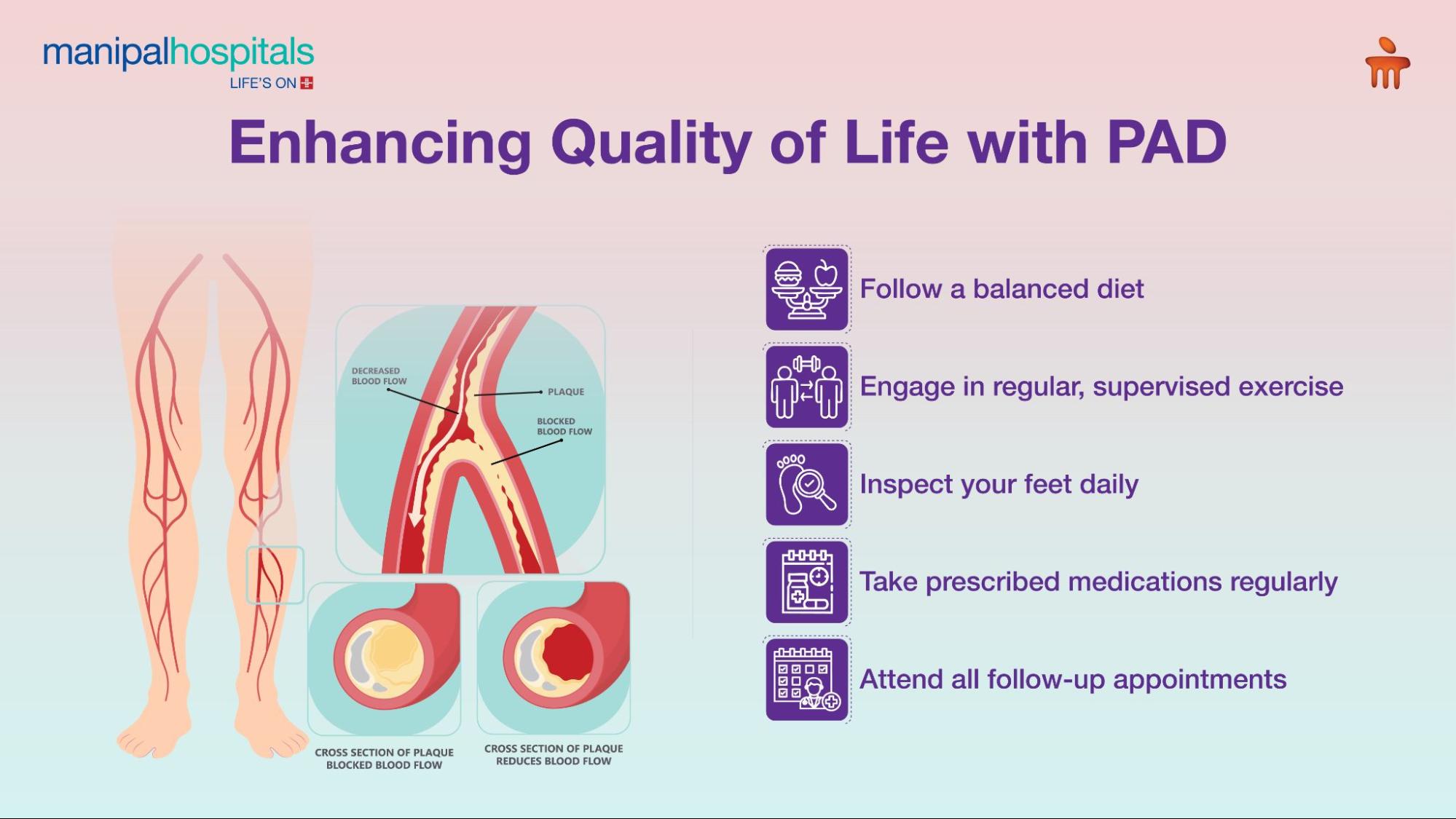
Effective Peripheral Artery Disease Treatment Options
The goal of peripheral artery disease treatment is to reduce symptoms, stop the progression of atherosclerosis, and lower the risk of heart attack and stroke. A comprehensive approach is often most effective. Advanced Cardiology Care at Manipal Hospitals, Ghaziabad
Lifestyle Modifications: First Line of Defence
Simple yet powerful changes can significantly improve poor blood circulation in the legs and manage peripheral artery disease symptoms.
-
Smoking Cessation: Quitting smoking is the single most impactful step in peripheral artery disease treatment. Within one year of quitting, the risk of cardiovascular events can decrease by 50%.
-
Regular Exercise: Supervised exercise programs, especially walking, can improve walking distance and reduce claudication in up to 85% of patients. This helps the body develop collateral circulation, bypassing blocked leg arteries.
-
Healthy Diet: A diet low in saturated fats, trans fats, and cholesterol can help manage blood pressure and cholesterol levels, crucial for preventing further plaque buildup, which is a major peripheral arterial disease cause.
-
Weight Management: Losing excess weight reduces the burden on your heart and improves overall cardiovascular health.
-
Diabetes and Blood Pressure Control: Meticulously managing these conditions is vital to slowing the progression of PAD and mitigating peripheral artery disease symptoms.
Medical Therapies
Your doctor may prescribe medications as part of your peripheral artery disease treatment plan to manage symptoms and reduce cardiovascular risks.
-
Antiplatelet Agents: To prevent blood clots, which can further aggravate blocked leg arteries.
-
Cholesterol-Lowering Medications (Statins): To reduce LDL cholesterol levels and slow plaque progression.
-
Blood Pressure Medications: To maintain healthy blood pressure.
-
Medications to Improve Blood Flow: Specific drugs can help improve blood flow in the legs and reduce claudication and peripheral artery disease symptoms.
Advanced Interventions for Blocked Leg Arteries
For severe cases, especially those with critical limb ischemia or debilitating peripheral artery disease symptoms, surgical or minimally invasive procedures may be necessary to restore blood flow.
-
Angioplasty and Stenting: A balloon is inflated inside the artery to open it, often followed by the placement of a stent to keep it open. This procedure has a success rate of over 90% in opening blocked leg arteries.
-
Atherectomy: A procedure where plaque is removed from the artery.
-
Bypass Surgery: A healthy blood vessel from another part of the body is used to create a new path around the blocked leg arteries. This is a highly effective peripheral artery disease treatment for long-segment blockages, with long-term patency rates often exceeding 70-80% over five years.
Take Control of Your Vascular Health
Don't let silent peripheral artery disease symptoms put your health at risk. Early detection and proactive peripheral artery disease treatment can significantly improve your quality of life and prevent serious complications.
Conclusion
If you are experiencing any signs of poor blood circulation in legs or have risk factors for blocked leg arteries, it's crucial to seek timely medical advice. Book an appointment with our expert cardiologists at Manipal Hospitals today and take the first step towards better vascular health.
FAQ's
While PAD cannot be "cured" in the sense of completely reversing arterial damage, it can be effectively managed. With appropriate peripheral artery disease treatment, including lifestyle changes and medical interventions, progression can be halted, symptoms relieved, and quality of life significantly improved. Early intervention for blocked leg arteries is key.
No, leg pain can have many causes, including muscle strain, nerve issues, or arthritis. However, if the pain occurs consistently with activity and subsides with rest (claudication), it's a strong indicator of peripheral artery disease symptoms and warrants medical evaluation, especially if accompanied by other signs of poor blood circulation in legs.
A heart-healthy diet is crucial. It helps manage risk factors like high cholesterol, high blood pressure, and diabetes, which are major peripheral arterial disease causes. By reducing these, diet supports overall peripheral artery disease treatment and prevents further development of blocked leg arteries.
For many patients, non-surgical treatments like lifestyle changes, supervised exercise, and medications are highly effective in managing peripheral artery disease symptoms, improving walking distance, and preventing disease progression. In fact, a significant percentage of patients show marked improvement with these measures, reducing the need for invasive procedures for their poor blood circulation in legs.
Yes, in severe cases, particularly if critical limb ischemia (CLI) develops due to extremely blocked leg arteries, PAD can lead to non-healing wounds, infection, and eventually necessitate amputation. This highlights the critical importance of early diagnosis and aggressive peripheral artery disease treatment. With proper care, over 90% of limb amputations due to PAD can be avoided.
Share this article on: