6 Min Read
Digestive discomfort, bloating, and irregular bowel habits have become increasingly common due to modern lifestyles, stress, and dietary choices. A healthy gut diet plays a crucial role in maintaining digestive balance, supporting nutrient absorption, and preventing bloating—an approach often emphasised by gastroenterologists in Delhi NCR while addressing everyday digestive concerns. When followed consistently, a healthy gut diet helps restore gut harmony, strengthens immunity, and enhances overall well-being.
This comprehensive guide explores how a healthy gut diet works, the science behind digestion, and the best foods that support gut health. You’ll also discover foods to improve digestion, natural remedies for bloating, and dietary habits that promote long-term digestive comfort.
Synopsis
- Understanding the Role of a Healthy Gut Diet
- Gut Microbiome Diet: The Foundation of Digestive Health
- Best Foods for Digestion in a Healthy Gut Diet
- Probiotic Foods for Gut Health
- Foods to Reduce Bloating Naturally
- Natural Remedies for Bloating Through Diet
- Foods to Avoid Bloating in a Healthy Gut Diet
- Foods to Improve Digestion vs Foods to Avoid Bloating
- How a Healthy Gut Diet Reduces Chronic Bloating
- Foods to Improve Digestion for Different Lifestyles
- Long-Term Benefits of a Healthy Gut Diet
- Conclusion
Understanding the Role of a Healthy Gut Diet
A healthy gut diet focuses on nourishing the digestive tract and supporting the trillions of bacteria that live within it. These microorganisms, collectively known as the gut microbiome, influence digestion, immunity, metabolism, and even mental health.
Why a Healthy Gut Diet Matters
-
Supports smooth digestion and nutrient absorption
-
Prevents bloating, gas, and abdominal discomfort
-
Strengthens gut lining and immune response
-
Maintains balance in the gut microbiome
According to our gastroenterologists in Delhi-NCR, long-term digestive issues often stem from poor dietary patterns rather than structural disease.
Gut Microbiome Diet: The Foundation of Digestive Health
A gut microbiome diet emphasises foods that nourish beneficial bacteria while limiting those that disrupt microbial balance. A balanced, healthy gut diet ensures microbial diversity, which is essential for reducing inflammation and bloating.
Key Principles of a Gut Microbiome Diet
-
High fibre intake
-
Inclusion of fermented foods
-
Limited processed foods
-
Adequate hydration
A well-planned healthy gut diet naturally supports microbial balance and digestive resilience.
Best Foods for Digestion in a Healthy Gut Diet
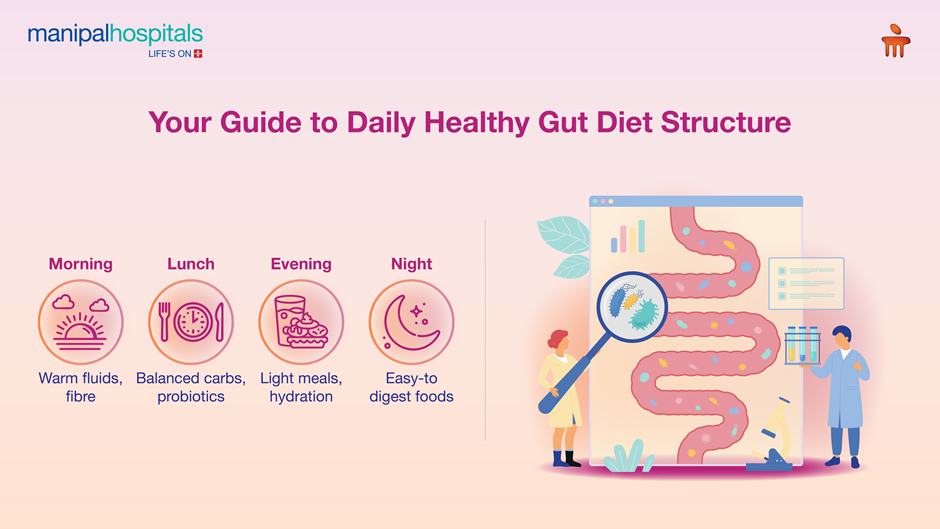
Choosing the best foods for digestion ensures smoother gut function and reduced bloating. These foods stimulate digestive enzymes and support intestinal movement.
Best Foods for Digestion
-
Whole grains like oats and brown rice
-
Leafy greens such as spinach and kale
-
Papaya and pineapple for digestive enzymes
-
Yoghurt and fermented dairy
-
Ginger and fennel
Including these foods to improve digestion daily strengthens your healthy gut diet.
Probiotic Foods for Gut Health
Probiotic foods for gut health contain live beneficial bacteria that enhance digestion and reduce bloating. They are essential components of a healthy gut diet.
Top Probiotic Foods for Gut Health
-
Yoghurt with live cultures
-
Kefir
-
Sauerkraut
-
Kimchi
-
Fermented buttermilk
Regular consumption of probiotic foods for gut health helps stabilise digestion and prevent bloating, as supported by our gastroenterologists in Delhi-NCR.
Foods to Reduce Bloating Naturally
Bloating often occurs due to slow digestion or gas accumulation. A healthy gut diet includes Foods to reduce bloating that soothe the digestive tract.
Foods That Relieve Bloating
-
Banana for potassium balance
-
Cucumber for hydration
-
Peppermint for gas relief
-
Ginger to improve motility
-
Fennel seeds to reduce intestinal spasms
These foods that relieve bloating act as natural remedies for bloating when consumed consistently.
Natural Remedies for Bloating Through Diet
A healthy gut diet prioritises dietary solutions before medications. Many natural remedies for bloating are readily available in everyday foods.
Effective Natural Remedies for Bloating
-
Warm lemon water in the morning
-
Ginger-infused herbal teas
-
Light post-meal walking
-
Mindful eating habits
-
Adequate hydration
Such practices complement foods to reduce bloating and improve digestive efficiency.
Foods to Avoid Bloating in a Healthy Gut Diet
Certain foods disrupt digestion and contribute to bloating. A healthy gut diet limits these items to maintain gut comfort.
-
Carbonated beverages- Introduce excess gas into the digestive system, leading to abdominal pressure and uncomfortable bloating sensations.
-
Excessive refined sugar- Feeds harmful gut bacteria, causing fermentation, gas buildup, and worsening digestive imbalance over time.
-
Deep-fried foods- Slow gastric emptying, increased inflammation, and heavier digestion contribute to persistent bloating.
-
Artificial sweeteners- They are poorly absorbed in the gut, triggering gas, bloating, and digestive discomfort in sensitive individuals.
-
Highly processed snacks- Contain additives and low fibre content, disrupting gut microbiota and increasing bloating risk.
Reducing foods to avoid bloating significantly improves digestive comfort and gut balance.
Foods to Improve Digestion vs Foods to Avoid Bloating
| Foods to Improve Digestion | Foods to Avoid Bloating |
| Oats | Soda |
| Yogurt |
Fried foods |
| Papaya |
Refined sugar |
| Leafy greens |
Processed snacks |
| Ginger |
Artificial sweeteners |
A healthy gut diet balances these choices daily.
How a Healthy Gut Diet Reduces Chronic Bloating
Chronic bloating often reflects gut imbalance. A healthy gut diet addresses root causes rather than masking symptoms.
How It Works
-
Improves intestinal movement
-
Enhances enzyme production
-
Reduces gas formation
-
Supports beneficial bacteria
Clinical insights from our gastroenterologists in Delhi-NCR confirm that dietary correction alone resolves bloating in many patients.
Foods to Improve Digestion for Different Lifestyles
A healthy gut diet can be adapted to various lifestyles.
For Busy Professionals
-
Overnight oats
-
Probiotic yogurt
-
Fruit smoothies
For Elderly Individuals
-
Soft-cooked vegetables
-
Fermented dairy
-
Fibre-rich soups
For Active Individuals
-
Whole grains
-
Lean proteins
-
Fermented beverages
Each approach supports foods to improve digestion effectively.
Long-Term Benefits of a Healthy Gut Diet
Following a healthy gut diet consistently delivers long-term digestive and systemic benefits.
Key Benefits
-
Reduced bloating and gas
-
Improved bowel regularity
-
Enhanced immunity
-
Better nutrient absorption
-
Improved mental well-being
As advised by our gastroenterologists in Delhi-NCR, sustainable gut health depends on consistency, not short-term fixes.
Conclusion
A healthy gut diet is the cornerstone of digestive wellness. By choosing the best foods for digestion, incorporating probiotic foods for gut health, and avoiding trigger foods, individuals can significantly reduce bloating and discomfort. A well-planned gut microbiome diet, supported by natural remedies for bloating, restores balance and promotes long-term digestive health. With mindful food choices and guidance from our gastroenterologists in Delhi-NCR, maintaining gut comfort becomes achievable and sustainable.
FAQ's
Most people notice improvement within 1–2 weeks of following a healthy gut diet consistently.
Probiotic foods for gut health work best when combined with fibre-rich foods in a healthy gut diet.
While not preventive for all conditions, a healthy gut diet significantly lowers digestive discomfort.
Ginger, banana, peppermint, and yoghurt are effective foods that relieve bloating.
Moderation is key. A healthy gut diet focuses on balance rather than complete restriction.
Share this article on: