7 Min Read
--Procedure-and-Benefits.webp "minimally invasive cardiac surgery mics benefits")
Open Heart Surgery is understandably a significant cause of worry for a cardiac patient and their family. While some cases are best treated by this procedure, medical advancements of today have brought forward minimally invasive cardiac surgery, also known as MICS. This sophisticated approach provides safer, less intrusive and more effective treatment options, promising quicker recovery, less pain, and superior cosmetic results. Understanding MICS can be a game-changer for your heart health journey.
Synopsis
What is Minimally Invasive Cardiac Surgery?
Minimally invasive cardiac surgery refers to surgical procedures performed through smaller incisions to treat cardiac problems. The small incisions are made in the groin, wrist or side of the chest, bypassing need for a full sternum opening.
Advantages of Minimally Invasive Heart Surgery
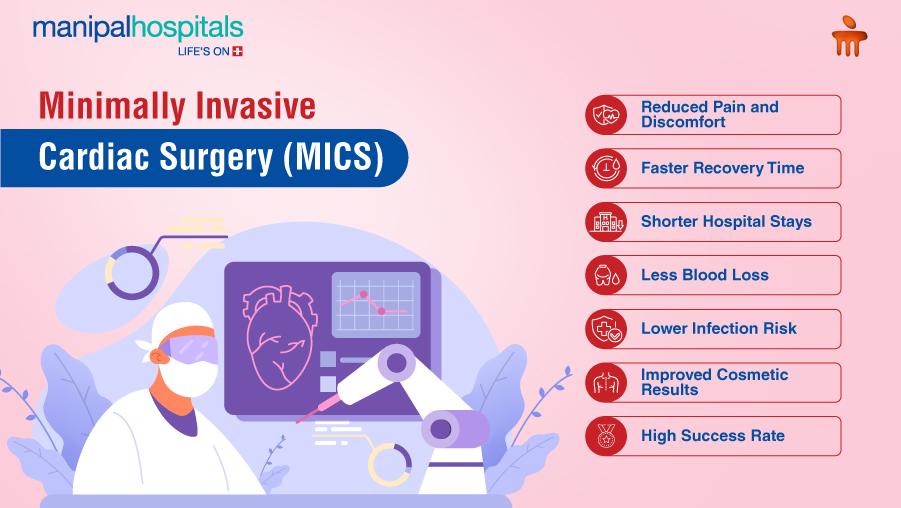
Minimally invasive heart surgery offers some key benefits:
-
Reduced Pain and Discomfort: Smaller incisions bypass the need for full sternum cutting, resulting in less post-operative pain and fewer pain medications.
-
Faster Recovery Time: Patients recover much quicker, resuming daily activities within 2–4 weeks, compared to 6–8 weeks for traditional surgery.
-
Shorter Hospital Stays: MICS patients typically stay at the hospital for 3–5 days, thereby reducing costs and infection risks.
-
Less Blood Loss: Precise techniques minimize blood loss, often reducing the need for transfusions significantly.
-
Lower Infection Risk: Smaller incisions reduce exposure and wound infection rates.
-
Improved Cosmetic Results: Less noticeable scarring provides psychological benefits.
-
High Success Rate: Minimally invasive cardiac surgery has a high success rate and is often considered for patients for whom traditional surgery may be high risk.
Types of Minimally Invasive Cardiac Procedures
Minimally Invasive Cardiac Surgery (MICS) encompasses a range of procedures for different cardiac complexities:
-
Minimally Invasive Coronary Artery Bypass Graft (CABG): Also known as minimally invasive bypass surgery, this involves resolving blocked coronary arteries via small incisions between the ribs.
-
Mitral Valve Repair or Replacement: Addresses mitral valve issues through small chest incisions.
-
Aortic Valve Replacement: Replaces diseased aortic valves with small incisions.
-
Tricuspid Valve Repair or Replacement: Similar to mitral valve procedures.
-
Atrial Septal Defect (ASD) Closure: Repairs holes in the heart's upper chambers.
-
Cardiac Tumor Removal: Excises non-cancerous heart growths.
-
MAZE Procedure for Atrial Fibrillation: Corrects irregular heart rhythms.
What to Expect from the Procedure
Minimally invasive cardiac surgery involves several steps, right from assessment all the way to post-operative care:
-
Pre-operative Assessment: A comprehensive evaluation through physical exams and tests covers medical history and addresses patient questions.
-
Surgery: Under general anaesthesia, surgeons make 2–4 inch incisions. Specialised instruments and a camera are inserted to visualize and operate on the heart with precision.
-
During the Procedure: The heart may or may not be stopped, sometimes using a heart-lung machine. The surgical team performs repairs or replacements meticulously.
-
Post-operative Care: After ICU monitoring, patients transition to a regular ward for pain management, vital sign monitoring, and early mobilization by dedicated nursing staff.
Potential Risks and Considerations
Minimally invasive cardiac surgery generally has lower risks than traditional open-heart surgery, but some associted risks may include:
-
Bleeding
-
Infection
-
Stroke
-
Heart attack
-
Anaesthesia complications
Do's and Don'ts during Recovery
For a successful recovery from minimally invasive heart surgery, follow these guidelines:
-
Do's: Follow medical advice, engage in gentle activities (e.g., short walks), maintain a heart-healthy diet, monitor incision sites, get adequate rest, and stay hydrated.
-
Don'ts: Avoid heavy lifting, strenuous exercise, immediate driving, smoking, alcohol, and ignore new or worsening symptoms.
Conclusion
Understanding all your options is vital if you have heart-related symptoms or need cardiac surgery. Manipal Hospitals Dhakuria is committed to excellence in cardiac care, embracing advanced techniques like Minimally Invasive Cardiac Surgery. We prioritize patient comfort, recovery, and long-term well-being. Consult our world-class cardiac specialists if you are exploring heart surgery options. Book an appointment with our expert cardiac surgeons at Manipal Hospitals Dhakuria today to discuss if Minimally Invasive Cardiac Surgery is suitable for you and start your journey to a healthier heart.
FAQ's
Typically 2-4 inches on the chest side, far smaller than traditional 6-8 inch sternum incisions.
Yes, MICS is equally effective for treating heart conditions, offering reduced trauma and faster recovery.
Yes, cardiac rehabilitation is highly recommended to strengthen your heart, improve fitness, and support long-term recovery.
Light work can resume in 2-4 weeks; physical work may take longer, but significantly faster than traditional bypass procedure.
Like any other surgical procedure, MICS also have some associated risks, such as bleeding, infection or heart attack. However, these risks are rare, and MICS has much lesser risks when compared to traditional surgery
Share this article on: