5 Min Read
A hernia occurs when an organ, intestine, or fatty tissue pushes through a weak spot in the surrounding muscle or connective tissue. While often not immediately life-threatening, hernias rarely heal on their own and can lead to serious complications if left untreated. Understanding when hernia treatment, especially surgical intervention, becomes necessary is crucial for your health. This blog is a comprehensive guide on the various treatment options for hernia and the factors that call for surgical intervention.
Synopsis
Types of Hernias and Their Surgical Considerations
Hernias can develop in various forms, and each type presents distinct symptoms, risk factors, and considerations for treatment. Understanding these differences helps in choosing the most appropriate and effective management approach for each patient.
-
Inguinal Hernia – This is the most common type, occurring in the groin area. This type of hernia often requires surgery.
-
Umbilical Hernia – This occurs around the belly button. Adult umbilical hernias typically require surgical repair.
-
Incisional Hernia – This develops at the site of a previous surgical incision. Incisional hernia treatment almost always involves surgical repair.
-
Femoral Hernia – This is less common and occurs in the outer groin. This type of hernia is more prone to complications like strangulation, making prompt femoral hernia treatment crucial.
-
Hiatal Hernia – This occurs when part of the stomach pushes up through the diaphragm. Surgical intervention is usually meant for severe symptoms.
When Is Hernia Surgery Essential?
Some small, asymptomatic hernias might be monitored over time (watchful waiting). These cases might require hernia treatment without surgery. Such non-surgical hernia treatment focuses on symptom management rather than a permanent cure. It includes lifestyle changes like avoiding heavy lifting, weight control, and using supportive devices. This approach is suitable only for mild cases, as most hernias eventually need surgery, especially those causing symptoms or posing a risk of complications. Studies show that early surgical intervention for symptomatic hernias can significantly reduce the risk of emergency complications like strangulation by over 80%.
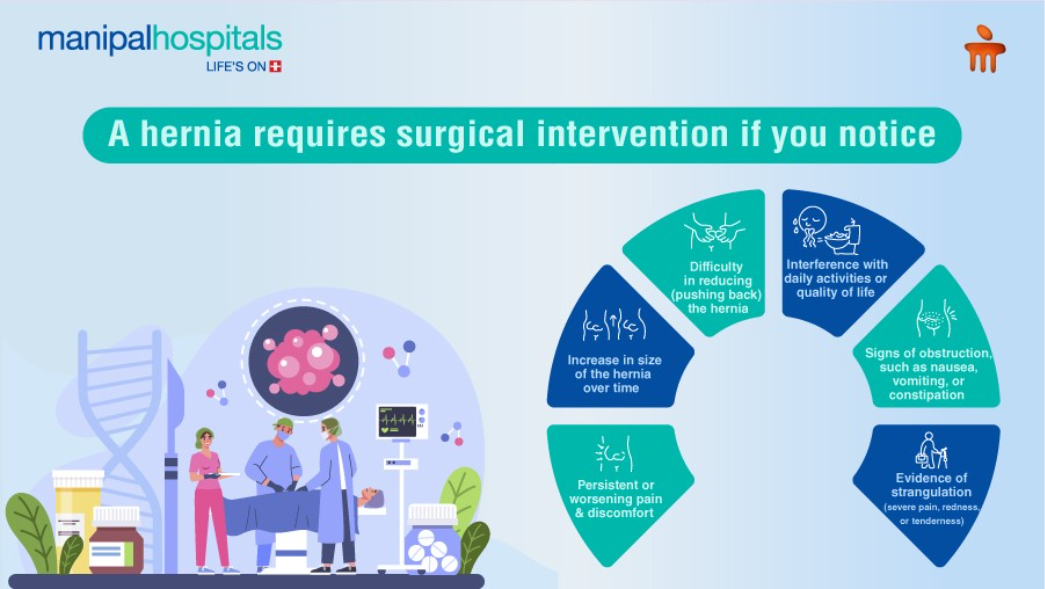
Critical Indicators for Surgery
-
Pain or discomfort – Persistent pain, aching, or a feeling of heaviness usually indicates a need for surgery.
-
Enlargement – A hernia that grows larger over time is a sign of deteriorating tissue.
-
Incarceration – Protruding tissue becomes trapped and cannot be pushed back, requiring urgent medical attention.
-
Strangulation – Blood supply to trapped tissue is cut off, causing a medical emergency that requires urgent surgery.
-
Risk of complications – Certain types, like femoral hernias, have a higher risk of strangulation and are often recommended for elective surgery.
Advantages of Surgical Hernia Repair
Surgical hernia repair offers a definitive solution by addressing the root cause, relieving symptoms, and preventing potential complications.
-
Effective pain relief – Surgery can address the root cause of discomfort.
-
Prevention of complications – Eliminates the risk of incarceration and life-threatening strangulation.
-
Improved quality of life – Patients can return to normal activities without pain, with satisfaction rates exceeding 90%.
-
Benefits of minimally invasive options – Techniques like laparoscopic and robotic surgery often lead to smaller incisions, reduced pain, and quicker recovery times.
Care Guidelines
Following proper care guidelines for hernia helps manage symptoms effectively, supports recovery, and reduces the risk of complications or recurrence:
-
Seek medical advice promptly if you notice a new bulge or experience pain.
-
Maintain a healthy weight and eat a high-fibre diet to prevent constipation and straining.
-
Follow your surgeon's post-operative instructions diligently.
-
Do not ignore your symptoms, especially increasing pain or a non-reducible bulge.
-
Avoid engaging in heavy lifting or strenuous activities without guidance.
-
Quit smoking, as it can impair healing and weaken tissues.
Conclusion
An untreated hernia can enlarge over time, leading to severe pain and potentially life-threatening complications like obstruction or strangulation. Early diagnosis and timely treatment can significantly improve outcomes and prevent complications of hernia. At Manipal Hospitals, our team of experienced general surgeons offers advanced, minimally invasive hernia repair techniques with high success rates and low recurrence. We are committed to delivering personalised, patient-centric care, ensuring you receive the most appropriate treatment for your condition. Don’t ignore the signs of a hernia. Book an appointment today at Manipal Hospitals Mukundapur for a comprehensive evaluation and take the first step toward safe and effective recovery.
FAQ's
In adults, hernias do not heal on their own and tend to worsen over time. While some small umbilical hernias in infants may close naturally, most adult hernias require medical or surgical intervention for effective and lasting treatment.
Non-surgical approaches, such as watchful waiting, are usually recommended only for very small, asymptomatic hernias with low risk of complications. These methods do not repair the hernia but involve careful monitoring to track any progression or symptom development.
Recovery varies by the type of surgery and the individual. Minimally invasive procedures often allow a return to light activities within a few days and full recovery in 2-4 weeks. Open surgery might require a longer recovery period, typically 4-6 weeks.
Patients will experience some discomfort, but pain is generally well-managed with medication. Modern techniques aim to minimise post-operative pain, and most patients report a significant reduction in pain within a few days.
Untreated hernias can enlarge, cause increasing pain, and lead to serious complications like incarceration (when the tissue gets trapped) or strangulation (when the blood supply is cut off), which are medical emergencies.
Share this article on: