8 Min Read
Are you or someone you care about wondering what happens after a successful brain surgery? As the situation is deemed to be overwhelming, knowing what the road ahead would look like is a consolation for both patients and caregivers to feel more confident and ready. Thanks to medical advances, brain surgeries are now safer and more successful than before.
Still, recovery takes time and involves healing both the body and mind. This blog covers the most important aspects of recovery after brain surgery, such as how long healing takes, common symptoms, and possible side effects.
Synopsis
What Happens Immediately After Brain Surgery?
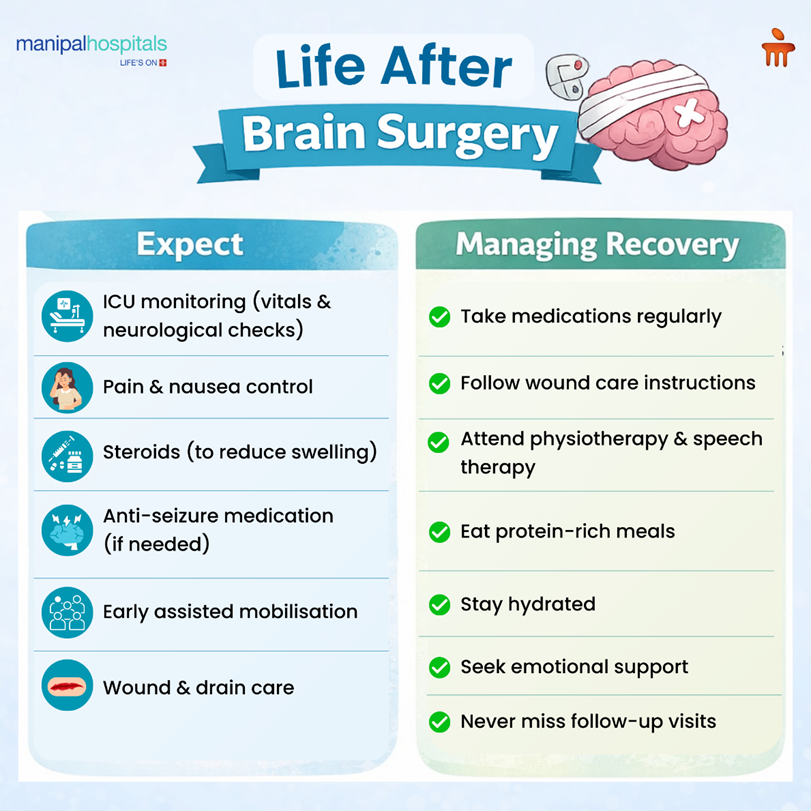
Right after the operation, the priority is safety. Expect the following during your stay at a hospital:
-
ICU Stay and Close Monitoring (ICU Stay): Vital signs, neurological checks, and fluid balance are tracked continuously to watch for swelling, bleeding, or drops in consciousness.
-
Wound Care and Drain Management (Wound Care): Scalp incision checked regularly; drains (if placed) are removed when output falls.
-
Pain Control and Nausea Management: Medication plans are adjusted to keep pain and vomiting under control.
-
Medication Start or Adjustment: Steroid therapy may be used briefly to reduce cerebral oedema; anti-epileptic drugs may be started if seizure risk is high.
-
Early Mobilisation: When safe, nurses and physiotherapists will help you sit up and take short walks. This reduces complications such as blood clots.
These early steps set the tone for a steady recovery after brain surgery.
20 Things to Expect After Brain Surgery
The following experiences are commonly reported after brain surgery:
1. Tiredness and Weakness
It is very common to feel exhausted after brain surgery. The brain uses a lot of energy to repair itself, so ordinary tasks that felt effortless before, such as sitting up, concentrating, or walking a short distance, can tire you out quickly. Expect the worst fatigue in the first few days to weeks; it usually eases gradually. Save energy by pacing yourself, napping when needed, and building activity back up slowly rather than pushing through.
2. Head and Scalp Pain
Mild to moderate headaches and soreness around the incision site are normal after an operation. These arise from the incision, local tissue healing, and sometimes from tension or the anaesthetic. Pain typically improves with prescribed painkillers and simple measures (ice packs applied gently to the scalp, head elevation at night). If headaches become severe or different from what you were told to expect, contact your surgeon.
3. Brain Swelling (Cerebral Oedema)
A degree of swelling inside the skull can happen after surgery. Doctors commonly use corticosteroids to reduce inflammation and protect brain function while the tissue settles. Swelling is usually temporary but may require careful monitoring in the days after the operation.
4. Nausea and Vomiting
Feeling sick is often a short-lived effect of anaesthesia or changes in intracranial pressure. It generally improves over a few days and can be treated with anti-nausea medication. Staying hydrated and taking small, bland meals can help while you recover.
5. Temporary Neurological Changes (Weakness, Numbness, Speech problems)
Depending on the surgery’s location, you may notice weakness, altered sensation, or difficulty speaking. These are often temporary and improve with time and targeted rehabilitation (physio, occupational, or speech therapy). Your care team will explain which problems are most likely given your operation.
6. Changes in Memory and Concentration
It’s normal to feel foggy, forgetful, or slower at thinking after brain surgery. Attention and processing speed usually recover over weeks to months; cognitive exercises, good sleep, and gradual mental activity help recovery. If problems persist or worsen, your team can arrange a cognitive assessment and therapy.
7. Mood Swings, Anxiety, and Low Mood
The impact of surgery, the brain’s chemistry, and the stress of illness all affect mood. Feelings of anxiety, irritability, or mild depression are common and valid. Talk to your medical team; simple strategies, counselling, or short-term medication can make a big difference while you heal.
8. Seizures (Postoperative Epilepsy)
Some patients develop seizures after brain operations, particularly when removing tumours or in surgeries close to seizure-prone regions. Neurologists may start anti-epileptic medication either as a preventative measure or if a seizure occurs. If you have a seizure, seek medical attention immediately.
9. Sleep Disturbances
Changes to sleep, difficulty falling asleep, waking at night, or daytime sleepiness are common after surgery. Sleep usually improves as pain lessens and medication is reduced. Good sleep hygiene (regular bedtime, quiet dark room, avoiding screens before bed) helps recovery.
10. Balance and Coordination Problems
If the surgery involved the cerebellum or motor areas, expect temporary changes to balance or coordination. Physiotherapy with balance exercises accelerates improvement; use walking aids as recommended until you feel steady.
11. Altered Sensation (Tingling, Numbness, Sensitivity)
Nerve irritation around the surgical site can cause numbness, tingling, or heightened sensitivity of the scalp or face. Most of these sensations fade with time, though some patients experience lingering changes that gradually improve over weeks to months.
12. Vision Changes
If the visual pathways were near the surgery site, you may notice blurred vision or temporary changes in your visual field. Many changes are reversible; any sudden loss of sight or new visual field defect should be reported straight away.
13. Speech and Language Difficulties
Operations near language areas can lead to transient aphasia (difficulty finding words or forming sentences). Speech and language therapy is very effective for recovery. Early, targeted therapy speeds improvement.
14. Appetite Changes
A poor appetite during the initial recovery is normal. Small, frequent, nutrient-dense meals and keeping hydrated matter more than big portions. If appetite loss persists, your team can suggest dietary support or supplementation.
15. Numbness or Altered Feeling in the Scalp
Nerves cut or stretched during the incision can leave parts of the scalp numb or tingling. This usually lessens over months as nerves regenerate; gentle skin care and avoiding irritants help comfort.
16. Risk of Infection
Infections after brain surgery are uncommon but serious. Watch for fever, increasing redness, swelling, or discharge at the wound, or severe headache and increasing confusion; these require prompt medical review.
17. Hormonal Changes
Surgeries that touch the pituitary gland or hypothalamus can alter hormone production, causing symptoms such as unusual thirst, tiredness, menstrual changes, or temperature sensitivity. Endocrine (hormone) blood tests and specialist input may be needed if your surgeon suspects this.
18. Need for Rehabilitation Therapies
Physiotherapy, occupational therapy, and cognitive or speech therapy are often recommended after brain surgery. These therapies are tailored to the problems you have and are key to regaining independence and function.
19. Gradual Return to Daily Life
Returning to normal activities is a step-by-step process guided by your surgeon. Many people resume light activities within weeks but may need months before feeling entirely back to themselves. Avoid heavy lifting or driving until cleared by your team.
20. Regular Follow-up and Imaging
Postoperative follow-up, including clinical checks and MRI scans, is essential to monitor healing and look for recurrence when a tumour has been removed. Your team will give you a schedule for appointments and scans; keep these and raise any new concerns.
What are the Side Effects After Brain Surgery?
Patients frequently inquire about potential side effects following brain surgery. These effects depend on the surgical site, underlying condition, and individual patient factors.
The most frequent after brain surgery side effects include:
-
Tiredness and headaches
-
Problems with memory and focus
-
Problems with speech or vision
-
Feeling weak or numb
-
Changes in feelings
-
Seizures in some instances
Most side effects following brain surgery resolve spontaneously and improve further with appropriate medical care and rehabilitation.
Managing Post-Surgical Symptoms
Rapid recovery after brain surgery happens when a team of specialists, like neurosurgeons, physiotherapists, and neuropsychologists, work together to help you. Take the following measures to manage your symptoms:
-
Medication Adherence: Keep a chart for pain meds, steroids, anti-epileptics and any antibiotics.
-
Wound Care: Follow instructions; keep the incision dry and observe for changes.
-
Rehabilitation: Begin neurorehabilitation (physical therapy, occupational therapy, speech therapy) as recommended.
-
Nutrition & Hydration: Balanced, protein-rich meals and adequate fluids support tissue repair.
-
Emotional Support: Counselling, peer groups, and family involvement speed psychological recovery.
These strategies reduce side effects from brain surgery and help you return to your usual activities. Regular follow-ups also help deal with problems early and improve long-term results after brain tumour surgery in Bhubaneswar.
Conclusion
Although brain surgery is a significant procedure, understanding the recovery process can alleviate anxiety and increase confidence. Awareness of typical healing symptoms and potential warning signs enables patients to respond appropriately. At Manipal Hospital Bhubaneswar, skilled surgeons and thorough rehabilitation programs help patients recover safely after brain tumour surgery. With personal care, regular follow-ups, and healthy habits, most patients can slowly return to normal life and regain independence.
FAQ's
The most intense symptoms (pain, nausea, drowsiness) typically ease in 1–2 weeks; fatigue and cognitive issues often improve over months.
Most cognitive issues are temporary; many people improve with cognitive rehabilitation. Lasting deficits depend on surgery location and preoperative function.
Driving requires medical clearance, typically after a period free from seizures and once coordination and reaction time have recovered, often several weeks to months.
Seizures occur in a subset of patients, especially after tumour surgery. Anti-epileptic drugs and close monitoring reduce risk.
Follow-up MRI timing varies by diagnosis; immediate post-op imaging, then scans at 3 months and at regular intervals, are common after tumour surgery. Your surgeon will specify the plan.
The timeline for recovery after brain surgery varies. It is based on the condition treated and your overall health. Most people start to feel better within a few weeks to a few months.
Share this article on:


_need_Surgery__Expert_Guide_.webp "Expert guide on gallbladder polyps and treatment options")