6 Min Read
For many expectant parents, the journey to childbirth is filled with anticipation and detailed planning. While a vaginal delivery is often the preferred outcome, medical circumstances sometimes necessitate a cesarean section, commonly known as a C-section. Understanding the reasons behind this recommendation can empower parents and alleviate anxieties. Globally, C-sections account for a significant number of births, with some regions reporting rates over 30%. This highlights the critical role this procedure plays in modern obstetrics. In this blog, let us know why doctors recommend this procedure to some expectant mothers.
Synopsis
Understanding C-Section Delivery: A Medical Perspective
So, what is C-section delivery? A cesarean section is a surgical procedure used to deliver a baby through incisions in the mother's abdomen and uterus. It is performed when a vaginal delivery would pose a risk to the mother, the baby, or both. The decision for a C-section delivery is always made with the utmost care, considering the unique circumstances of each pregnancy.
The c section meaning is rooted in ensuring optimal safety and outcome. While it's a major surgery, advancements in medical technology and surgical techniques have made it a remarkably safe and common procedure, with recovery times significantly improved over the years. Our dedicated team carries out every cesarean section with precision, compassion, and adherence to international safety protocols.
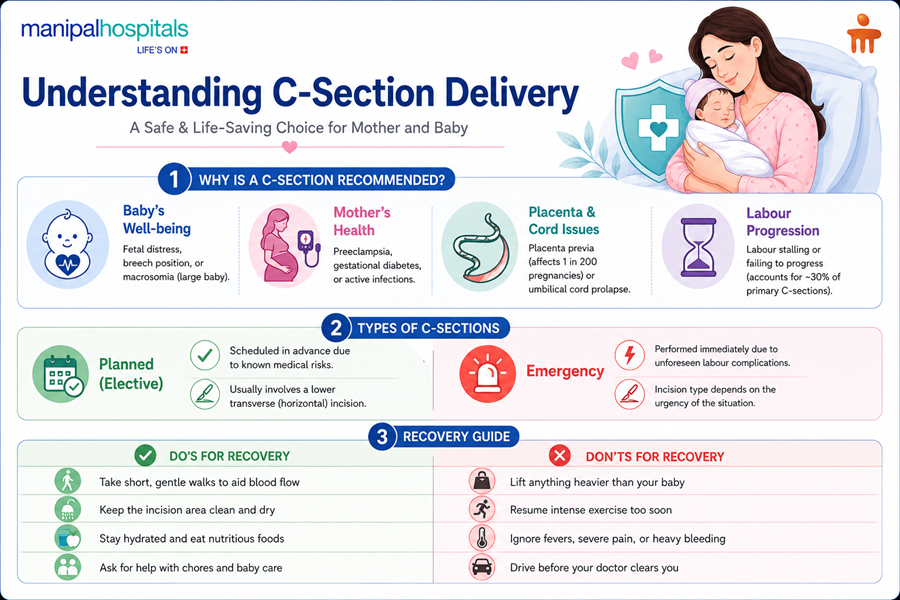
Key Medical Reasons for C-Section Recommendations
Doctors recommend a C-section delivery for various critical medical reasons. These can be categorised into issues related to the baby, the mother, or the progression of labour. Here are some of the most common scenarios where a caesarean section becomes the safest option:
Fetal Distress and Well-being
-
Oxygen Deprivation: If monitoring shows that the baby is not getting enough oxygen or experiencing abnormal heart rate patterns, an emergency C-section delivery may be necessary to prevent complications. Early intervention significantly improves neonatal outcomes.
-
Foetal Anomalies: In some cases, known foetal conditions might make a vaginal birth risky. A caesarean section can minimise trauma during delivery.
Maternal Health Concerns
-
Pre-eclampsia or Eclampsia: Severe high blood pressure conditions can pose serious risks to both mother and baby. A c section delivery might be recommended to stabilise the mother's condition and ensure timely delivery.
-
Gestational Diabetes: Uncontrolled diabetes can lead to a huge baby, increasing the risk of shoulder dystocia (when the baby's shoulder gets stuck during vaginal birth).
-
Active Genital Herpes: To prevent the transmission of the virus to the baby during birth, a caesarean section is often performed.
-
Other Chronic Conditions: Conditions like heart disease or certain neurological disorders in the mother might make the physical strain of labour too dangerous, leading to a planned c-section delivery.
Placenta and Cord Issues
-
Placenta Previa: This occurs when the placenta partially or completely covers the cervix, blocking the baby's exit. It's a common reason for a planned caesarean section to prevent severe bleeding. This condition affects approximately 1 in 200 pregnancies.
-
Placental Abruption: If the placenta separates from the uterine wall before birth, it can cause severe bleeding and cut off the baby's oxygen supply, necessitating an emergency c section delivery.
-
Umbilical Cord Prolapse: When the umbilical cord slips into the vagina before the baby, it can become compressed, cutting off the baby's oxygen supply. This is a critical emergency requiring an immediate Caesarean section.
Fetal Position and Size
-
Breech Presentation: If the baby is positioned feet-first or bottom-first instead of head-first (cephalic), a c section delivery is often recommended to avoid complications, although some vaginal breech births are attempted under specific conditions.
-
Transverse Lie: When the baby is lying sideways across the uterus, a vaginal birth is impossible, making a cesarean section mandatory.
-
Macrosomia (Large Baby): If the baby is estimated to be very large (typically over 9-10 pounds), a C-section delivery may be recommended to prevent birth injuries to both mother and baby.
-
Cephalopelvic Disproportion (CPD): This occurs when the baby's head is too large to fit through the mother's pelvis, despite efforts to dilate. It's a key reason for a cesarean section.
Previous C-Section and Other Obstetric History
-
Previous C-Section Delivery: While Vaginal Birth After C-section (VBAC) is possible for some women, many choose or are advised to have a repeat cesarean section, especially if there were complications with the previous surgery or if multiple prior C-sections have occurred. Our VBAC success rates at Manipal Hospitals are encouraging, with approximately 70-75% of eligible mothers achieving a vaginal birth.
-
Uterine Surgery: Previous uterine surgeries, such as fibroid removal, can weaken the uterine wall, increasing the risk of uterine rupture during labour.
Failure to Progress in Labour
Sometimes, despite strong contractions, labour simply doesn't advance, or the cervix stops dilating. After careful monitoring and attempts to stimulate labor, a C-section delivery may be performed to ensure the safety of both mother and baby. This accounts for approximately 30% of primary C-sections.
Multiple Pregnancies
If you are expecting twins, triplets, or more, a cesarean section is often recommended, particularly if babies are not in optimal positions or if there are other complications.
Types of Cesarean Sections
Understanding the types of Caesarean section procedures can further clarify the medical approach. Generally, they are categorised by urgency and technique:
-
Planned (Elective) C-Section: Scheduled in advance when medical reasons indicate a vaginal delivery would be too risky. These typically involve a lower transverse incision, which is less painful and heals better.
-
Emergency C-Section: Performed when unforeseen complications arise during labour or pregnancy that threaten the health of the mother or baby. The type of incision (transverse or classical vertical) depends on the urgency and specific situation.
Regardless of the types of caesarean section, our team ensures the highest standard of care, from preparation to recovery.
Recovery After a C-Section: Do's and Don'ts
A c section delivery is a major abdominal surgery, and proper care during recovery is crucial for healing and preventing complications. Here are some essential guidelines:
Do's
-
Prioritise rest and sleep whenever possible, especially in the first few weeks.
-
Walk gently. Short, frequent walks can help prevent blood clots and aid recovery.
-
Keep the incision clean and dry. Follow your doctor's instructions for wound care to prevent infection.
-
Manage pain as prescribed to allow for comfortable movement and rest.
-
Hydrate and eat nutritious foods to support healing and energy levels.
-
Don't hesitate to ask for help with household chores and baby care.
Don'ts
-
Avoid lifting anything heavier than your baby for several weeks.
-
Give your body time to heal before resuming intense exercise.
-
Report any fever, severe pain, heavy bleeding, unusual discharge, leg swelling, sudden shortness of breath, or chest pain to your doctor.
-
Don't drive immediately. Wait until you are cleared by your doctor and can comfortably perform emergency braking.
-
Only use medications approved by your healthcare provider, especially if breastfeeding.
C-Section Delivery at Manipal Hospitals Bangalore
At Manipal Hospitals Bangalore, we understand that a C-section delivery can be an unexpected turn in your birthing plan. We pride ourselves on providing comprehensive care, from detailed pre-operative counselling to supportive post-operative recovery, making your journey as comfortable and safe as possible. Our multidisciplinary team, including obstetricians, anaesthesiologists, and nursing staff, works tirelessly to ensure every C-section delivery in Bangalore meets the highest standards of safety and quality, resulting in excellent maternal and infant outcomes.
FAQ's
A c section delivery can be both. Many are planned due to known medical conditions, but emergencies can arise during labour, necessitating an immediate cesarean section for the safety of the mother or baby.
Typically, the surgery itself takes about 45 minutes to an hour. Most of this time is spent closing the incisions; the baby is usually delivered within the first 10-15 minutes.
The initial hospital stay is usually 3-4 days. Full recovery can take 4-6 weeks, during which it's crucial to follow your doctor's post-operative instructions carefully.
You will receive anaesthesia (usually a spinal or epidural) to numb your lower body, so you will not feel pain during the surgery, though you might feel pressure or pulling sensations.
Yes, many women are candidates for VBAC. Your doctor will assess your medical history, the reason for your previous C-section delivery, and your current pregnancy to determine if VBAC is a safe option for you.
Share this article on: