8 Min Read
Have you ever wondered what it means if someone has seizures more than once, without fever, injury, or any clear reason? For many individuals, that is often how epilepsy first becomes noticeable. Epilepsy is a neurological condition in which the brain experiences recurrent seizures caused by sudden bursts of electrical activity in the brain. It is a type of seizure disorder that can affect children, adults, and older people alike.
Many people think seizures always involve dramatic shaking. In reality, epilepsy symptoms can vary widely. Some episodes may involve brief staring spells, confusion, unusual sensations, or temporary loss of awareness. In this blog, a top neurologist in Yeshwanthpur explains the underlying epilepsy causes, the range of symptoms, how doctors make a diagnosis of epilepsy, and the various epilepsy treatment options available to manage this seizure disorder effectively.
Synopsis
What is Epilepsy?
Epilepsy is diagnosed when a person has repeated seizures that are not triggered by fever, infection, or another temporary cause. During an episode, the electrical disturbance may affect awareness, movement, speech, memory, or even emotions.
In certain cases, only a specific area of the brain is involved; such individuals experience only mild or subtle symptoms such as confusion or unusual sensations. These seizures are called focal onset seizures. In cases where both sides of the brain are affected, symptoms are pronounced and may even cause loss of consciousness and body stiffening or jerking. These seizures are called generalised onset seizures.
Doctors diagnose epilepsy when:
-
A person has two or more unprovoked seizures more than 24 hours apart, or
-
One unprovoked seizure with a high likelihood of recurrence based on brain imaging or EEG findings.
The underlying epilepsy causes are not always clear, but recognising it as a neurological seizure disorder helps people understand that it is a medical condition, not something to fear or misunderstand.
What Causes Epilepsy?
Understanding the possible epilepsy causes can help families make sense of a diagnosis, though in many people, the exact reason is never clearly identified.
-
Genetic Factors: Some forms of epilepsy are linked to changes in genes that affect how brain cells communicate. A person may inherit a genetic tendency, or a gene change may occur without a family history.
-
Structural Changes in the Brain: Injury to the brain can also increase the risk. This includes head trauma from accidents, stroke, brain tumours, or lack of oxygen at birth. Scarring in brain tissue can disrupt normal electrical signals.
-
Infections: Certain infections that affect the brain, such as meningitis or encephalitis, may lead to seizures and later epilepsy.
-
Developmental Conditions: Brain development differences present from birth can also play a role. Some neurological conditions are associated with a higher risk of seizures.
-
Immune-related Causes: In some cases, the immune system may mistakenly attack brain tissue, triggering seizures.
Do note that despite the many metrics and even after thorough evaluation, the cause may remain unknown. Such cases are termed “idiopathic epilepsy". Despite the lack of diagnosis, it does not mean the condition is untreatable – it simply means current testing cannot always identify the precise source.
Recognising Epilepsy Symptoms
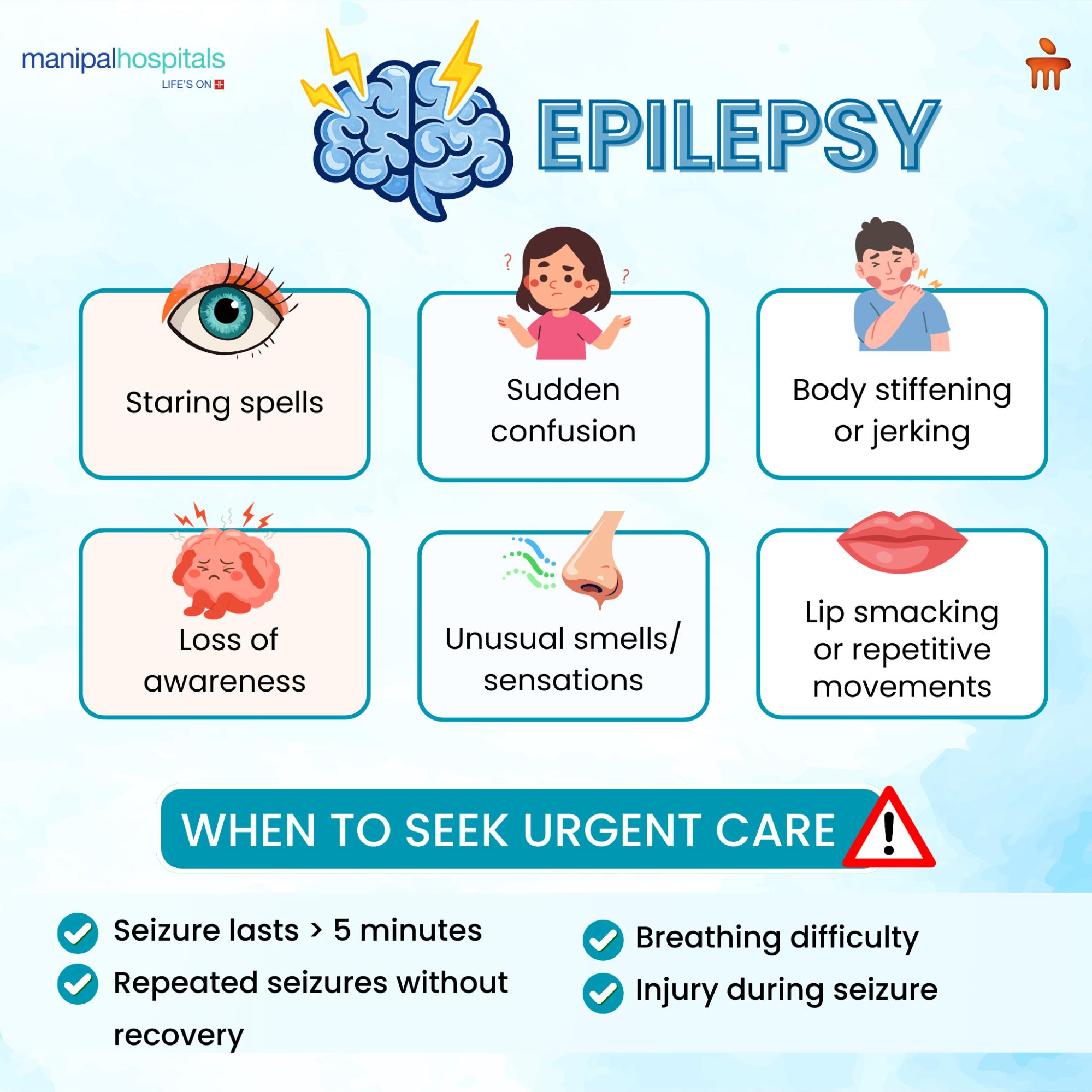
Knowing the range of epilepsy symptoms helps prevent delays in seeking care. Some seizures begin in one part of the brain and cause localised signs. Others involve both sides and can lead to loss of consciousness. The pattern varies, but recurrence is an important clue.
-
Staring episodes: A person may suddenly pause mid-conversation, look blank, and not respond for a few seconds. Afterwards, they may not realise anything unusual occurred.
-
Sudden confusion: There may be moments of disorientation, difficulty speaking, or not understanding what others are saying.
-
Involuntary movements: Jerking of an arm or leg, stiffening of the body, or rhythmic shaking can occur. In some seizures, the whole body is involved, and the person may fall.
-
Unusual sensations: Tingling, a strange smell or taste, visual changes, or a sudden intense feeling such as fear can appear without warning.
-
Behavioural tics and repeated actions: Repeated lip smacking, chewing motions, picking at clothes, or wandering aimlessly may be seen.
How is Epilepsy Diagnosed?
A clear diagnosis of epilepsy takes careful evaluation. It is not made after a single event without proper assessment.
-
Detailed discussion: The doctor will ask about what happened before, during, and after the episode. They will look for loss of awareness, jerking movements, stiffening, and confusion. Since many people do not remember their own seizure, a family member’s description often becomes very important.
-
Neurological examination: Memory, speech, balance, reflexes, and muscle strength are checked. This helps understand how the brain is functioning between episodes.
-
EEG test: Small electrodes are placed on the scalp to record electrical activity. The test is painless. Certain patterns can suggest a tendency toward seizures.
-
MRI scan: Brain imaging helps look for structural causes such as scars, stroke changes, tumours, and developmental differences.
Epilepsy Treatment Options
Treatment is planned after understanding the types of seizures and how often they occur. The goal is to reduce or completely stop seizures while maintaining quality of life.
-
Anti-seizure Medications: For many people, anti-seizure medications are the main form of treatment. These medicines reduce the abnormal electrical activity in the brain. A large number of patients become seizure-free with the right medication. Regular follow-up is important to monitor effectiveness and any side effects.
-
Ketogenic Diet: In some individuals, especially children whose seizures are difficult to control, a ketogenic diet may be recommended. This is a medically supervised high-fat, low-carbohydrate diet. It changes the body’s energy source and can reduce seizure frequency in certain cases.
-
Surgery: If medicines do not provide enough control and tests show that seizures begin from a specific area of the brain, surgery may be considered. The aim is to remove or modify the small region responsible for triggering seizures, if it can be done safely.
-
Devices and Specialised Centres: Implantable devices that send electrical signals to the brain or nerves may help reduce seizures. When seizures remain uncontrolled, referral to a specialised epilepsy centre allows access to advanced testing and personalised epilepsy treatment options.
Living with Epilepsy
Living with a seizure disorder requires small but important adjustments in daily life. Many people lead full and active lives with the right precautions.
-
Take medicines regularly: Skipping doses is one of the most common reasons for breakthrough seizures. Set reminders if needed.
-
Prioritise sleep: Lack of sleep can trigger seizures in some individuals. Maintaining a regular sleep schedule helps stabilise brain activity.
-
Identify triggers: Stress, flashing lights, illness, or missed meals may provoke seizures in certain people. Keeping a seizure diary can help track patterns.
-
Limit alcohol and follow medical advice: Alcohol can interfere with medication and lower the seizure threshold.
-
Seek emergency care when needed: Immediate medical attention is required if a seizure lasts more than five minutes, repeats without recovery, or causes injury.
Conclusion
Noticing epilepsy symptoms early and speaking to a doctor without delay can change the course of the condition. Many people feel uncertain or even afraid after a seizure, but clear answers and the right treatment plan bring reassurance.
Epilepsy care varies from person to person. It needs careful evaluation and steady follow-up. If you or someone in your family has had repeated seizures, it is important to seek medical advice. The neurology specialists at Manipal Hospital Yeshwanthpur provide detailed assessment, advanced testing, and personalised treatment to help you manage your condition well.
FAQ's
A seizure is a single episode caused by sudden abnormal electrical activity in the brain. Epilepsy is diagnosed when a person has two or more unprovoked seizures occurring more than 24 hours apart. Not everyone who has one seizure has epilepsy.
Epilepsy may not always be permanently cured, but it can often be well controlled. Many people become seizure-free with medication. In some cases, surgery or other treatments may significantly reduce or stop seizures, depending on the underlying cause.
Treatment often begins with anti-seizure medications to control abnormal electrical activity in the brain. If medicines do not provide adequate control, options such as dietary therapy, surgery, or implanted devices may be considered after detailed evaluation.
Epilepsy can affect people of any age. Risk may increase with genetic factors, head injury, stroke, brain infections, developmental conditions, or immune-related disorders. In many individuals, however, no clear cause is identified despite thorough assessment.
Emergency care is needed if a seizure lasts more than five minutes, if seizures occur repeatedly without recovery in between, if there is difficulty breathing, or if serious injury happens during the episode.
Share this article on:


.webp "Guillain-Barré Syndrome: Causes, Symptoms & Treatment")