7 Min Read
Living with Chronic Kidney Disease (CKD) can be challenging. When kidneys can no longer perform their vital functions adequately due to kidney failure, a life-saving process called dialysis becomes the need of the hour. This blog provides you with all the necessary information on kidney failure dialysis procedure and its role in end-stage chronic kidney disease.
Synopsis
Understanding dialysis
The elementary questions here are- what is dialysis and when is dialysis needed? To understand the procedure and its importance in kidney health, knowing the role of the kidneys is imperative. Our kidneys filter waste, excess salts, and water, maintaining body balance. When chronic kidney disease progresses to End-Stage Renal Disease (ESRD) or severe kidney failure, the kidneys almost completely lose their functionality (GFR below 15 mL/min). This is when dialysis is required. Dialysis for kidney disease is recommended when waste build-up, fluid overload, and electrolyte imbalances cause symptoms like:
-
Severe fatigue
-
Swelling (edema)
-
Uncontrolled high blood pressure
Early intervention by a nephrologist and timely initiation of dialysis treatment can significantly extend life.Dialysis is a medical treatment that performs the function of the kidneys when they are unable to work effectively. It helps remove waste products, excess fluids, and toxins from the blood, maintaining the body’s chemical balance.
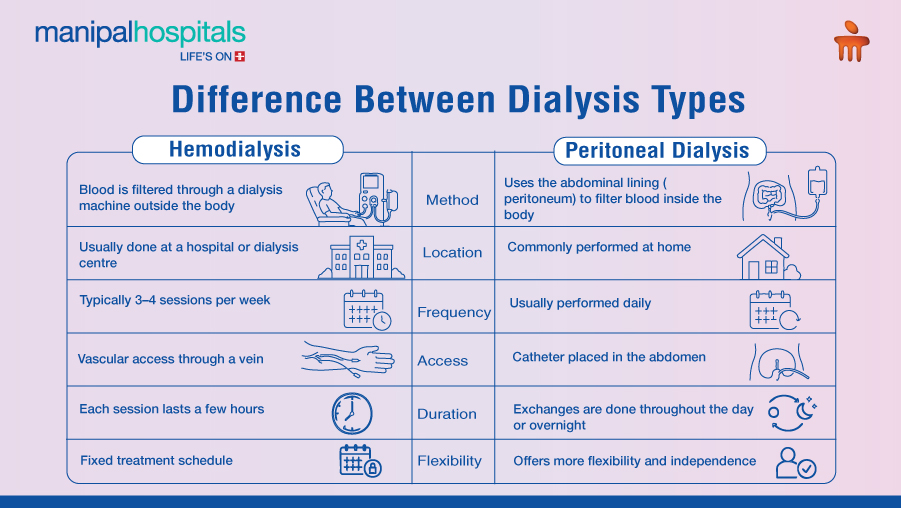
Types of dialysis
There are two primary types of dialysis treatment. Your kidney specialist can guide and decide which option for kidney failure dialysis is best for you.
1. Hemodialysis
Hemodialysis uses an artificial kidney machine (hemodialyzer) to filter blood. Blood is drawn, circulated through the dialyser, and returned. This dialysis treatment is usually performed at a centre, 3 times a week, for 3-4 hours per session. An AV fistula or graft is required for access. Home hemodialysis is also an option.
2. Peritoneal dialysis (PD)
Peritoneal dialysis uses the lining of your abdomen as a natural filter. A sterile solution (dialysate) is introduced into the abdominal cavity, absorbs waste, and is then drained. This treatment is primarily performed at home, offering greater flexibility. It can be done manually (CAPD) or overnight using an automated cycler (APD).
Managing CKD patients on dialysis
Effective management of CKD patients on dialysis involves a comprehensive, patient-centric approach. Our multidisciplinary team at Manipal Hospitals includes nephrologists, dietitians, and nurses, ensuring optimal health outcomes for those on kidney failure dialysis. Key aspects include a specialised diet (restricting sodium, potassium, phosphorus), fluid restriction, strict medication adherence, and regular monitoring of kidney function. We also provide mental and emotional support, as living with ESRD can be taxing.
Guidelines for dialysis patients
Adhering to certain essential guidelines significantly improves outcomes for CKD patients:
-
Follow your prescribed diet, fluid restrictions, and medications diligently.
-
Monitor your weight daily and report changes.
-
Keep your dialysis access site clean and protected.
-
Attend all scheduled dialysis sessions and appointments.
-
Do not skip treatments; this can lead to dangerous waste buildup.
-
Avoid ignoring symptoms like shortness of breath or fever; seek medical attention.
Conclusion
Dialysis plays a vital role in helping patients with chronic kidney disease manage symptoms, maintain overall health, and improve quality of life, especially in advanced stages of kidney failure. At Manipal Hospitals, our renal specialists and advanced dialysis facilities are committed to delivering comprehensive, compassionate care tailored to every patient’s needs. If you or your loved one requires expert guidance for kidney disease or dialysis treatment, book a consultation with our experienced nephrologists today at Manipal Hospitals Siliguri (Pradhan Nagar) and take a confident step towards better kidney health.
FAQ's
The lifespan of someone on dialysis varies greatly depending on age, overall health, and adherence to treatment. With proper care, many patients live 5-10 years, and some live much longer, even 20-30 years.
Many patients on dialysis continue to work, study, and travel. Hemodialysis may require more scheduling adjustments, but home hemodialysis and peritoneal dialysis offer greater flexibility. With careful planning, travel is often possible, and Manipal Hospitals can assist with coordinating dialysis in other locations.
Common side effects can include fatigue, low blood pressure, muscle cramps, and nausea during or after hemodialysis. Peritoneal dialysis patients might experience abdominal fullness or minor infections around the catheter site.
Hemodialysis uses a machine to filter blood outside the body, typically in a clinic. Peritoneal dialysis uses the lining of your abdomen as a natural filter, often performed at home, offering more flexibility.
Yes, for many patients, a kidney transplant is a viable option, and dialysis can serve as a bridge while awaiting a suitable donor kidney. Your nephrologist will evaluate your eligibility for transplantation.
Share this article on: