4 Min Read
Severe knee pain impacts your daily life and can even stop you from doing your day to day tasks properly. When conservative treatments fail, knee replacement surgery offers an effective solution. This comprehensive guide covers all important aspects of total knee replacement surgery, like associated risks and knee replacement recovery time, empowering you towards a healthier future.
Synopsis
Understanding Knee Replacement Procedure
Understanding the concept of knee replacement procedure is essential to know how the surgery is performed and other associated factors, like risks and recovery time.
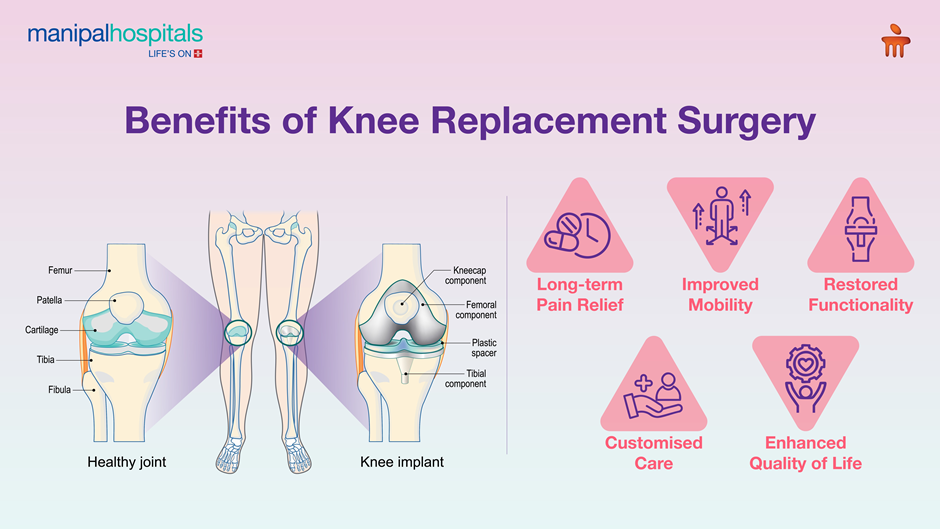
Often termed as total knee replacement surgery, this procedure replaces damaged cartilage and bone from the knee joint with artificial implants to relieve pain and restore function. Pre-surgery imaging is performed to carry out customised planning as per the patient’s health and physical condition. Under anaesthesia, the damaged parts removed from the knee are replaced with prosthetics. The procedure usually takes about 1-2 hours, depending on the severity of the condition.
Knee Replacement Recovery Time
Partial or Total Knee Replacement Surgery is often the most effective way to deal with severe knee pain and related problems. However, proper post-operative rehabilitation is essential to aid recovery and promote mobility.
Pain after knee replacement surgery is common, and full recovery takes about 6-12 months. Many patients can do light activity within 3 months, and with proper rehabilitative care, like physiotherapy and medication, knee replacement recovery time can even reduce.
Potential Risks of Knee Replacement Surgery
Like any major surgery, knee replacement surgery also has some associated risks which should be considered carefully. They include:
-
Anaesthesia-related complications: Allergic reactions to anaesthesia, like breathing trouble and nerve problems.
-
Blood clots: Though rare, blood clots after surgery can cause deep vein thrombosis (DVT) or pulmonary embolism, which can be life threatening.
-
Infection: Improper care of wound site or unhygienic environments can make way for bacteria to enter, leading to infections.
-
Blood loss: Excess blood loss during surgery may require blood transfusion.
-
Nerve damage: While extremely rare, knee replacement surgery can sometimes cause nerve injury or damage, also called nerve palsy. This can cause loss of sensation in the leg.
-
Implant misalignment: Implant used during knee replacement surgery can sometimes become misaligned, leading to persistent pain, discomfort and need for repeat surgery.
Improvements in medical science have brought forward advanced techniques, like minimally invasive and robotic knee replacement procedures. They have significantly helped avoid associated risks, thereby enhancing patient safety, recovery and all-over outcomes.
Care Essentials: Do's and Don'ts during Recovery
Adhering to surgeon and physiotherapist instructions is crucial for proper recovery after knee replacement surgery.
Do's:
-
Follow your physical therapy exercises diligently.
-
Take prescribed pain medication as directed.
-
Elevate your leg and apply ice to reduce swelling.
-
Keep your incision site clean and dry.
-
Use assistive devices (crutches, walker) as advised.
-
Attend all follow-up appointments.
Don'ts:
-
Don't ignore increasing pain after knee replacement surgery or new symptoms.
-
Don't overexert yourself or lift heavy objects too soon.
-
Don't cross your legs or twist your knee excessively.
-
Don't skip your physical therapy sessions.
-
Don't place pillows directly under your knee for prolonged periods.
Get advanced orthopaedic care at Manipal Hospitals Siliguri with expert surgeons, modern technology, and personalised recovery support.
Conclusion
Chronic knee pain can significantly affect your mobility and prevent you from doing your daily tasks. When conventional methods are deemed ineffective, knee replacement surgery can bring significant relief. If you are experiencing chronic knee pain that impacts your quality of life, it is crucial to seek timely medical advice. Book an appointment with our expert orthopaedic specialist at Manipal Hospitals Siliguri today.
FAQ's
Knee replacement procedure takes about 1 to 2 hours, depending on the severity of the condition being resolved.
Patient usually stays at the hospital for 1 to 3 days, after which they are required to undergo thorough rehabilitative care.
Light activities can be resumed within 3 months, but full recovery typically takes 3-6 months, with continued improvement for up to a year.
Yes, physiotherapy is essential for strengthening and restoring range of motion during your knee replacement recovery time.
Increased pain, redness, swelling, warmth, fever, or wound drainage are signs of infection. Contact doctor immediately if you notice any of these symptoms.
Most surgeons recommend waiting 4 to 6 weeks, especially for the right knee, to ensure adequate reaction time.
Share this article on: