7 Min Read
White patches on the skin often draw our attention immediately. They raise small worries in many people because the change feels sudden, even if the area has been developing slowly. Most of the time, these patches come from conditions that respond well to care. A calm look at what leads to these changes can help people feel more informed.
Synopsis
What Are White Spots on Skin?
White spots on the skin are light coloured patches that appear when the natural pigment changes. These areas may stay small or grow wider with time. Some have clear edges, while others look softer around the boundary. They can show up on the face, neck, arms, back, or any area that faces sunlight often.
The pigment in our skin comes from tiny cells that produce melanin. When these cells slow down, weaken, or get disturbed, lighter marks start forming. This change can happen for many reasons. Some conditions, such as vitiligo, form a more noticeable contrast because of a drop in pigment. Others, like pityriasis versicolor, create small flakes that make the patch appear lighter. Even dry skin conditions can leave pale marks for weeks.
How Do These White Spots Usually Form
White spots appear when something disrupts the natural balance of the skin. The process varies from one condition to another, and some patterns are easy to recognise. In many pigment-related conditions, the skin cells that make color start slowing down. Infections in others cause the top layer to deteriorate and prevent light from reflecting evenly.
Some patches appear after minor infections on the surface of the skin. These infections can affect how the outer layer sheds, which produces lighter areas. At times, these patches pop up after strong sunlight, which leads to peeling or uneven healing. A few spots may also be linked to nutritional gaps, especially when the body needs better support for healthy pigment activity.
Sometimes stress on the skin builds slowly. People may use harsh products or scratch an irritated patch without realising the impact on their pigment cells. When the healing is uneven, light marks appear. Looking at the pattern of these marks often helps identify how the condition began. A small cluster of spots behaves differently from a patch that spreads gently across both sides of the body.
Common Causes Of White Spots On Skin
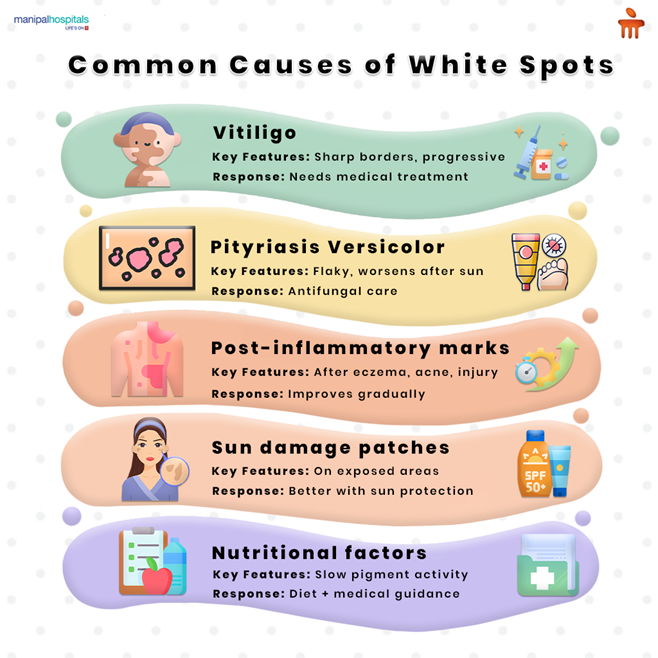
There are several common reasons for lighter patches. Many respond well to care when identified early. Below are the conditions that often lead to these changes.
Vitiligo
Vitiligo occurs when pigment-producing cells stop working. The patches appear sharply defined. They may grow slowly or remain stable for months. Many people notice them first on areas exposed to Sunlight can affect areas of the skin, such as the hands or face. This is a long-term condition that benefits from medical guidance.
Pityriasis Versicolor
This is a harmless superficial infection that causes flaky, pale patches. The spots may feel slightly dry and often look more noticeable after sun exposure. People see them more often on the chest, shoulders, or upper back. The patches may come and go with weather changes or sweat.
Post-Inflammatory Hypopigmentation
After a rash or irritation settles, the area may heal with lighter pigment. This happens when the inflammation affects the pigment cells temporarily. These patches usually improve gradually with steady care. People notice these marks after eczema, acne flare-ups, or minor injuries.
Sun Damage-Related Patches
Strong sunlight can stress the skin over time. This stress affects the natural pigment pattern, leaving lighter marks in exposed areas. These often appear on the arms and face. Consistent sun protection helps prevent these changes.
Nutritional Factors
Low levels of certain nutrients may affect pigmentation. When the body lacks enough support for melanin production, the skin may show uneven tone. A balanced diet and medical guidance in Salem can help bring these areas back to healthier levels.
Mild Fungal Infections
A few fungal infections interrupt the surface layer and create lighter patches. These infections tend to produce fine flakes. They respond well to targeted creams that reduce the fungal load.
Across these conditions, the pattern and texture of the patches often guide the diagnosis. People should pay attention to when the spots appear, how they evolve, and whether they itch or stay calm.
Symptoms Of White Spots On Skin
White spots come with certain signs that help people recognise the cause. These symptoms vary across conditions and give helpful clues.
Changes in Color
The most common sign is a lighter patch that contrasts with the surrounding skin. The change may start small and widen slowly. Some patches remain faint, while others become more obvious in bright light.
Mild Dryness
Many white patches feel slightly dry. When the top layer of skin sheds unevenly, it creates a pale and dull appearance. This dryness is common in conditions like pityriasis versicolor or healing after inflammation.
Flakiness
Some infections or healing areas produce fine flakes. These flakes make the patch look textured. They also highlight the colour difference between the patch and healthier skin.
No Pain
Most white patches do not cause discomfort. They rarely produce sharp pain. A few may itch mildly, especially if dryness or infection is present.
Gradual Spread
People sometimes notice the slow spreading of these patches. The pace varies across conditions. Some remain fixed for a long time, while others progress in gentle waves.
These signs help build a clearer picture of what might be happening under the surface.
Who Gets White Spots And Why
White spots can appear at any age. Children may develop lighter patches after eczema or minor rashes. Adults may notice pigment-related conditions, such as vitiligo or fungal infections, more commonly. Climate also plays a role, especially in humid weather when certain infections thrive.
Factors That Increase The Likelihood
-
Living in warm climates
-
Having dandruff-prone skin
-
Experiencing repeated irritation or rashes
-
Spending long hours in strong sunlight
-
Using harsh skin products
-
Not keeping the skin adequately moisturised
-
Nutritional gaps that affect skin regeneration
Patterns differ from person to person. Some see patches linked to family history, while others develop white spots after certain skincare habits.
How Doctors Identify The Cause
A doctor usually begins with a clear look at the skin. The shape, edge, and distribution of the spots help narrow down the cause. They may use a simple light source that highlights the colour difference more clearly. In some cases, a small sample from the top layer may be examined to rule out infection. These tests are quick and do not cause discomfort.
Doctors also ask about sun exposure, recent rashes, family history, and new products used on the skin. These details provide clues. A steady conversation helps the doctor understand the pattern behind the spots. Such information allows them to choose a treatment approach that suits the person’s skin needs.
How White Spots Are Treated
White spots on skin treatment depend on the cause. Some treatments calm inflammation, while others restore pigment activity. The aim is to support the skin so it can return to a healthier tone over time.
Topical Creams
Creams that support pigment production can help conditions like vitiligo. Others may reduce inflammation, which helps the pigment return gradually. People usually apply these for several weeks under medical supervision.
Antifungal Care
When fungal infections cause white patches, topical antifungal creams or washes help clear them. Once the infection settles, the pigment often returns with time.
Sun Protection
Protecting the skin every day helps prevent new patches caused by sun stress. Using broad-spectrum sunscreen preserves pigment activity and balances tone.
Light-Based Therapies
Doctors may use controlled light exposure to stimulate pigment-producing cells. This method supports gradual repigmentation and works best under medical guidance.
Moisturising
Keeping the skin moisturised prevents flare-ups of dryness-related patches. Moisture supports healing and helps the skin maintain a more even tone.
Addressing Nutritional Gaps
If nutritional imbalance plays a part, doctors may suggest dietary support. Balanced nutrition helps the skin regenerate normally.
These approaches are chosen carefully depending on the pattern and cause of the white patches.
Everyday Care Tips For People With White Spots
Daily habits can help reduce flare-ups and support skin recovery.
-
Use mild cleansers without harsh chemicals
-
Keep the skin moisturised every day
-
Avoid rubbing or scratching irritated areas
-
Follow sun protection practices consistently
-
Wear breathable fabrics in humid weather
-
Choose skincare products suited for sensitive skin
-
Seek guidance when patches change shape or spread
These habits help maintain a more balanced surface layer.
When To Seek Medical Help
People should consider seeing a doctor when patches spread, darken, or keep returning. White spots that last for several weeks deserve a closer look. Early guidance helps avoid long-standing pigment imbalance. When the patches appear on the face or hands, people often feel more concerned, and a doctor can explain what is happening in a clear and supportive way.
As you bring more attention to these changes, remember that the skin responds well to the right kind of care. A consultation often gives people reassurance. If the patches feel stubborn or confusing, booking a visit to Manipal Hospitals Salem can give a clearer picture of what your skin needs next.
FAQ's
White spots can form when pigment shifts because of conditions like healing rashes, mild infections, or changes after sun exposure. Each pattern behaves differently, so the causes of white spots on skin vary from person to person. A quick check with a doctor helps you understand why they showed up.
If the patches grow slowly or keep returning, it is worth getting them checked. Some marks fade with time, while others need simple care early on. A doctor can guide you based on the symptoms of white spots on skin you notice.
Some lighter patches settle naturally once the skin heals or the top layer normalises. Others need steady support, like creams or sun protection. The right white spots on skin treatment help the process move smoothly.
Treatment depends on what caused the patches in the first place. Doctors may suggest creams, antifungal care, or light-based methods as part of white spots on skin treatment. The aim is to help the pigment return at a steady pace.
Strong sunlight can highlight lighter areas and make the edges stand out more. Regular sun protection helps the skin keep a more even tone. It also supports better results from any ongoing care.
Share this article on: