6 Min Read
--Symptoms,-Causes,-and-Treatment.webp "Managing pulmonary edema effectively")
Could unexplained breathing difficulty be a warning sign of a serious lung condition? Breathing is usually effortless, but difficulty breathing can signal serious health problems. Sudden trouble breathing, a heavy feeling in the chest, or waking up gasping for air can be concerning. Pulmonary edema, also known as 'water in the lungs,' is a serious condition that may cause these symptoms. In this blog post, we’ll explain what pulmonary edema is, how to recognize its symptoms, the most common causes, and the latest treatment options.
Synopsis
- What Does ‘Water in the Lungs’ Mean?
- Why Pulmonary Edema Is a Medical Emergency
- Symptoms of Water in the Lungs
- Causes of Pulmonary Edema
- How Do Doctors Find Pulmonary Edema?
- Treatment of Pulmonary Edema
- Medicines for Pulmonary Edema
- How to Safely Reduce Fluid in Lungs: Water Removal Treatment
- Recovery After Pulmonary Edema
- Prevention of Pulmonary Edema
- When to Visit the Emergency Room?
- Conclusion
What Does ‘Water in the Lungs’ Mean?
Pulmonary edema does not mean you have inhaled water. Instead, it happens when fluid builds up inside the tiny air sacs in your lungs. These air sacs are responsible for taking in oxygen and passing it into your blood. When they fill with fluid, they cannot efficiently transfer oxygen into the bloodstream, making breathing harder and less effective. When fluid fills the lungs, the body struggles to get enough oxygen. Without medical help, such a condition can quickly become life-threatening.
Why Pulmonary Edema Is a Medical Emergency
The heart and lungs depend on each other to work properly. Pulmonary edema may appear suddenly or develop slowly. For severe symptoms, visit a doctor immediately. Recognising the warning signs of water in the lungs, and seeking help quickly can reduce the risk of complications and help you recover faster.
Symptoms of Water in the Lungs
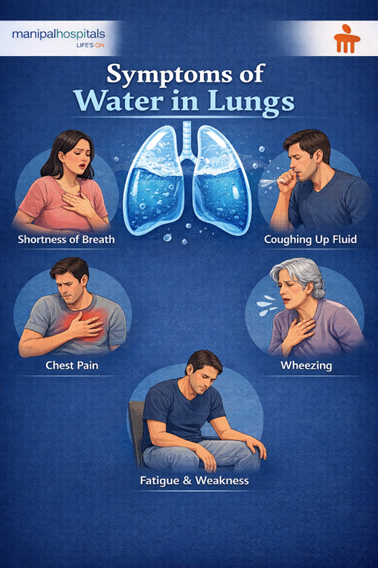
Water in the lungs symptoms can vary depending on how fast the fluid builds up and what causes it. Common signs of water in the lungs include:
-
Breathlessness, especially when lying down
-
Sudden shortness of breath while sleeping
-
Breathing quickly or with effort
-
Breathing that sounds like wheezing or bubbling.
-
Coughing up pink or foamy mucus
-
Pain or tightness in the chest
-
Fatigue, anxiety, or agitation
If your oxygen levels drop very low, your lips or fingertips might turn blue. If you suddenly have trouble breathing or your symptoms get worse, go to the hospital immediately.
Causes of Pulmonary Edema
Doctors can provide the best treatment when they know what’s causing the water in your lungs. Pulmonary edema has two main types of causes: heart-related (cardiac) and non-heart-related (non-cardiac).
Cardiac Causes
If the heart can’t pump blood effectively, pressure increases in the lung’s blood vessels. This pressure pushes fluid into the air sacs.
-
Heart attack
-
Problems with valves
-
High blood pressure that can't be controlled
-
Inflammation of the heart muscles
-
Fluid accumulation around the heart (pericardial effusion)
Non-Cardiac Causes
Inflammation or injury causes the blood vessels in the lungs to become leaky, allowing fluid to build up.
-
Severe infections or sepsis
-
Acute respiratory distress syndrome (ARDS)
-
Kidney failure with too much fluid
-
Exposure to high altitudes
-
Inhaling toxic gases or smoke
-
Near-drowning episodes
-
Severe drug reactions
How Do Doctors Find Pulmonary Edema?
Doctors start by taking a detailed medical history and doing a physical exam. They may listen for crackling sounds in your lungs and check your oxygen levels.
Common tests include:
-
A chest X-ray helps detect fluid accumulation patterns in the lungs
-
Blood tests to check for markers of heart disease, kidney disease, and infections
-
ECG and echocardiogram to check how well the heart is working
-
CT scan in some cases
Treatment of Pulmonary Edema
The main goals of treating water in the lungs are to improve oxygen levels, remove extra fluid, and address the underlying cause.
-
Oxygen therapy begins right away.
-
You might need non-invasive or mechanical ventilation.
-
Constant monitoring in an intensive care unit.
Medicines for Pulmonary Edema
In cases related to the heart, the right medicine helps treat water in the lungs:
-
Diuretics: to get rid of extra water.
-
Medications to improve heart-pumping function and lower blood pressure.
-
Antibiotics only if required
How to Safely Reduce Fluid in Lungs: Water Removal Treatment
Doctors must carefully manage how fluid is removed from the lungs. Removing fluid too quickly can cause low blood pressure or put stress on the kidneys. To do this safely, doctors might use:
-
Diuretics are given through an IV.
-
Controlled limiting of fluids.
-
Dialysis for people with kidney failure.
Recovery After Pulmonary Edema
How quickly treatment begins and the cause of the problem both affect recovery time. Once the extra fluid is removed and oxygen levels are stable, many people start to feel better within a few days.
-
Managing underlying heart failure effectively
-
Keeping blood pressure in check.
-
Keeping an eye on how well your kidneys work.
-
Lifestyle changes, like cutting back on salt and fluids.
Prevention of Pulmonary Edema
You can’t always prevent water in the lungs, but you can lower your risk by:
-
Taking care of heart problems the right way.
-
Keeping diabetes and blood pressure under control.
-
Not eating too much salt.
-
Looking for help with breathing problems early.
When to Visit the Emergency Room?
If you see any of the following, get medical help right away:
-
Sudden or very bad shortness of breath
-
Chest pain and trouble breathing
-
Coughing up pink or foamy mucus
-
A lot of worry, confusion, or skin that looks blue
-
Getting quick medical support can save your life.
Conclusion
Water in the lungs is serious, but it can be treated. Recognising the symptoms, understanding the causes, and seeking medical help quickly can make a big difference. For troubled breathing, visit Manipal Hospitals for the best pulmonary edema treatment in Salem. Our experts offer timely and compassionate treatment for pulmonary edema to help patients breathe easier and recover safely.
FAQ's
No. Pulmonary edema occurs when fluid builds up in the lungs because of problems with the heart, kidneys, or lungs. Pneumonia, on the other hand, is an infection. But both can make it hard to breathe and may need to be treated in a hospital.
Yes. Acute pulmonary edema can happen suddenly, especially after a heart problem or too much fluid. You should never ignore sudden shortness of breath, coughing, or tightness in the chest. You should get medical help right away.
How quickly treatment starts and what caused the problem can affect how long it takes to get better. Many patients get better in a few days, but people with heart or kidney problems may need long-term care to keep them from coming back.
If not treated quickly, pulmonary edema can be deadly. Getting the right treatment, oxygen support, and an early diagnosis all lower risks and improve outcomes. This factor makes getting medical care on time very important.
Yes, it can come back if the underlying cause isn't well-controlled. Taking care of heart disease, kidney problems, or high blood pressure and following your doctor's advice can greatly lower the chances of pulmonary edema coming back.
Share this article on: