5 Min Read
A sudden twist, a jarring impact, or even the wear and tear of daily life can lead to a common yet often debilitating knee injury: a meniscus tear. Affecting millions globally, this injury can significantly impact your mobility and quality of life. Expert, compassionate care will help guide you through understanding the condition, exploring effective meniscus tear treatment options, and ensuring a path to recovery.
Synopsis
What is a Meniscus Tear?
Your knee joint is a complex marvel of engineering, and a crucial component within it is the meniscus. There are two C-shaped pieces of cartilage in each knee, located between your thigh bone (femur) and shin bone (tibia). These menisci act as natural shock absorbers, distributing weight evenly across the knee joint and providing stability. They also facilitate smooth movement and lubrication.
A meniscus tear occurs when one of these cartilages is damaged. This damage can range from a minor fraying to a complete tear. Tears are often classified by their pattern (e.g., radial, horizontal, flap, bucket-handle) and location, which influences both the symptoms and the most effective meniscus tear treatment.
Understanding Meniscus Tear Symptoms
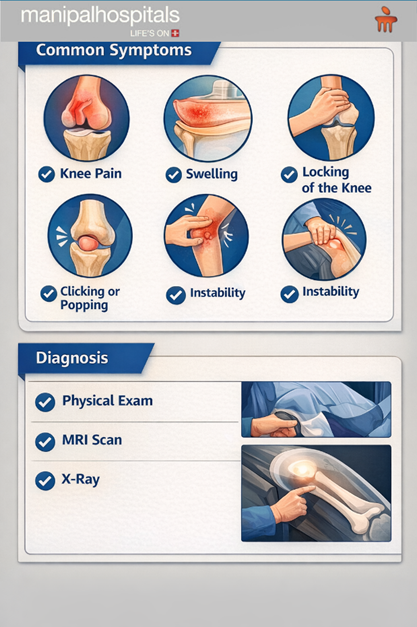
Recognising the signs of a meniscus tear early is crucial for prompt and effective intervention. The specific meniscus tear symptoms can vary depending on the severity and location of the tear, but common indicators include:
-
Pain: Often localised to the side of the knee where the tear has occurred. It can worsen with twisting, squatting, or going up/down the stairs.Swelling: The knee may feel puffy or inflamed, developing gradually over a few hours or days after the injury.
-
Stiffness: Difficulty bending or straightening the knee fully.
-
Popping or Clicking Sensation: You might hear or feel a "pop" at the time of injury or experience clicking, catching, or grinding within the joint during movement.
-
Locking of the Knee: A piece of torn meniscus can get caught in the joint, preventing the knee from fully extending or bending. This is a significant symptom and often indicates a more severe tear.
-
Instability or Giving Way: A feeling that your knee might buckle or give out, especially when bearing weight.
While some minor tears might present with subtle symptoms, a significant meniscus tear can cause acute pain and severely limit your daily activities. Approximately 50-70% of individuals with an acute knee injury involving pain and swelling may have a meniscal tear, highlighting its prevalence. Early diagnosis can prevent further damage and lead to better long-term outcomes for your knee health.
Causes and Risk Factors
Meniscus tears can occur in various ways, often categorized into acute (traumatic) and degenerative tears:
-
Acute Injuries: These are common in sports that involve sudden stops, twists, pivots, or direct impact, such as football, basketball, and skiing. A forceful twist of the knee while the foot is planted is a classic mechanism.
-
Degenerative Tears: As we age, the meniscus naturally weakens and becomes more brittle. Simple movements like squatting or stepping awkwardly can lead to a tear without significant trauma. Degenerative tears are more common in individuals over 40.
-
Other Risk Factors: Obesity, certain occupations involving repetitive squatting or kneeling, and pre-existing knee conditions can also increase the risk of a meniscus tear.
Diagnosing a Meniscus Tear
Accurate diagnosis is the first step toward effective meniscus tear treatment. Orthopaedic specialists often use a multi-pronged approach that involves:
-
Physical Examination: Your doctor will assess your knee for tenderness, swelling, and range of motion. Special tests, such as the McMurray test, are performed to elicit pain or clicking indicative of a tear.
-
Medical History: A detailed account of your symptoms, how the injury occurred, and your activity level helps in diagnosis.
-
Imaging Studies:
-
X-rays: While X-rays don't show the meniscus itself, they can rule out other knee problems like fractures or arthritis.
-
Magnetic Resonance Imaging (MRI): An MRI is the most reliable method for diagnosing a meniscus tear. It provides detailed images of soft tissues, allowing the doctor to visualise the location, type, and severity of the tear with high accuracy.
-
Meniscus Tear Treatment Options
The choice of meniscus tear treatment depends on several factors, including the type, size, and location of the tear; your age; activity level; and overall health. Treatment involves a spectrum of options, from conservative management to advanced surgical solutions. For smaller, stable tears, especially those located in the "red zone" (the outer third of the meniscus with good blood supply), non-surgical approaches can be highly effective. Approximately 70–80% of smaller peripheral tears, particularly in younger, active individuals, show improvement with conservative care. These include R.I.C.E. therapy to reduce swelling and pain, use of over-the-counter pain relievers and anti-inflammatory medications to manage pain, and physical therapy by taking part in a structured rehabilitation programme.
Surgical Interventions: When Are They Necessary?
When conservative meniscus tear treatment fails, or for larger, more complex tears, meniscal tear surgery may be recommended. Modern meniscus tear surgery is typically performed using arthroscopy, a minimally invasive technique. The different types of meniscal tear surgery include:
-
Arthroscopic Meniscus Repair: The surgeon uses small incisions and a tiny camera (arthroscope) to visualise the tear and then stitches the torn edges of the meniscus back together. This option is preferred as it preserves the meniscus, reducing the risk of future arthritis.
-
Arthroscopic Partial Meniscectomy: If the tear is irreparable or in a poorly vascularised area, the damaged part of the meniscus is carefully trimmed away. This procedure aims to remove the symptomatic portion while preserving as much healthy meniscus as possible.
Recovery and Rehabilitation
Post-meniscal tear surgery, a tailored rehabilitation programme is essential. This typically involves physical therapy to regain range of motion, strength, and stability. Recovery times vary, but most patients can expect to return to light activities within a few weeks and more strenuous activities within 3–6 months, depending on the type of surgery and individual progress.
At Manipal Hospital Salem, our orthopaedic department is equipped with state-of-the-art facilities and staffed by highly experienced surgeons specialising in knee arthroscopy and sports injuries. We provide comprehensive care for meniscus tear surgery in Salem, ensuring that patients receive advanced diagnostic services, personalised treatment plans, and dedicated postoperative rehabilitation support. If you are experiencing these symptoms, don’t hesitate to seek timely medical advice from an expert orthopaedic specialist.
FAQ's
Some small tears, particularly those in the outer third of the meniscus (the "red zone" with excellent blood supply), may heal on their own with conservative management, rest, and physical therapy. However, larger tears or those in areas with poor blood supply often require intervention like meniscal tear surgery.
Recovery time varies depending on the type of meniscus tear surgery (repair vs. meniscectomy) and individual factors. Partial meniscectomy generally involves a quicker recovery, often a few weeks to a couple of months for full activity. Meniscus repair recovery can take 3 to 6 months or more, as the tissue needs time to heal properly.
While meniscal tear surgery is generally safe, as with any surgical procedure, there are potential risks, including infection, blood clots, stiffness, nerve damage, or persistent pain. Your surgeon will discuss these risks with you in detail before the procedure.
Return to sports depends on the severity of the tear, the type of meniscus tear treatment, and your individual rehabilitation progress. After a meniscectomy, many athletes can return to sports within 2–3 months. Following a meniscus repair, it's typically 4-6 months, or even longer, to ensure adequate healing and reduce the risk of re-tear. A full return to activity is guided by your surgeon and physical therapist.
Meniscus repair involves stitching the torn pieces of the meniscus back together, aiming to preserve the cartilage. This is usually done for tears with beneficial healing potential. Meniscectomy, on the other hand, involves removing the damaged portion of the meniscus, which is often chosen for tears that cannot heal or are causing persistent mechanical symptoms.
Share this article on: