8 Min Read
Will your baby hit those healthy growth milestones at the right time? Seeing your child grow is one of the best parts of being a parent. Every giggle, rolling over, and achievement feels rewarding and reassuring. Parents often wonder how to increase baby weight and how much the baby's weight should be. Many parents seek medical advice for safe weight gain tips for their babies. This blog offers healthy, evidence-based tips to help your baby gain weight safely. It covers pregnancy, fetal development during pregnancy, birth, and the newborn stage.
Synopsis
- Why Babies Need to Gain Weight
- What Is Normal Weight Gain for a Baby?
- Supporting Healthy Baby Weight Gain During Pregnancy
- Support for Low Fetal Growth
- How to Increase Newborn Baby Weight?
- How to Help Your Baby Gain Weight (0–12 Months)
- Common Mistakes to Avoid When Supporting Baby Weight Gain
- When You Need to See a Doctor About Slow Weight Gain
- Medical Guidance for Healthy Infant Weight Gain
- Conclusion
Why Babies Need to Gain Weight
Weight gain in babies is a positive sign of their overall health and growth. Getting the right amount of weight helps:
-
Supports brain development
-
Strong immune system
-
Supports muscle and organ development
Better results for growth in the long run
However, weight should increase gradually, not rapidly. The aim is healthy growth, not just higher numbers on the scale.
What Is Normal Weight Gain for a Baby?
Each baby grows at their pace. Genetics, diet, and overall health all play a role. Some babies are naturally smaller but still healthy. Doctors use growth charts to track a child's weight, length, and head size over time. Before worrying about your newborn's weight gain, check if it's truly too little or just a normal difference.
|
Age group |
Typical weight gain (average) |
|
Newborn to 6 months |
20–30 g per day in early months (about 150–200 g per week); many babies double their birthweight by 4–6 months. |
|
6–12 months |
Slower than early infancy; gains taper to small daily amounts as growth rate slows. |
|
1–5 years (toddlers, preschool) |
About 2–3 kg per year (roughly 4–7 lb/year). |
|
6–12 years (school age) |
Around 2.5–3.5 kg per year is common. |
|
Adolescence (puberty) |
It can be large: peak weight velocity is often around 6–12.5 kg/year in boys and about 5.5–10.5 kg/year in girls, with an average peak near 8–9 kg/year. |
|
Early to middle adulthood (20s–40s) |
Typical gradual gain of about 0.5–1.0 kg per year on average in many populations. |
|
Older adults (from about 60+) |
Weight may stabilise or slowly fall due to loss of muscle mass (sarcopenia); body composition shifts even if weight is unchanged. |
Supporting Healthy Baby Weight Gain During Pregnancy
Babies begin gaining weight right from the very first day of pregnancy. If you're pregnant and concerned about your baby's growth, here are some safe ways on how to increase baby weight during pregnancy:
Include a Balanced Diet
What a mother eats directly affects her baby's growth. Focus on:
-
Sufficient protein: eggs, legumes, beans, and lean meats.
-
Complex carbohydrates: whole grains, oats, and millets.
-
Healthy fats: nuts, seeds, olive oil, and avocados.
-
Iron and calcium: leafy greens, fortified cereals, fish, and dairy.
-
Essential vitamins: bananas, oranges, and leafy greens.
-
Include smaller and more frequent meals.
-
Maintain adequate hydration
-
Prenatal vitamin supplements as prescribed by the doctor.
-
Limit intake of caffeine and aerated drinks.
-
Effectively manage stress and sleep well.
Regular Check-Ups During Pregnancy
Doctors use ultrasounds and checkups to monitor your baby's growth. If your baby is small, they may recommend changes to your diet or suggest supplements
Take Care of Health Problems
Conditions such as anaemia, high blood pressure, thyroid issues, or gestational diabetes can affect a baby's weight before birth. Getting the right care is key to helping your baby gain weight safely in the womb.
Support for Low Fetal Growth
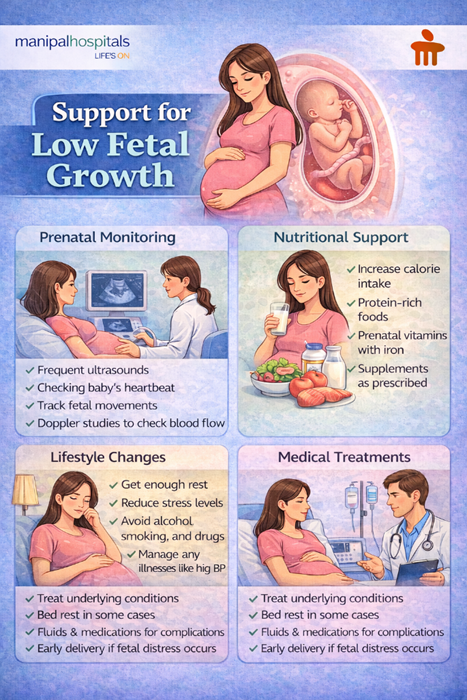
If an ultrasound shows your baby is small, it's natural to worry about helping them gain weight quickly. Some safe and helpful medical advice includes:
-
Small, frequent meals that are high in nutrients.
-
Getting enough protein.
-
Staying hydrated.
-
Getting enough rest and sleep.
-
Customised meal plans for the mother.
-
If needed, add iron, calcium, or protein to your diet.
-
Keeping an eye on the health of the placenta and blood flow.
-
Avoiding overintake of alcohol, tobacco, and caffeine.
-
Managing stress is important, as it can indirectly affect your baby's growth.
Avoid taking supplements or eating high-calorie foods on your own. Always follow your doctor's advice to ensure safe weight gain during this time.
How to Increase Newborn Baby Weight?
After birth, feeding is the most important factor for your baby's weight gain. If you're concerned, doctors usually begin by reviewing your baby's feeding routine.
Supporting Breastfeeding for Healthy Weight Gain
Breast milk is the best food for babies. Be sure to:
-
Correct latch and placement
-
Feeding when needed
-
Enough time to eat
Feeding with formula (when necessary)
If breastfeeding isn't possible or isn't enough, a doctor may suggest formula feeding. The focus is still on getting enough food, not too much.
How to Help Your Baby Gain Weight (0–12 Months)
For babies older than a few weeks, the best way to help them gain weight depends on their age and development.
Adding Complementary Foods
Around six months old, babies start eating solid foods along with milk. Healthy options include:
-
Fruits and vegetables that have been mashed.
-
Cereals and millets that are well-cooked.
-
Soft proteins and lentils.
-
Small amounts of healthy fats, like ghee.
Smaller, more frequent meals often work better than large ones, especially for babies with smaller appetites.
Common Mistakes to Avoid When Supporting Baby Weight Gain
Parents may unintentionally follow practices that do not support healthy growth. These include:
-
Feeding by force.
-
Eating high-sugar or processed foods.
-
Taking too many supplements without a doctor's advice.
-
Comparing other babies’ growth with your baby’s growth.
Focus on balanced nutrition and age-appropriate feeding instead.
When You Need to See a Doctor About Slow Weight Gain
Sometimes, slow weight gain can be a sign of problems like:
-
Problems with feeding.
-
Repeated infections.
-
Problems with digestion.
-
Hormonal or metabolic issues.
If proper nutrition doesn't help your baby gain weight, your doctor may recommend tests. Early evaluation ensures your child gets the right care and gives you peace of mind.
Medical Guidance for Healthy Infant Weight Gain
Medical experts advise parents not to rely on unreliable sources for their young ones and to trust tested sources. Some tried and tested tips for helping babies gain weight often include:
-
Keeping track of growth over time.
-
Putting nutrition ahead of prioritising excess calorie intake
-
Giving mothers emotional and physical support.
-
Plans that are tailored to each person instead of general advice.
It's normal to be worried about your baby's weight, but you should remember that growth isn't a race. Some babies gain weight quickly, while others do so slowly.
The most important thing is that your baby is eating well and growing normally.
Conclusion
Making informed choices, providing balanced nutrition, and seeking timely medical help are key to healthy weight gain for your baby. Whether you're pregnant, caring for a newborn, or raising a baby, focus on safe and lasting growth. If you have concerns about your baby's growth or weight gain, the specialists at Manipal Hospitals Salem can provide personalised advice, support, and care. Baby weight gain tips from doctors in Salem will help your baby achieve a healthy weight and achieve milestones.
FAQ's
If a baby consistently drops percentiles on growth charts, doesn't eat well, seems tired, or shows signs of delayed development, parents should be worried. Check with a pediatrician if your kid’s weight doesn’t increase properly.
Balanced meals that are high in protein, iron, calcium, and healthy fats are what help you gain weight in a healthy way during pregnancy. Regular prenatal checkups, treating conditions in the mother, and staying away from junk food all help the baby gain weight safely.
It is important to make sure that breastfeeding or formula feeding is done correctly, that the baby is fed on demand, and that any latch or feeding problems are fixed. Instead of forcing them to eat or giving them extra supplements, newborns need to eat often and get many nutrients.
Yes. After six months, foods high in nutrients like mashed lentils, cereals, fruits, vegetables, and healthy fats can help a baby gain weight steadily when they are slowly added to their milk feeds.
No, gaining weight quickly is not good for your health and could cause stomach problems. The goal is steady growth that is right for the child's age, with the help of proper nutrition, regular checkups, and advice from doctors who specialise in helping babies gain weight.
Share this article on: