5 Min Read
I remember a patient once saying, “Doctor, I feel like one side of my nose is always blocked, no matter what I do.” This is something many people quietly struggle with every day. What they often don’t realise is that the issue could be a deviated septum, a common yet overlooked condition.
If you frequently deal with nasal blockage, breathing difficulty, or sinus issues, understanding deviated septum symptoms and treatment can make a big difference in your daily life.
Synopsis
- What is a Deviated Septum?
- Deviated Septum Symptoms You Should Not Ignore
- A Simple Deviated Septum Self-Test
- Understanding Nasal Blockage Causes
- What Causes a Deviated Septum?
- How Is It Diagnosed?
- Deviated Septum Treatment: What Are Your Options?
- What is septoplasty?
- Septoplasty Procedure and Recovery
- Benefits of Septoplasty Surgery
- A Note on Expert Care
What is a Deviated Septum?
Inside your nose, there is a thin wall called the septum that separates the two nostrils. Ideally, it should sit right in the center. But in many people, it is slightly off-center, and in some, significantly shifted. This is what we call a deviated septum or DNS.
Interestingly, many people live with it without even knowing. However, when the deviation becomes severe, it can lead to constant nasal blockage, making breathing uncomfortable.
Deviated Septum Symptoms You Should Not Ignore
One thing I’ve noticed is that people often ignore early symptoms, thinking it’s just a cold or allergy. But persistent signs may point towards a deeper issue.
-
Here are the most common deviated septum symptoms:
-
One-sided nasal blockage that doesn’t go away
-
Difficulty breathing through the nose, especially at night
-
Frequent sinus infections
-
Headaches or facial pressure
-
Nosebleeds due to dryness inside the nose
-
Snoring or noisy breathing during sleep
Sometimes, patients even complain of poor sleep or fatigue simply because they are not breathing properly at night.
A Simple Deviated Septum Self-Test
While nothing replaces a doctor’s diagnosis, you can try a quick deviated septum self-test at home.
Close one nostril and breathe through the other. Then switch sides. If you consistently feel one side is more blocked than the other, it could be a sign of deviation.
Of course, this is just a basic check. A proper evaluation by an ENT specialist in Ranchi is always the best step forward.
Understanding Nasal Blockage Causes
A deviated septum is one of the most common nasal blockage causes, but it’s not the only one.
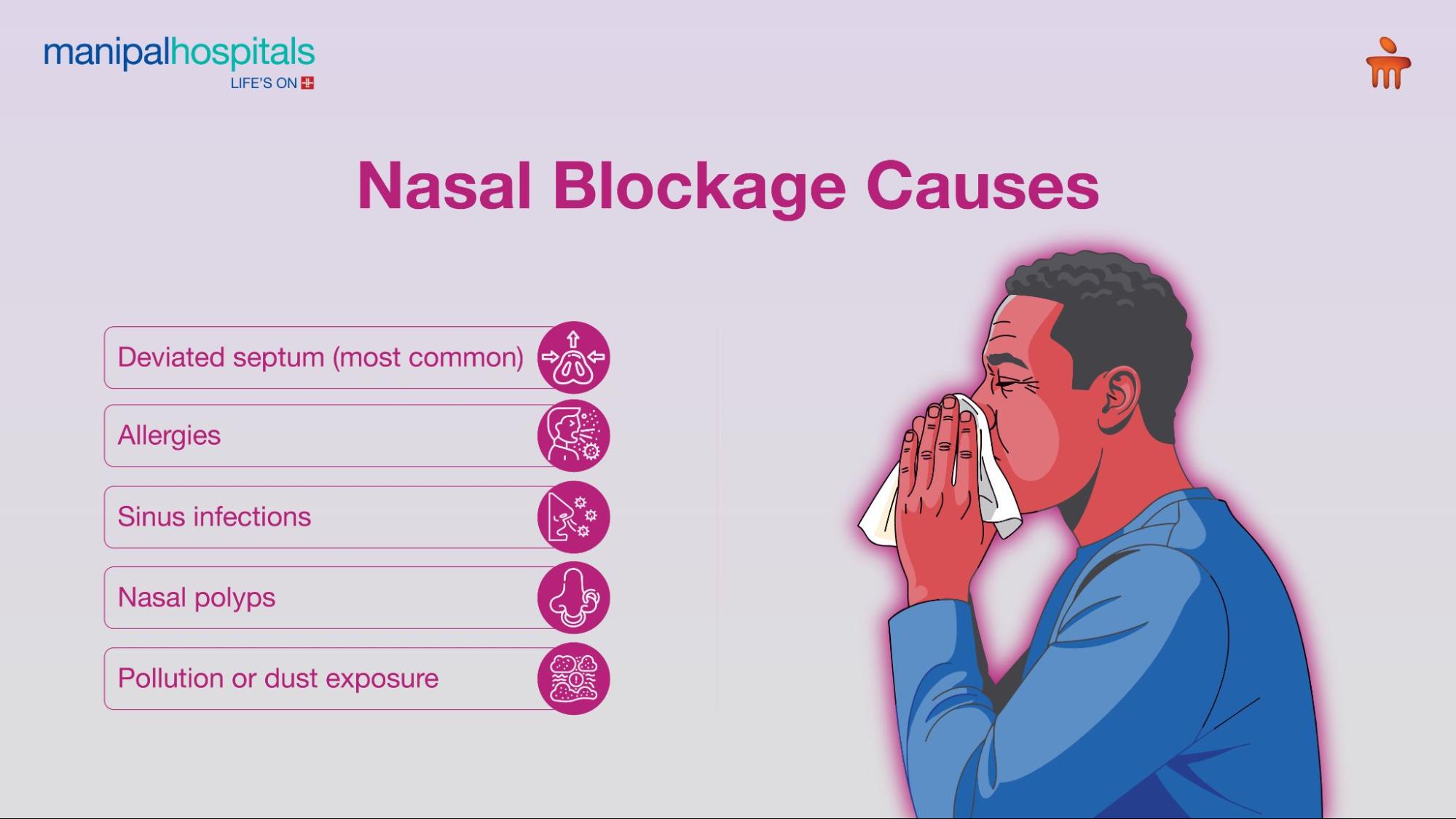
Other causes include:
-
Allergies
-
Sinus infections
-
Nasal polyps
-
Pollution or dust exposure
This is why proper diagnosis matters because the treatment depends on the exact cause.
What Causes a Deviated Septum?
From what I’ve seen in clinical practice, there are a few common reasons behind this condition:
1. Birth-Related Factors
Some people are born with a deviated septum, and it becomes more noticeable as they grow.
2. Injury or Trauma
A fall, accident, or sports injury can shift the septum out of place.
3. Ageing
As we age, the structure of the nose can change, sometimes worsening an existing deviation.
How Is It Diagnosed?
Diagnosis is usually simple and painless. An ENT specialist examines the inside of your nose using a light or a small camera (nasal endoscopy).
In some cases, especially if sinus issues are involved, a CT scan may be suggested for a clearer picture.
Deviated Septum Treatment: What Are Your Options?
The good news is that deviated septum treatment depends on how severe your symptoms are.
Mild Cases: Non-Surgical Treatment
If symptoms are manageable, doctors usually suggest the following:
-
Nasal sprays
-
Antihistamines for allergies
-
Decongestants
-
Steam inhalation or saline rinses
These methods help reduce discomfort but don’t fix the actual deviation.
Severe Cases: Septoplasty Surgery
When symptoms start affecting your daily life, septoplasty surgery becomes the most effective solution.
What is septoplasty?
It is a procedure that straightens the septum, allowing air to flow freely through both nostrils.
My Observation as a Writer
Many patients hesitate when they hear the word “surgery.” But in reality, deviated septum surgery is quite routine and safe when performed by experienced specialists.
Septoplasty Procedure and Recovery
The surgery usually takes about an hour. There are no visible cuts on the outside, which is something patients find reassuring.
After the procedure:
-
You may feel mild discomfort for a few days
-
Nasal packing might be used temporarily
-
Most people return to work within a week
Within a few weeks, breathing becomes noticeably easier—that’s the moment most patients say, “I wish I had done this earlier.”
Benefits of Septoplasty Surgery
From real-life experiences, the improvements are quite significant:
-
Clear and easy breathing
-
Reduced sinus infections
-
Better sleep quality
-
Less snoring
-
Improved overall comfort
You should not ignore your symptoms if:
-
Nasal blockage is constant
-
Breathing affects your sleep
-
You get frequent sinus infections
-
Medications are not helping
Early treatment can prevent long-term complications and improve quality of life.
A Note on Expert Care
At Bhagwan Mahavir Manipal Hospital, Ranchi, patients receive personalised care for ENT conditions like DNS. With experienced specialists and modern technology, the focus is always on accurate diagnosis and effective deviated septum treatment.
Living with a deviated septum can be frustrating, especially when it affects something as basic as breathing. But the good news is it is treatable.
Whether through simple medications or advanced septoplasty surgery, the right approach can bring lasting relief.
If you’ve been ignoring persistent nasal blockage, this might be the right time to take it seriously. Sometimes, a small correction can make a big difference in how you feel every day.
FAQ's
Early signs include one-sided nasal blockage, mild breathing difficulty, and occasional sinus discomfort.
No, it is a routine and safe procedure with a high success rate.
Yes, if symptoms are mild. But severe cases should not be ignored.
Most people recover within a week, with complete healing in a few weeks.
Yes, better airflow often leads to improved sleep and reduced snoring.
Share this article on: