.webp "Thyroid Scan in Pune | Manipal Hospitals")
Thyroid Uptake & Scan in Pune
Manipal Hospitals offers a detailed service for a thyroid scan in Pune, also called a nuclear thyroid scan. The procedure evaluates the size, shape, and function of the thyroid gland. This helps detect thyroid nodules, hyperthyroidism, or thyroiditis. The scan is conducted in a nuclear medicine unit, supporting highly accurate thyroid imaging through expertly administered tracer techniques and specialist interpretation. This enables informed clinical decisions for long-term thyroid health.
Hospital Locations
-
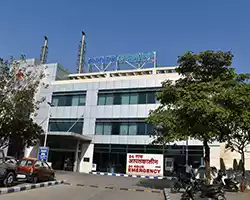
Kharadi - Pune
-
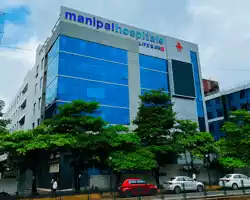
Baner - Pune
-
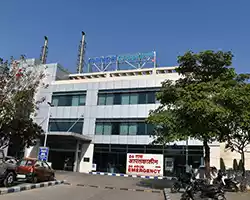
Clinic Dhanori - Pune
How It Works
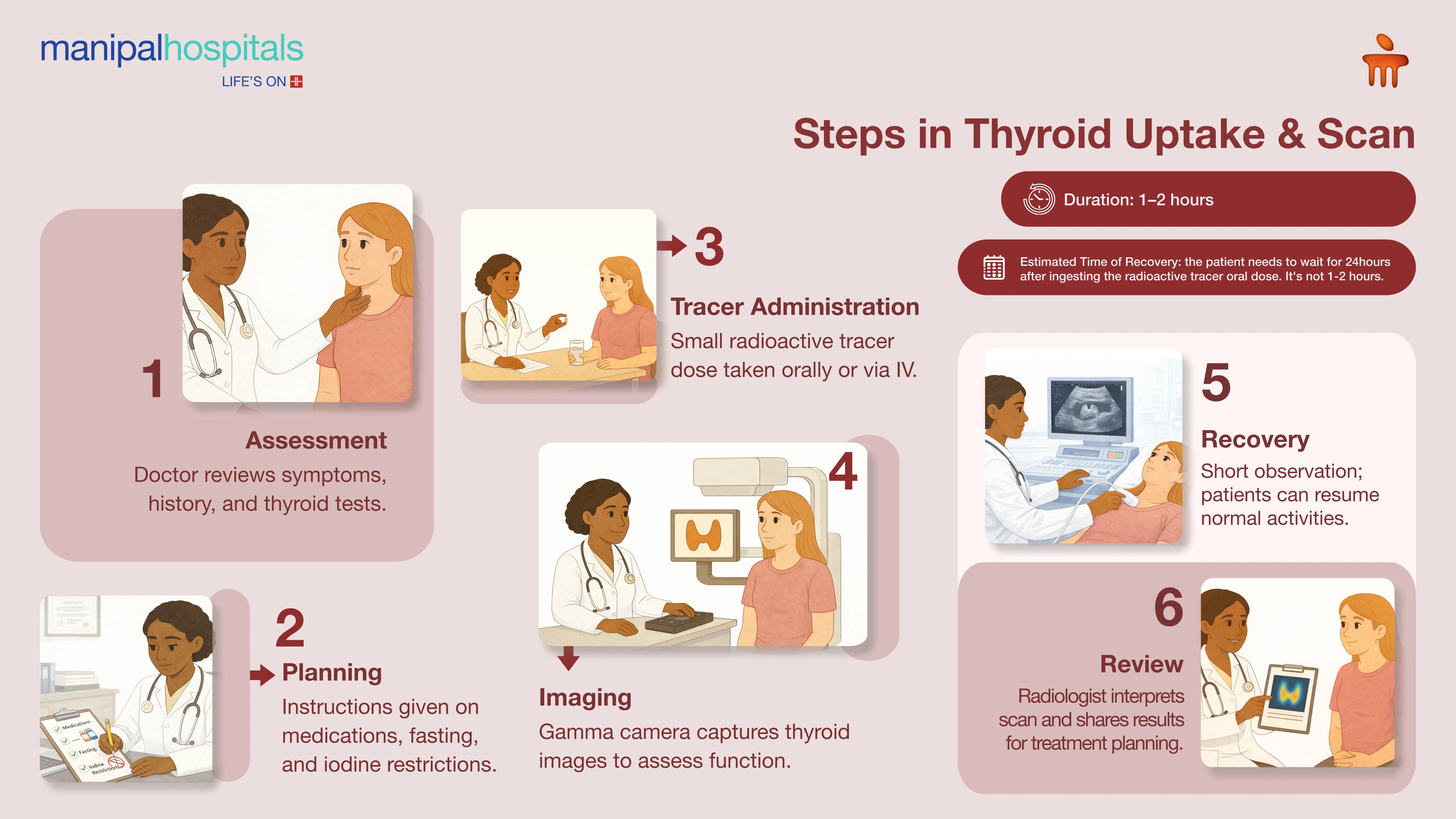
At Manipal Hospitals, the thyroid uptake scan is performed through a carefully structured process designed to evaluate thyroid gland activity with precision. The procedure begins with the patient receiving a small dose of a radioactive tracer, most commonly I-123 or Tc-99m. This tracer is selectively absorbed by the thyroid gland. Following a waiting period to allow adequate tracer uptake, a gamma camera captures detailed images of the thyroid. It highlights areas of high or low activity.
The nuclear thyroid scan Pune may be combined with a radioactive iodine uptake test, which measures how efficiently the thyroid absorbs the tracer over time. Regions identified as “hot” (overactive) or “cold” (underactive) provide critical information about possible nodules, hyperthyroidism, or thyroiditis. Based on these findings, further diagnostic evaluation may be recommended, including thyroid ultrasound, fine-needle aspiration, or biopsy.
The entire process is conducted under the supervision of experienced nuclear medicine specialists, ensuring safety, accuracy, and patient comfort. By providing both functional and anatomical insights, the thyroid scan supports informed clinical decisions. It also guides treatment planning and contributes to long-term thyroid health management.
Didn’t find what you were looking for?
Request a CallbackBenefits
Key benefits of a nuclear thyroid scan:
-
Provides both structural and functional thyroid assessment in a single test.
-
Detects active and inactive gland areas, guiding targeted treatment.
-
Complements ultrasound to clarify “hot” vs “cold” nodules for precise diagnosis.
-
Minimally invasive nuclear thyroid scan performed under expert supervision.
-
Supports personalised care planning for thyroid disorders, including nodules, goitre or hyperthyroidism.
What to Expect
Pre-Procedure Review
The nuclear medicine specialist evaluates the patient’s medical history, prior thyroid tests, and current symptoms to ensure the procedure is appropriate.
Tracer Dose
A small amount of radioactive tracer is administered, either as a capsule or injection, which the thyroid absorbs for imaging purposes.
Waiting Interval
The patient rests while the tracer circulates and is taken up by the thyroid. This interval ensures accurate functional imaging, after which the patient returns for the scan.
Imaging Session
The patient lies still with the neck gently extended. A gamma camera then captures images over 15–30 minutes, showing areas of high and low thyroid activity.
Results & Discussion
The imaging report is prepared and shared with the endocrinologist, who interprets the findings and advises on the next steps.
Follow-Up Plan
Depending on the scan results, additional tests such as ultrasound, thyroid uptake studies, or specialist consultations may be recommended to guide treatment.
Why Manipal Hospitals?
Manipal Hospitals is widely recognised for offering thyroid scans with high standards of care. The hospital combines extensive clinical expertise and advanced imaging infrastructure to ensure consistently accurate results. The hospital’s nuclear medicine unit features dedicated gamma cameras, expert radiologists, and seamless collaboration with endocrinology and surgery teams. Adhering to the latest safety protocols and tracer techniques, the facility ensures the nuclear thyroid scan is performed with precision and comfort. It also maintains minimal radiation risk for patients. With a strong legacy of quality, continual investment in technology, and multidisciplinary coordination, Manipal Hospitals offers a dependable and patient-focused environment. This ensures effective diagnosis and management of thyroid disorders.
Centre of Excellence
The Nuclear Medicine Department at Manipal Hospitals, Pune, conducts thyroid imaging and a range of related functional tests using safe radionuclide tracers. Experienced specialists in nuclear medicine, radiology, and endocrinology collaborate closely to ensure accurate interpretation and effective patient preparation. They also manage seamless procedure execution and integrated follow-up care for optimal thyroid health outcomes.
Services Offered
Manipal Hospitals offers the following services:
-
Functional thyroid scan with radionuclide tracer for structure and uptake assessment.
-
Radioactive iodine uptake test to measure thyroid absorption dynamics.
-
Combined thyroid uptake scan and imaging for nodules, goitre, or hyperthyroid evaluation.
-
Liaison with endocrinology and surgery for follow-through diagnostics and interventions.
-
Interpretation of tracer distribution and coordinated reporting.
Facilities & Services
Manipal Hospitals, Pune, offers comprehensive thyroid scan services with advanced infrastructure and patient-focused care:
-
Dedicated nuclear medicine suite with gamma camera room, tracer preparation facility, and comfortable waiting lounge.
-
Patient safety is ensured through radiation monitoring and specialised staff.
-
Seamless integration with endocrinology enables efficient scheduling, accurate reporting, and coordinated specialist assessment.
Frequently Asked Questions
Yes. You may need to stop certain medications and carefully follow dietary advice (for example, a low-iodine diet) ahead of the scan. This improves accuracy and ensure reliable, precise results.
The overall process can span several hours or days (typically involves tracer administration followed by imaging after a waiting period). The imaging itself typically lasts 15–30 minutes, though prep and waiting extend the total time.
Yes. The radiation dose from a nuclear thyroid scan is very low and generally comparable to or even less than many standard imaging tests. Risks are minimal when performed correctly.
Cold nodules absorb less tracer and may require further evaluation via ultrasound, biopsy, or endocrinologist review. They often carry a higher chance of requiring additional medical investigation and careful specialist monitoring.
A thyroid scan in Pune evaluates function and uptake of the gland using a tracer, unlike an ultrasound, which shows size and structure only. The scan adds functional information for nodules and hyperthyroid conditions.
Consult our Experts

You’re on Our Indian Website
Visit the Global site for International patient services
'Click' to chat with us