.webp "Behavioral Therapy in Pune | Manipal Hospitals")
Behavioral Therapy in Pune
Manipal Hospitals offers structured behavioural therapy sessions in Pune for individuals experiencing anxiety, phobias, mood disturbances, habit-related concerns, or behavioural challenges. The therapy is delivered by trained clinical psychologists in close collaboration with psychiatrists, ensuring a coordinated and holistic approach to mental well-being. Each session blends assessment, guided discussion, and action-oriented exercises designed to identify problematic behaviour patterns, modify maladaptive responses, and build healthier habits. Patients also have access to complementary services such as cognitive behavioural therapy in Pune when clinically appropriate.
Hospital Locations
-

Kharadi - Pune
-

Baner - Pune
-

Clinic Dhanori - Pune
How It Works
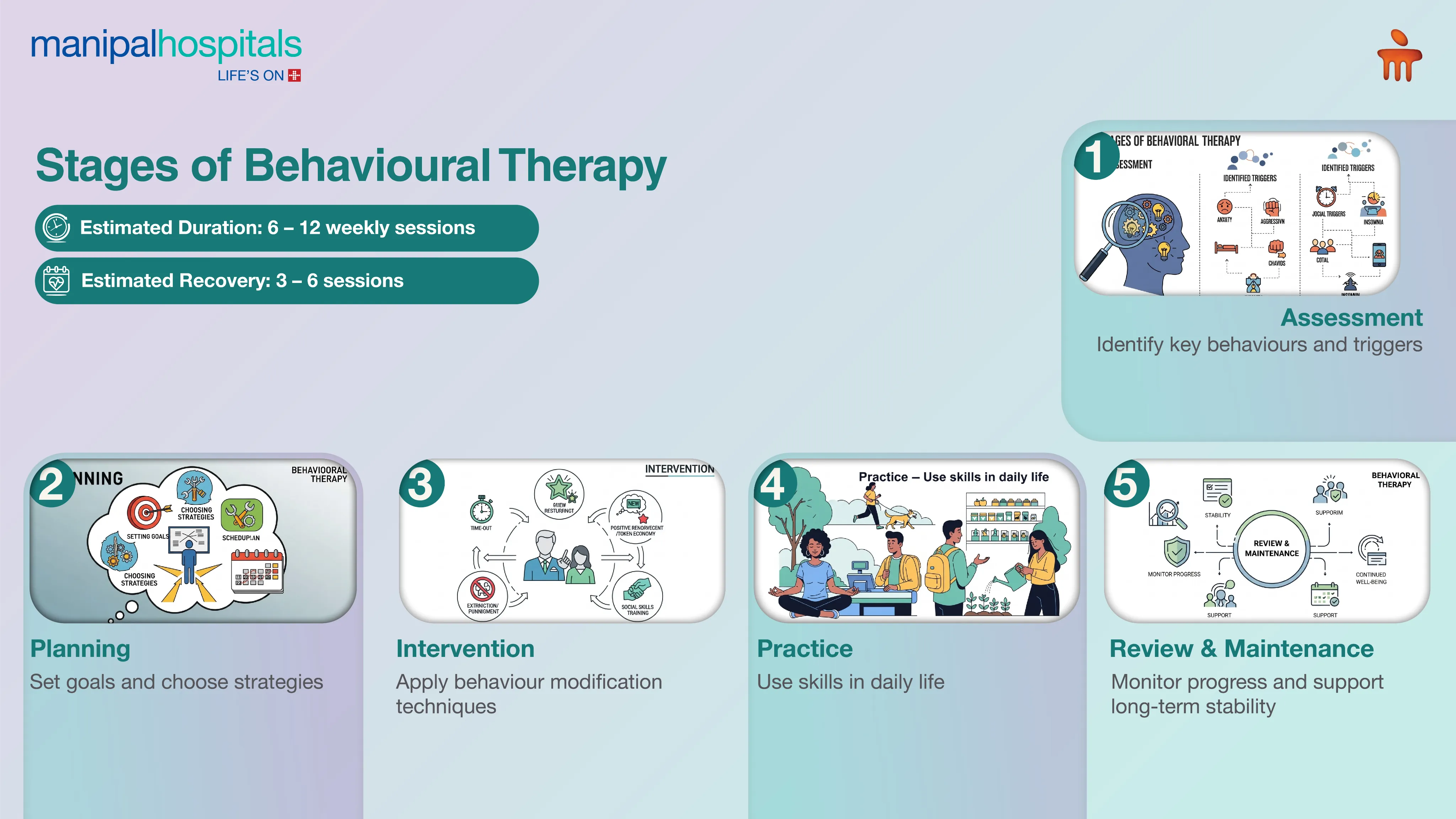
Manipal Hospitals follows a structured behavioural therapy model that moves through assessment, planning, intervention, practice, and review phases to reshape behavioural responses and promote long-term emotional stability. These methods are especially beneficial for individuals seeking counselling for anxiety in Pune, as they help address both behavioural patterns and emotional triggers.
The behavioural therapy process begins with a detailed assessment in which the therapist evaluates the client’s behavioural triggers, emotional responses, daily routines, and reinforcing patterns. Standardised questionnaires, behavioural observations, and interviews help identify root causes and establish a therapeutic baseline. Once concerns are clarified, the therapist and client collaboratively set clear, measurable goals.
During the intervention phase, sessions focus on behaviour modification techniques such as exposure-based activities, reinforcement strategies, habit reversal methods, and pattern interruption. patients learn to recognise cues, reduce avoidance, and replace unhelpful behaviours with adaptive alternatives.
Between sessions, patients enter the practice phase, applying newly learned techniques in real-life situations. Behaviour logs, habit-tracking tools, and reflection sheets help reinforce learning and strengthen behavioural consistency. Progress is regularly assessed in the review phase, enabling therapists to refine strategies, address challenges, and prepare patients for independent skill use. Long-term planning focuses on relapse prevention, maintenance routines, and sustainable emotional well-being.
Didn’t find what you were looking for?
Request a CallbackBenefits
Manipal Hospitals, Pune, provides specialised behavioural therapy sessions guided by experienced psychologists and supported by integrated mental-health care.
-
Equips individuals with practical tools to modify unhelpful habits and behavioural patterns
-
Addresses anxiety, phobias, mood-related disturbances, stress, and habit-based concerns through structured behavioural strategies
-
Encourages active participation, measurable goals, and consistent progress tracking
-
Delivered by a coordinated team of psychologists and psychiatrists, ensuring comprehensive mental-health support
What to Expect
Consultation and Diagnosis
The process begins with a detailed consultation where a clinical psychologist explores emotional triggers, habits, thought–behaviour connections, stressors, and overall functioning.
Pre-Therapy Preparation
Before formal sessions begin, the therapist explains the behavioural therapy model, expected outcomes, duration, and the importance of active practice outside sessions.
Therapy Sessions
Each behavioural therapy session lasts 45–60 minutes and is scheduled weekly or bi-weekly. Sessions include reviewing previous tasks, identifying reinforcement cycles, practising behavioural strategies, and planning new exercises.
Progress Monitoring
After each session, clients reflect on behavioural shifts and track improvements. Therapists adjust techniques and goals to maintain steady progress.
Outpatient Care
Behavioural therapy is conducted on an outpatient basis, with regular appointments helping maintain consistency and therapeutic momentum.
Skill Strengthening
Patients reinforce new habits through exposure tasks, self-monitoring tools, habit-reversal techniques, and structured practice exercises.
Follow-Up Appointments
Periodic reviews assess behavioural changes and introduce new strategies as needed.
Long-Term Recovery
Once goals are met, maintenance sessions and occasional check-ins help ensure lasting behavioural stability and prevent relapse.
Why Manipal Hospitals?
Manipal Hospitals, Pune, is known for offering high-quality behavioural therapy delivered through a dedicated mental-health team, a structured treatment pathway, and modern therapy facilities. Clinical psychologists, psychiatrists, counsellors, and allied therapists collaborate to provide personalised, goal-focused care aimed at improving behavioural functioning and emotional balance, alongside specialised psychotherapy in Pune when required.
Therapy rooms ensure privacy and comfort, supported by digital tools that track behavioural progress, monitor outcomes, and adapt treatment plans. The hospital emphasises holistic well-being by integrating psychoeducation, lifestyle counselling, and long-term follow-up support. The approach focuses on building resilience, measurable improvement, and a supportive therapeutic relationship throughout care.
Centre of Excellence
The Psychology and Behavioural Health Department at Manipal Hospitals, Pune, specialises in diagnosing and treating a wide range of mental-health concerns using structured behavioural therapy. A multidisciplinary team of clinical psychologists, therapists, and psychiatrists collaborates to deliver personalised, goal-focused care that supports emotional well-being, behavioural improvement, and long-term mental resilience.
Services Offered
Manipal Hospitals, Pune, provides comprehensive behavioural-health services that support emotional and behavioural well-being.
-
Individual behavioural therapy sessions for anxiety, phobias, mood issues, and habit-related concerns
-
Group behavioural programmes for social skills, resilience, and stress management
-
Tele-therapy options for flexible access
-
Assessment and counselling for behavioural challenges, mood disturbances, and emotional concerns
-
Follow-up care and relapse-prevention planning to maintain long-term improvement
Facilities & Services
Manipal Hospitals, Pune, offers a secure and supportive therapy environment enhanced by digital tracking tools and integrated psychiatric care.
-
Private, sound-controlled therapy cabins
-
Digital tools for behavioural monitoring and progress tracking
-
Seamless coordination with psychiatry for combined psychological and medical support
-
A calm, supportive setting designed to promote emotional safety and therapeutic stability
Frequently Asked Questions
Behavioural therapy can help individuals manage anxiety, phobias, OCD traits, stress, mood disturbances, and habit-related concerns by identifying behavioural triggers, reshaping unhelpful responses, and reinforcing healthier patterns. It promotes practical, long-term coping strategies under professional guidance.
Most individuals benefit from 8–20 behavioural therapy sessions, depending on the complexity of their concerns, progress rate, and consistency with practice. Regular participation, between-session exercises, and therapist feedback significantly enhance the effectiveness and overall outcomes of treatment.
Yes. Behavioural therapy is highly suitable for children and adolescents, using age-appropriate strategies to address anxiety, habits, emotional difficulties, and behavioural issues. Interactive methods, parental involvement, and structured guidance help young clients build healthy coping skills and resilience.
Yes. Manipal Hospitals offers secure tele-therapy sessions for clients who require remote access or flexible scheduling. Online behavioural therapy provides the same structured guidance, progress monitoring, and therapist support, ensuring continuity of care from the comfort of home.
Behavioural therapy can sometimes reduce the need for medication by improving emotional and behavioural responses. However, a combined approach—such as integrating behavioural techniques with cognitive behavioural therapy in Pune—may be recommended. Psychologists and psychiatrists jointly decide the most suitable treatment plan.
Consult our Experts



You’re on Our Indian Website
Visit the Global site for International patient services
'Click' to chat with us
