




 5 Min Read
Bloating after meals is something almost everyone experiences at some point. That tight, stretched, uncomfortable feeling can turn a good meal into a distraction. Many people describe it as their stomach feeling “puffy” or “full of air,” especially after even a normal-sized meal. While it’s usually harmless, frequent bloating can disrupt your day, drain your energy, and make you feel uneasy in your own body.
At Manipal Hospital Kharadi, Pune, many patients walk in with the same concern: “Why do I feel bloated after every meal?” The reassuring part is that with small changes in your daily habits, you can manage bloating effectively—sometimes even within minutes.
Synopsis
Why Do You Feel Bloated After Eating?
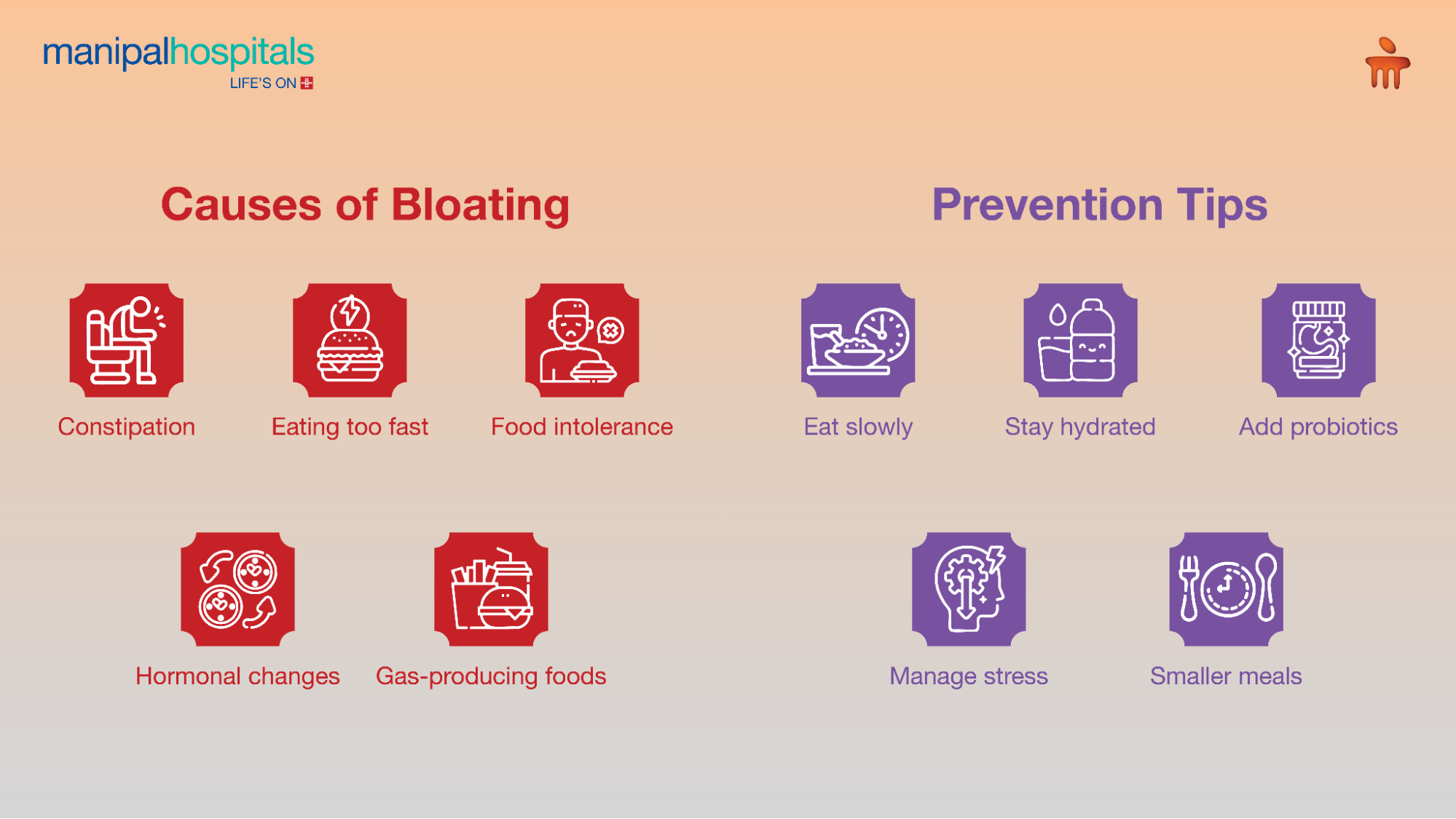
Bloating doesn’t happen without a reason. Here are the most common causes:
-
Eating Too Quickly - When you eat fast, you swallow more air than usual. This air stays in your stomach and intestines, leading to gas and bloating.
-
Foods That Create Gas - Some foods are well known for this—beans, broccoli, cabbage, onions, and fizzy drinks. They produce gas during digestion, making your stomach feel swollen.
-
Food Intolerance - Lactose, gluten, and even artificial sweeteners can trigger bloating in people who are sensitive to them.
-
Large Meals - Eating one heavy meal instead of smaller ones can overload your digestive system and cause discomfort.
-
Digestive Conditions - IBS, constipation, acidity, and other digestive issues can lead to constant or severe bloating.
-
Hormonal Changes - Women may experience bloating before or during their periods due to fluid retention and hormonal shifts.
A Real-Life Experience That Many Can Relate To
A 32-year-old IT professional recently shared her struggle with us at Manipal Hospital Kharadi. Every afternoon after lunch, she felt extremely bloated so much so that she had to loosen her clothes while sitting at her desk. She often felt embarrassed and avoided social gatherings after work.
After a quick consultation, we realised she was skipping breakfast, eating her lunch in less than 10 minutes, and was drinking two large bottles of cola daily. She also had mild lactose intolerance. Once she slowed down her meals, switched to warm water, reduced carbonated drinks, and adjusted her diet slightly, her bloating reduced within a week. She later told us, “I didn’t know such small habits could change how I feel every day.”
Her journey shows how simple adjustments can make a big difference.
How to Get Rid of Bloating Fast
If you’re trying to find quick bloating relief, these simple steps can help:
-
Sip Warm Water - Warm water soothes the digestive tract and helps trapped gas move out naturally.
-
Walk for 10–15 Minutes - A short walk is one of the fastest ways to reduce bloating. It boosts digestion and reduces gas build-up.
-
Try Herbal Teas - Ginger, peppermint, and chamomile teas work wonders for bloating and stomach discomfort.
-
Gently Massage Your Stomach - A slow, clockwise massage can help release pressure and ease stomach swelling.
-
Avoid Straws and Fizzy Drinks - Both introduce extra air into your digestive system, worsening bloating.
Long-Term Ways to Reduce or Prevent Bloating
-
Eat Slowly - Chew your food steadily. It reduces air intake and makes digestion smoother.
-
Identify Trigger Foods - Everyone’s system is different. Pay attention to foods that regularly cause discomfort.
-
Drink More Water - Proper hydration helps prevent constipation, one of the biggest causes of bloating.
-
Add Probiotics - Curd, yogurt, and probiotic supplements help maintain a healthy balance of gut bacteria.
-
Reduce Stress Levels -Stress affects digestion more than most people realise. Simple breathing exercises can help.
-
Avoid Overeating - Smaller, well-spaced meals are gentler on your stomach.
When Should You Be Concerned About Bloating?
If bloating happens once in a while, it’s usually nothing serious. But consider seeing a doctor if you notice:
-
Persistent or severe bloating
-
Sudden swelling with pain
-
Vomiting or severe acidity
-
Blood in stools
-
Unintentional weight loss
-
Bloating that does not improve even with home remedies
Getting the right diagnosis helps you know exactly what needs to change.
Conclusion
Bloating after meals can be frustrating, especially when it interrupts your routine or leaves you feeling uncomfortable for the rest of the day. The good news is that small daily changes like eating slowly, choosing the right foods, staying hydrated, and managing stress can make a big difference. And if your bloating keeps coming back or becomes severe, getting the right medical guidance can help you understand what your body truly needs. With a little awareness and timely support, you can enjoy your meals again without the heaviness, tightness, or worry that bloating brings.
FAQ's
Warm water, herbal tea, walking, and avoiding gas-triggering foods can help quickly.
Common causes include eating fast, gas-producing foods, intolerances, and digestive issues.
Eat slowly, stay hydrated, and avoid overeating.
Bananas, ginger, curd, peppermint tea, and warm water can help calm the stomach.
If you have constant bloating, severe discomfort, or sudden unexplained symptoms.
Share this article on:


.webp "Nerve Pain: Causes, Symptoms, and Treatment Options")





