
Laparoscopic Cholecystectomy
Laparoscopic gallbladder removal in Mysore at Manipal Hospital Mysore treats symptomatic gallstones, acute cholecystitis, and biliary colic through four small incisions using high-definition laparoscopes. The gold standard for gallbladder disease, minimally invasive cholecystectomy in Mysore reduces postoperative pain, shortens hospital stay to 24 hours, and minimises scarring compared to open surgery. A critical view of safety technique prevents bile duct injury, ensuring safety across elective and emergency presentations.
How It Works
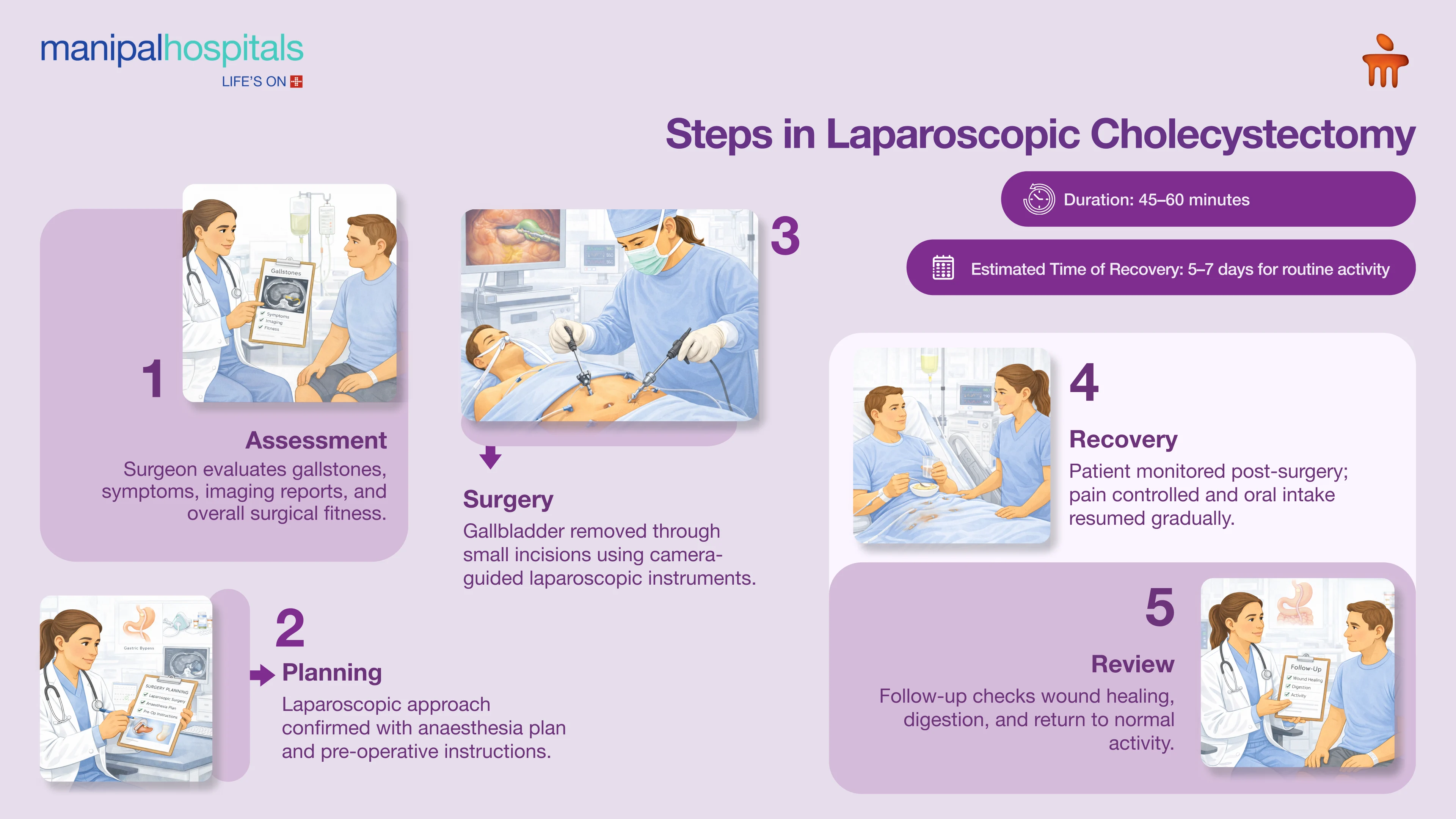
At Manipal Hospital Mysore, laparoscopic gallbladder removal in Mysore is performed under general anaesthesia, so the patient is fully asleep and comfortable throughout the procedure. The surgeon gently inflates the abdomen with gas to create enough space to work safely. Small keyhole cuts are then made, allowing a camera and fine surgical instruments to be inserted.
Using the camera for clear visibility, the surgeon carefully identifies the gallbladder and the small ducts and blood vessels connected to it. Once these structures are clearly seen and confirmed to be safe, they are securely closed and divided. The gallbladder is then separated from the liver with controlled precision, taking care to minimise bleeding and avoid damage to surrounding tissues.
In some cases, additional imaging is used during surgery to check the bile ducts for stones. If the gallbladder is severely inflamed, the surgeon adapts the technique to ensure safety. After removal, the gallbladder is taken out through a small incision, the area is checked thoroughly, and the incisions are closed. Most procedures are completed within one to one and a half hours, allowing for faster recovery and minimal scarring.
Didn’t find what you were looking for?
Request a CallbackBenefits
Laparoscopic gallbladder removal in Mysore accelerates recovery through minimally invasive techniques at Manipal Hospital.
-
Day surgery discharge 80% uncomplicated cases.
-
Postoperative pain reduced 70% versus open surgery.
-
Cosmetic advantage four small incisions only.
-
Early return to normal diet and activities.
What to Expect
Pre-Operative Preparation
Before surgery, patients are asked to fast for about six hours. Routine blood tests and an ultrasound scan are reviewed, and the surgeon explains the procedure, including possible risks, so patients feel informed and reassured.
Surgery Day
On the day of surgery, general anaesthesia is given, meaning you will be asleep and pain-free. The surgeon makes a few small cuts on the abdomen to insert a camera and instruments. The operation typically takes between 45 and 90 minutes. In some cases, imaging is done during surgery to check the bile ducts for stones.
Immediate Recovery
After surgery, patients are observed in the recovery area for a couple of hours. Pain is usually mild and managed with medications. Fluids are started first, followed by light food as tolerated. Most patients are able to walk the same day.
Discharge & Follow-up
If recovery is smooth, discharge is often planned the next day. A follow-up visit is scheduled to review healing. Normal eating can usually resume immediately, with gradual return to daily activities.
Why Manipal Hospitals?
At Manipal Hospital Mysore, laparoscopic gallbladder surgery is performed by highly experienced surgeons who focus on safety, precision, and faster recovery. The hospital handles a large number of gallbladder surgeries every year, which plays a key role in maintaining consistent outcomes. Advanced visual systems allow surgeons to clearly identify delicate bile ducts, reducing the risk of complications.
Patients benefit from structured recovery pathways that support early mobilisation, minimal pain, and shorter hospital stays. Emergency gallbladder surgeries are also handled round the clock, ensuring care is available when it is needed most. From consultation to follow-up, the emphasis remains on clear communication, comfort, and dependable surgical care.
Key advantages
-
High-definition laparoscopic visual systems
-
Techniques that reduce bile duct injury risk
-
Day surgery options for suitable patients
-
Emergency laparoscopic care available at all times
Centre of Excellence
The Minimal Access Surgery Centre at Manipal Hospital Mysore is dedicated to keyhole surgical techniques that minimise pain and recovery time. By combining advanced equipment with skilled surgical teams, the centre delivers safe gallbladder removal procedures with outcomes that meet global safety standards.
Services Offered
Services include planned and emergency laparoscopic gallbladder removal, bile duct imaging during surgery, removal of bile duct stones, single-incision gallbladder surgery, and robotic-assisted procedures. These options allow surgeons to tailor treatment based on disease severity and patient needs.
Facilities & Services
The hospital is equipped with modern laparoscopic operating theatres, advanced imaging systems, specialised energy devices, and dedicated day surgery units. Emergency theatres remain operational at all hours, ensuring patients receive timely and safe minimally invasive gallbladder surgery whenever required.
Frequently Asked Questions
Surgery is recommended when gallstones cause pain, repeated attacks, infection, inflammation, or complications such as gallbladder polyps or porcelain gallbladder.
It ensures the surgeon clearly identifies the correct duct and artery before cutting, which significantly lowers the risk of bile duct injury.
Both are safe when performed by experienced surgeons. Laparoscopic surgery has slightly higher theoretical risk, but high-volume centres achieve excellent safety outcomes.
Most people return to desk work within a few days. Driving is usually possible after a week, while heavy lifting and strenuous activity may need four to six weeks.
A small number of patients may experience digestive discomfort due to bile flow changes, retained stones, or unrelated stomach conditions, which are usually manageable with treatment.
Consult our Experts



You’re on Our Indian Website
Visit the Global site for International patient services