6 Min Read
In many cases, coughs or mild respiratory infections like sore throats settle with time, rest, or basic treatment. But when a cough lingers for weeks, worsens despite medication, or is accompanied by fever, fatigue, or foul-smelling sputum, it may signal something far more serious. One such condition that often hides behind a persistent cough is a lung abscess.
In this blog, an experienced pulmonologist in Mysore explains about lung abscess causes and why a persistent cough deserves timely medical attention. He also explores the connection between a persistent cough and lung abscess and addresses why it is not advisable to ignore lung abscess. With practical advice for lung abscess diagnosis in Mysore, he lists out appropriate investigations, prompt medical attention, structured lung abscess treatment, and follow-up care for avoiding serious complications of lung abscess, such as chronic lung injury and systemic infection.
Synopsis
- Why Is Lung Abscess Considered a Serious Lung Infection?
- Lung Abscess Symptoms
- The Link Between Persistent Cough and Lung Abscess
- Causes and Types of Lung Abscess
- Why Lung Abscess Should Never Be Ignored?
- How is a Lung Abscess Diagnosed?
- Lung Abscess Treatment
- Recovery and Life After Treatment
- Conclusion
Why Is Lung Abscess Considered a Serious Lung Infection?
A lung abscess is not just another lung infection; it is a severe form of infection where a pocket of pus forms within the lung tissue. Unlike routine respiratory infections, a lung abscess involves the destruction of lung tissue due to prolonged infection. When bacteria enter the lungs and are not cleared effectively, the body responds by forming a cavity filled with pus. This cavity can interfere with breathing, spread infection, and lead to complications if left untreated.
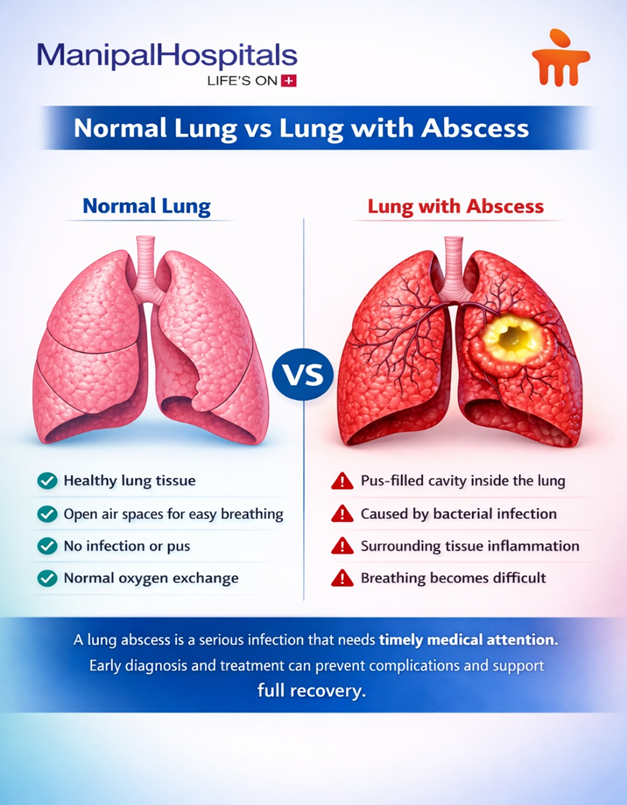
What makes a lung abscess particularly concerning is that it often develops gradually. Lung abscess symptoms may appear mild initially, leading many patients to delay evaluation. Over time, however, the infection deepens, increasing the risk of complications of lung abscess, such as bleeding, spread of infection, or long-term lung damage.
Lung Abscess Symptoms
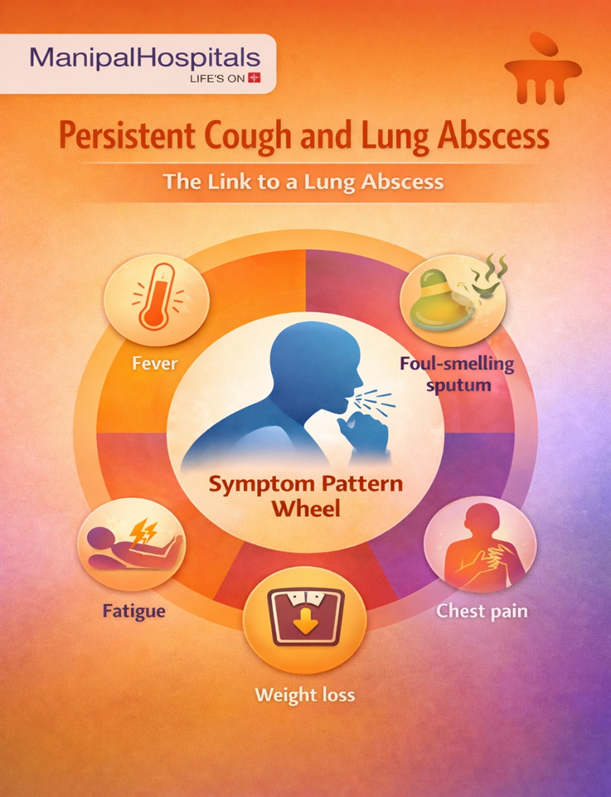
The symptoms of lung abscess tend to develop gradually, which is why early signs are often missed. Instead of appearing all at once, they form a pattern that becomes clearer over time. Common lung abscess symptoms include:
-
Persistent cough with thick or foul-smelling sputum
-
Fever that may come and go
-
Chest pain, especially while breathing deeply
-
Fatigue and general weakness
-
Breathlessness in advanced cases
When these symptoms appear together, especially in someone with risk factors, there is a high possibility of a lung abscess.
The Link Between Persistent Cough and Lung Abscess
A persistent cough is not always a warning sign of a lung abscess on its own. What matters is the pattern surrounding it. Doctors look beyond duration and focus on associated features that suggest an ongoing, unresolved infection. Common cough-related clues include:
-
A cough lasting more than two to three weeks
-
Thick, purulent, or foul-smelling sputum
-
A cough that does not improve despite antibiotics
-
Episodes of coughing up large amounts of sputum
These symptoms often reflect the presence of bacteria trapped within a cavity, where short courses of medication are ineffective. Over time, this unresolved infection can evolve into a lung abscess.
Causes and Types of Lung Abscess
Some common lung abscess causes include:
-
Bacterial infections
-
Inadequately treated pneumonia or severe lung infections
-
Airway obstruction due to internal factors, such as tumours or enlarged lymph nodes or external factors, such as accidentally inhaled or ingested foreign bodies
-
Weakened immune system
-
Infections that have spread from elsewhere (example – gum infections)
-
Chronic lung diseases like COPD, bronchiectasis
Usually, lung abscesses are caused by themselves, determining the types of lung abscess. Understanding the types of lung abscesses helps explain why treatment approaches differ and why some cases are more severe than others.
|
Type of Lung Abscess |
Causes |
Clinical Importance |
|
Primary lung abscess |
Aspiration of bacteria from the mouth or throat |
Most common type; linked to poor oral hygiene or altered consciousness |
|
Secondary lung abscess |
Develops due to obstruction, lung disease, or spread from another infection |
Often more complex and requires detailed evaluation |
Why Lung Abscess Should Never Be Ignored?
What sets lung abscess apart from simpler infections is its potential to worsen silently. Without proper treatment, the infection can extend beyond the lungs or permanently damage lung tissue.
Potential complications of lung abscess include:
-
Rupture of the abscess into the airway
-
Spread of infection to the bloodstream
-
Chronic lung scarring
-
Recurrent lung infections
-
Prolonged hospitalisation
How is a Lung Abscess Diagnosed?
A suspected lung abscess is never diagnosed based on symptoms alone. Instead, doctors rely on a combination of clinical evaluation and investigations. The standard protocol for lung abscess diagnosis in Mysore may include:
-
Detailed medical history and symptom assessment
-
Chest X-ray to identify cavities
-
CT scan for precise localisation and size
-
Blood tests to assess infection severity
-
Sputum examination when required
Lung Abscess Treatment
Lung abscess treatment differs significantly from routine pneumonia care. Because antibiotics must penetrate the abscess cavity, treatment often requires a longer duration and close monitoring. Key aspects of lung abscess treatment include:
-
Prolonged antibiotic therapy, often for several weeks
-
Regular monitoring through imaging and blood tests
-
Supportive care, including nutrition and rest
-
Drainage procedures, in most cases, are minimally invasive (usually small pigtails). In drainage procedures, care should be taken to ensure that pus is drained to its last drop and the abscess cavity heals completely. Stopping treatment early can result in relapse, making adherence a vital part of recovery.
-
Surgery is only performed in rare, non-responsive cases
Recovery and Life After Treatment
Recovery from a lung abscess is usually gradual. Patients often notice improvement in fever and cough first, followed by a gradual return of energy levels. Follow-up imaging ensures the infection has resolved completely.
Conclusion
A lung abscess is a serious lung infection, not because it is common, but because it is often missed until it becomes severe. It is highly recommended to consult an experienced pulmonologist at Manipal Hospital Mysore if you or a loved one has a cough that refuses to settle, especially when accompanied by fever, fatigue, or unusual sputum.
FAQ's
No. A lung abscess requires medical treatment, usually with prolonged antibiotics. Without treatment, the infection may worsen or cause complications.
Treatment typically lasts several weeks, depending on severity and response. Regular follow-up is essential.
Lung abscess itself is not contagious, though the bacteria causing it may spread in certain infections.
Recurrence is uncommon if treatment is completed fully and underlying risk factors are addressed.
No. Most persistent coughs have simpler causes, but certain symptom patterns prompt evaluation for lung abscess.
Share this article on:


.webp "Discomfort While Eating: Causes, Symptoms & Dysphagia Treatment")