7 Min Read
Do your joints feel stiff in the morning or after sitting for a while? Small changes in movement, joint stiffness, or discomfort can be the first hint of a long-term joint condition. Noticing early symptoms of arthritis helps you act before damage becomes significant. This blog explains what to watch for, how signs vary by joint, what stage 1 early arthritis in hands looks like, the common early symptoms of arthritis in knees, and the steps you can take now. Read on so you know what to do and where to get appropriate arthritis treatment in Mysore if needed.
Synopsis
- What Is Early Arthritis?
- Common Early Signs of Arthritis
- Early Signs by Joint
- Practical Self-Checks You Can Do
- How Early Arthritis Is Diagnosed
- Non-Surgical Management for Early Arthritis
- When Medication or Injection is Appropriate
- Surgical Options for Advanced or Refractory Cases
- How to Prepare for A Clinical Visit
- Living Well with Early Arthritis
- When to Seek Urgent Care
- Conclusion
What Is Early Arthritis?
Arthritis describes inflammation and wear in a joint. Early arthritis is that stage of the disease where the effect on the joints is still subtle without any obvious damage and symptoms are still bearable. Lifestyle changes, seeking targeted tests, and starting effective treatment at this stage can help slow the progression and prevent damage to the joints. Understanding what the early signs of arthritis are gives you a clear path to timely care and better long-term function.
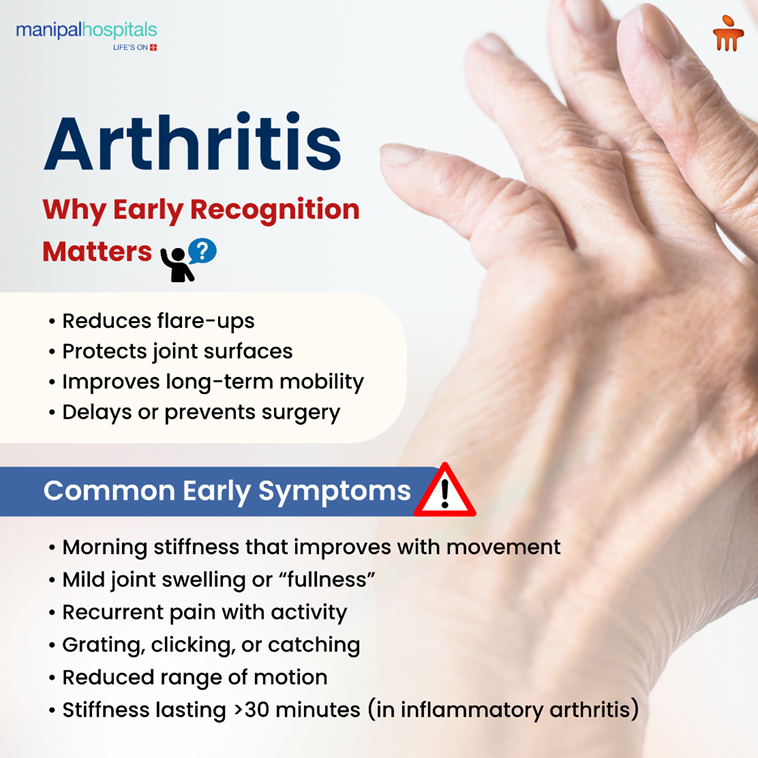
Common Early Signs of Arthritis
The following are the most common early symptoms of arthritis to watch for:
-
Joint stiffness that eases after movement.
-
Brief swelling or a feeling of fullness in the joint.
-
A grating or catching sensation with certain movements.
-
Mild but recurring pain with activity.
-
Reduced range of motion compared to the other side.
-
Morning stiffness lasting more than 30 minutes in inflammatory forms.
These signs can come and go at first. Because the symptoms are often mild, it is easy to dismiss them. That is why awareness matters.
Early Signs by Joint
Listed below are the typical early signs of arthritis in the most commonly affected joints. Use this as a quick reference to compare your symptoms.
|
Joint |
Typical Early Signs |
|
Hands |
Stiffness when gripping, difficulty opening jars, tender finger joints |
|
Knees |
Pain with stairs, swelling after activity, and difficulty fully straightening the leg |
|
Hips |
Stiffness when standing after sitting, discomfort that radiates to the groin or thigh |
|
Spine |
Localised back stiffness, reduced bending or twisting, intermittent nerve symptoms |
|
Shoulders |
Difficulty lifting the arm, aching with overhead activities, and catching sensation |
Practical Self-Checks You Can Do
You can perform simple checks at home to note changes:
-
Test morning stiffness timing. If it lasts more than 30 minutes, note that detail.
-
Compare joint movement with the opposite side. Asymmetry is significant.
-
Track pain related to specific activities like stairs or opening jars.
-
Check for morning grip weakness or difficulty with buttons.
Record findings and bring them to your appointment. Small details help the clinician decide next steps.
How Early Arthritis Is Diagnosed
Diagnosis begins with history and focused examination. The clinician will ask about symptom pattern, timing, and activities that worsen or improve the pain.
Typical diagnostic steps include:
-
Clinical examination of joint swelling, range of motion, and strength.
-
Simple X-rays to look for joint space narrowing or bone changes.
-
Ultrasound for soft tissue inflammation.
-
Blood tests are performed when inflammatory arthritis is a possibility.
-
MRI is used in selected cases when early structural change is suspected but not visible on X-ray.
Early diagnosis often relies on clinical skill. Tests support decisions, but the earliest window for intervention often occurs before dramatic imaging changes appear.
Non-Surgical Management for Early Arthritis
Many interventions reduce symptoms and slow progression when started early:
-
Physiotherapy to strengthen surrounding muscles and improve joint mechanics.
-
Targeted exercises to preserve the range of motion and function.
-
Weight management to reduce joint load, particularly for knees and hips.
-
Topical or oral anti-inflammatory medications for symptomatic relief.
-
Short-term use of splints or braces to support affected joints.
-
Joint protection techniques in daily tasks.
Early, consistent application of non-surgical measures often delays or prevents the need for invasive procedures.
When Medication or Injection is Appropriate
If symptoms persist despite conservative measures, medical options are available:
-
Nonsteroidal anti-inflammatory drugs for short-term symptom control.
-
Intra-articular injections, such as corticosteroid injections, are used to calm a flare.
-
Viscosupplementation in selected knee cases to improve joint lubrication.
-
Disease-modifying agents for inflammatory arthritis are used when diagnosed.
Your clinician will match therapy to your diagnosis, symptom severity, and overall health goals.
Surgical Options for Advanced or Refractory Cases
Surgery is rarely necessary in the earliest stages. When degeneration or persistent pain affects function despite optimal conservative care, options include:
-
Arthroscopic procedures to address mechanical symptoms in selected cases.
-
Realignment osteotomy in early uni-compartmental knee disease for appropriate candidates.
-
Joint replacement is considered when severe pain and loss of function persist.
Because early recognition often reduces the need for surgery, timely care remains the best strategy.
How to Prepare for A Clinical Visit
Gathering a few items before your appointment speeds diagnosis:
-
A symptom diary noting when pain occurs and what eases it.
-
Photos or notes of visible swelling or deformity, if present.
-
List of current medicines and any past joint injuries.
-
Questions you want to discuss, for example, about arthritis treatment in Mysore.
A well-prepared visit focuses time on diagnosis and the most effective next steps.
Living Well with Early Arthritis
Daily habits make a practical difference:
-
Keep active with low-impact exercise such as walking, swimming, or cycling.
-
Build strength through guided resistance work.
-
Use adaptive tools when required to reduce joint strain.
-
Balance rest and activity during flare-ups; avoid prolonged immobilisation.
-
Maintain a healthy weight to reduce knee stress.
Small, consistent changes combine to protect joints and improve comfort.
When to Seek Urgent Care
Seek prompt clinical advice if you notice:
-
Rapidly increasing swelling or severe pain unrelieved by simple measures.
-
New loss of motion or sudden inability to bear weight.
-
Signs of infection, such as fever with joint warmth and severe pain.
Timely review prevents complications and ensures infection or other urgent causes are not missed.
Conclusion
Knowing early symptoms of arthritis empowers you to act before the condition worsens. Consult our expert orthopaedic and rheumatology teams at Manipal Hospital Mysore for specialized diagnosis and a range of treatments. Early care preserves function and improves daily life.
FAQ's
The earliest signals include morning stiffness, mild joint swelling, pain with specific activities, and reduced range of motion. Note timing, triggers, and whether symptoms improve with movement.
Stage 1 is marked by intermittent stiffness and mild discomfort with preserved daily function. Structural damage is minimal, so interventions often slow progression effectively.
Stage 1 is marked by intermittent stiffness and mild discomfort with preserved daily function. Structural damage is minimal, so interventions often slow progression effectively.
Early knee signs include pain on stairs, swelling after activity, feelings of instability, and creaking or locking. Weight loss and strengthening exercises help reduce symptoms.
Appropriate, low-impact exercise guided by a therapist improves strength and joint mechanics. High-impact activities without guidance can aggravate symptoms, so follow a tailored plan.
Manipal Hospital Mysore provides comprehensive services, including specialist assessment, imaging, physiotherapy, injection procedures, and surgical care when needed. Book a consultation for a personalised plan.
Share this article on:


.webp "Discomfort While Eating: Causes, Symptoms & Dysphagia Treatment")