7 Min Read
Have you wondered why doctors ask you to monitor your cholesterol during regular check-ups, even if you feel healthy? Your body needs cholesterol to make hormones and build cells. But when cholesterol levels go above the normal range, they can quietly raise the risk of heart disease, stroke, and blocked arteries. Many people believe that only older adults have cholesterol problems. In reality, cholesterol can rise at any age due to lifestyle, diet, genetics, or health issues. Now, the question arises: how to reduce cholesterol levels. Understanding normal cholesterol levels for your age and gender, recognising cholesterol symptoms, and knowing how to lower cholesterol can help protect your heart. In this blog, you will learn about cholesterol in simple terms, explain healthy target numbers, and offer practical tips to manage your cholesterol.
Synopsis
- What is Cholesterol?
- Types of Cholesterol
- Cholesterol Normal Value for Adults
- Cholesterol Normal Value by Age
- Difference in Cholesterol Levels Between Men and Women
- High Cholesterol Symptoms: Why It’s Called a Silent Condition
- Causes of High Cholesterol Levels?
- How to Control Cholesterol Naturally
- Treating Cholesterol Medically
- When Should You Seek Medical Attention?
- Conclusion
What is Cholesterol?
Cholesterol is a waxy, fat-like substance that your body needs to perform vital functions. It helps build strong cell membranes. It is used by the body to produce hormones that regulate metabolism and other functions.
Cholesterol also helps the body produce vitamin D and forms bile acids, which aid digestion. However, too much cholesterol can build up on your artery walls, forming plaque. This buildup, called atherosclerosis, narrows blood vessels and restricts blood flow. Over time, this can increase the risk of heart attack, stroke, and other problems. This is why doctors monitor your cholesterol levels to safeguard your heart and blood vessels.
Types of Cholesterol
Lipoproteins are particles that move cholesterol through your blood. The main types are:
1. LDL Cholesterol (Bad Cholesterol): Low-density lipoprotein (LDL) carries cholesterol to your body’s tissues. If you have too much LDL, plaque can build up in your arteries.
2. HDL Cholesterol (Good Cholesterol): High-density lipoprotein (HDL) drains away extra cholesterol from your blood and brings it back to your liver, where it is broken down. A higher level of HDL is good for the heart.
3. Triglycerides: Triglycerides are another type of fat in your blood. They store extra calories that aren’t used. Having high triglycerides can also make you more likely to get heart disease.
Cholesterol Normal Value for Adults
Doctors usually check your cholesterol with a lipid profile test. This test measures your total cholesterol, LDL, HDL, and triglycerides. The following are the recommended cholesterol levels:
|
Cholesterol Component |
Healthy Range |
|
Total Cholesterol |
Less than 200 mg/dL |
|
LDL (Bad Cholesterol) |
Less than 100 mg/dL |
|
HDL (Good Cholesterol) |
Above 40 mg/dL (men), above 50 mg/dL (women) |
| Triglycerides |
Less than 150 mg/dL |
Keeping these numbers in the healthy range lowers your risk of heart disease.
Cholesterol Normal Value by Age
Cholesterol levels can vary slightly at different stages of life. As people grow older, metabolism, hormonal changes, and lifestyle habits can influence cholesterol levels. The table below provides general guidance on typical total cholesterol ranges across different age groups.
|
Age Group |
Total Cholesterol Normal Value |
|
Children (2–19 years) |
Less than 170 mg/dL |
|
Adults (20–39 years) |
Less than 200 mg/dL |
|
Adults (40–59 years) |
Less than 200 mg/dL |
|
Adults (60+ years) |
Less than 200 mg/dL |
Normal cholesterol levels for adults remain about the same, but older adults may need to be checked more frequently because their risk of heart disease is higher.
Difference in Cholesterol Levels Between Men and Women
Men and women can have slightly different cholesterol patterns due to hormonal differences. The following highlights the typical cholesterol targets for men and women:
|
Cholesterol Type |
Men | Women |
|
Total Cholesterol |
Less than 200 mg/dL |
Less than 200 mg/dL |
| LDL |
Less than 100 mg/dL |
Less than 100 mg/dL |
| HDL |
Above 40 mg/dL |
Above 50 mg/dL |
Before menopause, women often have higher HDL cholesterol than men because oestrogen helps raise HDL levels. Women are more susceptible to heart disease and high cholesterol after menopause.
High Cholesterol Symptoms: Why It’s Called a Silent Condition
High cholesterol levels often don’t cause obvious symptoms. Many people only discover they have high cholesterol during a routine blood test or after health problems appear.
In severe cases, high cholesterol can cause symptoms such as:
-
Fatigue during exercise
-
Shortness of breath
-
yellowish fatty deposits around the eyes called xanthelasma
Symptoms like chest pain and leg pain may appear when high cholesterol has already caused artery blockage. Regular cholesterol tests are important because symptoms usually do not appear until the condition becomes advanced.
Causes of High Cholesterol Levels?
Many health and lifestyle factors can raise your cholesterol.
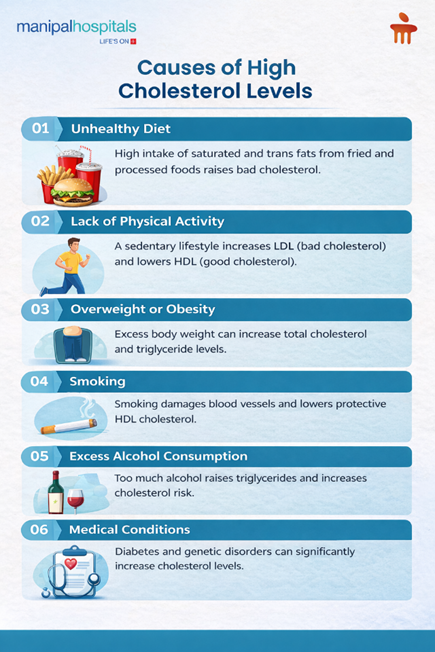
Common Causes
-
A diet high in trans and saturated fats
-
Lack of enough exercise
-
Being overweight or obese
-
Smoking
-
Excess alcohol consumption
-
Genetic disorders like familial hypercholesterolaemia
Understanding these factors is the first step in managing your cholesterol levels.
How to Control Cholesterol Naturally
Many patients can lower their cholesterol levels through healthy lifestyle changes.
1. Follow a Heart-Healthy Diet
Foods like whole grains and oats, fresh fruits and vegetables, nuts and seeds, olive oil, salmon, and other fatty fish are known to lower LDL cholesterol levels. To maintain a healthy heart, avoid oily or fried foods, red meat, processed foods, and sugary foods.
2. Exercise Every Day
To boost your HDL (good cholesterol) and lower your LDL (bad cholesterol), include regular exercise like brisk walking, biking, yoga, swimming, or light jogging. Most doctors recommend at least 150 minutes of moderate exercise per week.
3. Maintain a Healthy Weight
Losing just 5–10% of your body weight can make a big difference in your cholesterol levels. Keeping a healthy weight is an important part of controlling your cholesterol.
4. Quit Smoking
Smoking increases oxidative stress, damages blood vessels, and lowers HDL cholesterol. Quitting smoking improves blood flow and helps return cholesterol levels to normal.
5. Limit Alcohol Intake
Drinking too much alcohol can raise triglycerides and lead to weight gain. Drinking in moderation helps maintain healthy cholesterol levels.
Treating Cholesterol Medically
When lifestyle changes alone do not bring cholesterol levels into a healthy range, doctors may recommend medications to help control it. The following explains some commonly prescribed medications used to manage high cholesterol and how they help:
|
Treatment Type |
Purpose |
| Statins |
reduce cholesterol production in the liver |
|
Cholesterol absorption inhibitors |
Reduce cholesterol absorption in the intestine |
|
PCSK9 inhibitors |
Lower LDL in high-risk patients |
| Fibrates |
Lower triglyceride levels |
A person’s age, health conditions, and overall heart risk will affect their treatment plan.
When Should You Seek Medical Attention?
Although high cholesterol usually does not cause noticeable symptoms, medical evaluation is important if you have risk factors for heart disease. You should consult a doctor if:
-
You have a family history of high cholesterol or early heart disease
-
You experience chest pain, shortness of breath, or unexplained fatigue during physical activity
-
Blood tests show elevated cholesterol levels
-
You have conditions such as diabetes, high blood pressure, or obesity
-
Cholesterol levels remain high despite lifestyle changes
Regular check-ups and lipid profile tests help detect high cholesterol early and allow doctors to recommend appropriate treatment to protect heart health.
Conclusion
Cholesterol is important for your body, but keeping it in the normal range is key to heart health. Regular screenings are the best way to catch problems early, since there are no clear cholesterol symptoms. Making small changes to your daily life, such as eating healthy, exercising regularly, maintaining a healthy weight, and not smoking, can have a significant impact on your cholesterol levels. At Manipal Hospitals Millers Road, experienced cardiologists provide advanced cholesterol treatment in Millers Road, Bangalore; thorough screenings; personalised treatment plans; and preventive care to help patients manage cholesterol and protect their heart health.
FAQ's
The normal cholesterol levels for adults are total cholesterol below 200 mg/dL, LDL below 100 mg/dL, and HDL above 40 mg/dL for men and above 50 mg/dL for women.
Most of the time, high cholesterol doesn't show any signs at first. In severe cases, cholesterol symptoms may include chest pain, fatigue during exercise, shortness of breath, or fatty deposits around the eyes.
You can lower your cholesterol by eating foods high in fibre, working out regularly, keeping a healthy weight, quitting smoking, and drinking less alcohol.
Regular health checkups, a heart-healthy diet, regular exercise, stress management, and taking medications prescribed by a doctor when needed are all part of managing cholesterol.
Patients on Millers Road, Bangalore, who need specialised cholesterol treatment can consult cardiologists for lipid profile evaluation, lifestyle advice, medication, and preventive cardiac care.
Share this article on: