


 7 Min Read
A cancer diagnosis is overwhelming on its own. Hearing that it has “spread” can feel even more frightening, often bringing uncertainty about what comes next. Amid such fear, understanding “what is metastasis?" can help replace some of that fear with clarity. Metastasis refers to cancer cells travelling from their original sites to another part of the body, where they begin to grow again. It does not mean that treatment stops or that hope disappears. Often, metastatic cancer can be controlled for years with the right strategy.
This blog explains "What is metastasis?”, how doctors diagnose it, and the modern treatment approaches that are changing outcomes for patients today
Synopsis
What Is Metastasis, and How Does It Happen?
Cancer begins in one organ or tissue. That original location is called the primary site. When cancer cells break away from this primary tumour and travel to distant organs through the bloodstream or lymphatic system, they may form new tumours. That process is known as metastasis.
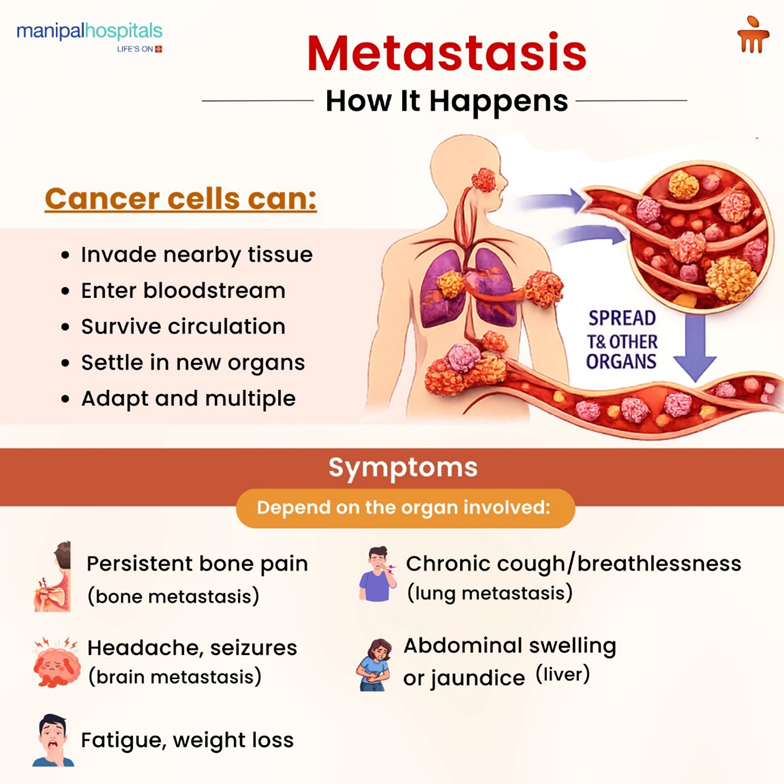
To understand what metastasis is at a biological level, it helps to know that cancer cells behave differently from normal cells. They can:
-
Invade the surrounding healthy tissue
-
Enter blood vessels or lymph channels
-
Survive in circulation
-
Exit into distant tissues
-
Adapt and grow in a new environment
For example, breast cancer that spreads to the liver is still treated as breast cancer, not liver cancer. The new tumour carries the same cellular features as the original one.
Not all cancers spread in the same way. Some grow locally for long periods, while others have a higher tendency to metastasise early. The behaviour depends on tumour type, grade, genetic mutations, and the body’s immune response.
Common Sites Where Cancer Spreads
Certain organs are more likely to be affected when cancer spreads. This pattern often depends on the original cancer type and blood flow pathways.
-
Bone metastasis is commonly seen in breast, prostate, thyroid, and lung cancers.
-
The liver is a frequent site for colorectal and pancreatic cancers.
-
The lungs are often affected in sarcomas, kidney cancer, and melanoma, leading to lung metastasis.
-
The brain can be involved in advanced lung, breast, and melanoma cases.
Each site of spread produces its own set of clinical challenges and requires tailored management.
Recognising Metastasis Symptoms
Symptoms of metastatic disease are not always dramatic at first. In some cases, spread is detected during routine imaging before a person notices anything unusual.
When present, metastasis symptoms depend entirely on the organ involved. Some patterns include:
-
Persistent bone pain, fractures, or elevated calcium levels in bone involvement
-
Shortness of breath or a chronic cough in lung metastasis
-
Abdominal discomfort or jaundice if the liver is affected
-
Headaches, seizures, or confusion when the brain is involved
-
Severe fatigue and unexplained weight loss
Importantly, symptoms from metastatic disease can sometimes appear before the primary cancer is discovered. That is why new, unexplained symptoms, particularly in someone with a history of cancer, should always be evaluated carefully.
Why Does Metastasis Occur?
The development of metastatic disease is influenced by several biological and clinical factors. It is not simply a matter of tumour size. Some key contributors include:
-
Tumour aggressiveness: High-grade cancers divide rapidly and are more likely to invade nearby tissues.
-
Genetic mutations: Certain molecular changes allow cancer cells to detach and survive in new environments.
-
Delayed diagnosis: Advanced-stage cancers at presentation are more likely to have already spread.
-
Incomplete treatment: Inadequate removal or resistance to therapy can allow microscopic cells to persist.
-
Immune system interaction: A weakened immune response may allow circulating cancer cells to escape detection.
Research continues to uncover how tumour cells “prepare” distant organs before settling there, a concept known as the pre-metastatic niche. This evolving understanding has influenced modern treatment development.
How Doctors Diagnose Metastatic Cancer
Confirming metastasis requires more than suspicion. A structured evaluation is essential to guide treatment decisions.
Doctors may use:
-
Contrast-enhanced CT scans
-
MRI for brain or spinal assessment
-
PET-CT to detect active cancer cells throughout the body
-
Bone scans for suspected bone metastasis
-
Image-guided biopsy of a metastatic lesion
A biopsy is particularly important. It confirms that the new tumour is truly metastatic and may reveal additional genetic changes that affect therapy selection.
Diagnostic Tools and What They Offer
|
Test/Investigation |
Best For |
Unique Advantage |
|
PET-CT Scan |
Whole-body evaluation |
Detects metabolically active lesions even before structural changes appear |
|
Liquid Biopsy (circulating tumour DNA) |
Monitoring advanced disease |
Identifies tumour mutations from a blood sample without invasive procedures |
|
Molecular Profiling |
Targeted therapy selection |
Reveals actionable mutations for personalised treatment |
|
Bone Density with Tumour Markers |
Monitoring bone involvement |
Assesses fracture risk alongside disease progression |
|
Brain MRI with Contrast |
Neurological symptoms |
High-resolution imaging of small metastatic deposits |
These tools allow clinicians to move beyond a one-size-fits-all approach and personalise care.
Modern Treatment Approaches
Learning what metastasis is often leads to the next pressing question: Can it be treated? The answer is yes, though the goals may vary between control, symptom relief, and prolonged survival.
Treatment depends on cancer type, location of spread, patient health, and molecular features. Options include:
Systemic Therapies
These treat cancer throughout the body:
-
Chemotherapy
-
Hormonal therapy for hormone-sensitive cancers
-
Targeted therapy directed at specific mutations
-
Immunotherapy that enhances the immune system’s response
Systemic treatment is often the backbone of care in metastatic disease.
Localised Treatments
Even when cancer has spread, treating specific sites can improve comfort and survival.
-
Radiation therapy for painful bone metastasis
-
Surgical removal of isolated metastatic deposits in selected cases
-
Stereotactic radiosurgery for small brain lesions
-
Ablation techniques for limited liver or lung involvement
Palliative and Supportive Care
Managing symptoms is just as important as treating the disease itself. Pain control, fracture prevention, breathing support, nutritional care, and psychological counselling are integral parts of comprehensive treatment.
Advances in oncology mean that many patients with metastatic cancer live meaningful, active lives for years. In some cancers, long-term remission is achievable.
Living With Metastatic Cancer
A diagnosis of metastatic disease changes life in profound ways. It affects work, relationships, emotional well-being, and long-term planning. Open communication with the care team makes a difference.
Patients benefit from:
-
Regular monitoring and reassessment
-
Clear discussions about treatment goals
-
Access to clinical trials when appropriate
-
Strong support networks
Understanding what metastasis is empowers patients to ask informed questions and participate actively in their care decisions.
Conclusion
Metastasis does not signal the end of options. It represents a shift in strategy. With early detection, precise imaging, molecular profiling, and personalised therapies, outcomes continue to improve. Modern oncology focuses not only on extending life but also on preserving dignity, comfort, and independence.
If you or a loved one is diagnosed with this condition, then exploring metastasis treatment options in Malleshwaram at Manipal Hospital Malleshwaram and seeking care from the experienced oncology team is the ideal way to go. Our team can help you understand the full spectrum of therapies available and design a plan tailored to your specific diagnosis.
FAQ's
In most solid tumours, metastatic cancer is considered treatable but not fully curable. However, certain cancers, such as testicular cancer, some lymphomas, and specific hormone-sensitive tumours, may achieve long-term remission with aggressive therapy. Advances in immunotherapy are also changing long-term outcomes for selected patients.
In many solid cancers, distant spread corresponds to stage IV. However, staging systems vary by cancer type. Some haematological cancers use different classification systems. A specialist can clarify staging based on the specific diagnosis.
Follow-up imaging schedules depend on cancer type, treatment response, and clinical stability. Typically, scans are performed every 2-4 months during active treatment, then spaced out if disease control is achieved. The plan is individualised.
While lifestyle changes cannot eliminate metastatic disease, maintaining balanced nutrition, moderate physical activity when possible, adequate sleep, and stress management can support overall health and improve tolerance to treatment. These measures complement, but do not replace, medical therapy.
Clinical trials follow strict ethical and safety regulations. Many provide access to cutting-edge therapies that are not yet widely available. Participation is voluntary, and patients are carefully monitored throughout. Discussing eligibility with an oncologist helps determine suitability.
Share this article on:


