


 8 Min Read
Our joints are the silent workhorses of our body. From getting out of bed in the morning to walking, climbing stairs, exercising, and even typing on a phone, every movement depends on healthy joints. When joints function well, we rarely think about them. But when pain or stiffness sets in, even simple daily tasks can become challenging.
In recent years, joint health problems have increased significantly. A sedentary lifestyle, prolonged sitting, obesity, poor posture, and increasing life expectancy have all contributed to rising cases of knee pain, back pain, hip pain, stiffness, and arthritis. Many people now develop joint issues much earlier than expected.
The good news is that a thoughtful joint care lifestyle through small changes in what you eat, how you move, and how you sleep makes a big difference. This blog explains why joints suffer and what you can do to protect them, and provides clear, evidence-based healthy joint tips along with the best foods for joint health that you can follow every day.
Synopsis
Understanding Joint Health
Our joints are connections between two or more bones. They allow movement and provide flexibility and support. Healthy joints depend on cartilage, synovial fluid, ligaments, muscles, and tendons working together smoothly. Over time, cartilage can wear down, ligaments may stretch, and supporting muscles can become weak. This may be due to ageing, increased body weight, lack of exercise, poor posture, repetitive strain, previous injuries, and inflammatory conditions. Without proper care, cartilage gradually thins, lubrication decreases, and stiffness and pain begin.
-
Strengthening the muscles around a joint reduces the load on the joint itself.
-
Maintaining joint mobility keeps cartilage nourished via the movement of synovial fluid.
In short, you protect joint health by keeping the whole joint system—bones, cartilage, fluid, ligaments, and muscles—strong and mobile.
How to Keep Joints Healthy?
A consistent lifestyle for healthy joints focuses on everyday habits that support mobility, comfort, and long-term movement.
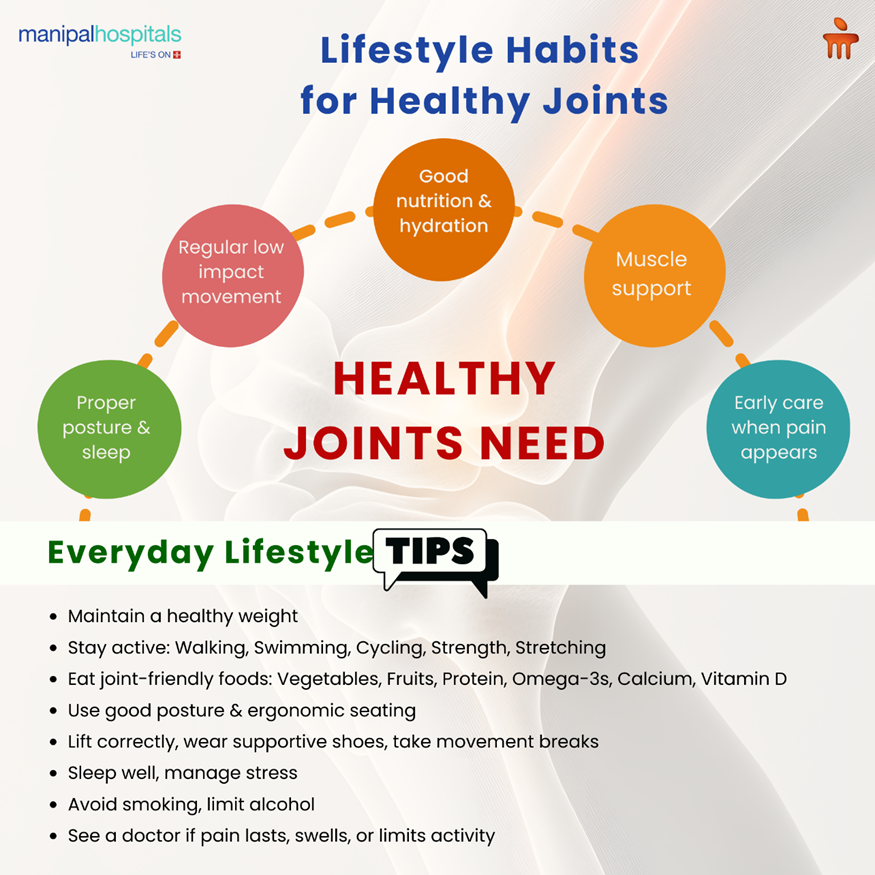
Maintain a Healthy Body Weight
Excess body weight is one of the biggest risk factors for joint problems, especially in the knees, hips, and spine. Every extra 1 kg of extra body weight increases approximately 3 - 4 kg of additional pressure while walking. That constant extra load accelerates wear and contributes to pain.
-
Avoid crash diets. Instead, aim for gradual, sustainable weight loss if you are overweight. Rapid dieting is hard to maintain and may reduce muscle mass. Reduce portion sizes gradually along with exercises for healthy joints to preserve muscle and protect joint health and function.
-
Focus on a balanced diet for strong joints with increased protein intake.
-
Choose whole foods over processed foods.
-
Walk daily for 30–45 minutes.
Losing 5-10% of body weight often leads to noticeable joint pain prevention and reduces the long-term risk of mobility problems.
Stay Physically Active, But Smartly
Movement is medicine for joint lubrication and muscle strength. The right activity builds muscle support, improves balance, and maintains flexibility. But not all exercise is equal: high-impact pounding (sudden, repetitive forces) strains damaged joints, while low-impact movement protects them. Here are practical lifestyle tips for healthy joints:
Best exercises for joint health
-
Low-impact aerobic exercises such as walking, cycling, and swimming improve cardiovascular fitness without harsh joint forces.
-
Strength training helps muscle groups around the knees, hips, and spine (quadriceps, core, hips, and back), so joints bear less load during daily tasks. Aim for progressive resistance twice weekly.
-
Flexibility exercises and yoga reduce stiffness and improve range of motion; include gentle dynamic stretches before activity and static stretches after.
A personalised joint care lifestyle, guided by medical advice and physiotherapy, can significantly improve comfort and movement quality over time.
Exercises to Avoid or Modify
If you already have joint pain, be cautious with high-impact activities.
-
Avoid long-distance running on hard surfaces or repetitive jumping.
-
Heavy weight lifting without supervision is also not recommended.
Focus on technique, warm up thoroughly, and modify movements; for example, swap running for cycling or use an elliptical trainer. Always increase activity gradually and listen to your body. These simple, healthy joint tips practiced daily help preserve movement and slow age-related wear.
Focus on Joint-Friendly Nutrition
What you eat affects inflammation, muscle mass, and bone health, all key to joint longevity.
Essential nutrients for joint health:
-
Calcium and vitamin D maintain bone strength that supports joints. Ensure regular dietary sources and sensible sun exposure for vitamin D, or supplements if recommended.
-
Protein is vital to repair and preserve muscle that protects joints; target appropriate daily intake based on age and activity.
-
Omega-3 fatty acids (found in oily fish, flaxseeds, and walnuts) reduce inflammation and help ease joint pain for some people.
|
Foods to Support Healthy Joints |
Foods to Limit |
|
Vegetables and fruits are rich in antioxidants that help reduce joint stress. |
Highly processed snacks that may increase inflammation |
|
Nuts and seeds provide healthy fats and micronutrients |
Excess sugar can worsen joint discomfort |
|
Whole grains that support digestion and overall mobility |
Deep-fried foods linked to inflammation and weight gain |
|
Adequate hydration to support cartilage function |
Excess salt foods that may contribute to swelling |
|
Legumes and lean proteins for muscle strength around joints |
Refined carbohydrates with little nutritional value |
|
Dairy or fortified alternatives that support bone health |
Frequent consumption of fast food and packaged meals |
Highly processed snacks, excess sugar, deep-fried items, and too much salt can promote inflammation and weight gain. Reducing these helps your joint pain prevention strategy.
Maintain Good Posture & Ergonomics
Learning how to keep joints healthy begins with posture awareness and consistent mobility work. Sustained poor posture increases strain on the spine and weight-bearing joints. At work and home, check your sitting posture: hips and knees at roughly 90 degrees, feet flat, elbows supported, and the top of your screen at eye level. Use an ergonomic chair and adjust the desk height so you avoid leaning forward.
-
For sleeping, choose a mattress that supports your natural spinal curve and a pillow that keeps your neck aligned.
-
Small adjustments, standing up every 30–45 minutes, using lumbar support, and avoiding slumped positions reduce cumulative joint strain.
-
Keep your back straight while sitting, feet flat on the floor, and avoid slouching. Ensure proper workstation setup and use a medium-firm mattress for sleeping.
-
Protect Your Joints During Daily Activities
Manage Stress and Sleep Well
Chronic stress increases inflammation, and hormones released during stress can increase joint pain. Poor sleep impacts the body’s ability to repair and regulate pain. Aim for a minimum of 7-8 hours of quality sleep each day. Practice deep relaxation, mindfulness, meditation, and light stretching to reduce stress and help alleviate joint pain.
Avoid Smoking and Limit Alcohol
Smoking reduces bone density, which, together with improper blood flow, inhibits the healing process. Excess alcohol interferes with calcium absorption and causes inflammation, which, in turn, inhibits the uptake of nutrients. There is little complexity in both quitting the use of tobacco and controlling alcohol for long-term joint health.
Regular Health Check-Ups and Early Care
Consult a doctor if you have persistent joint pain, swelling, prolonged morning stiffness, or reduced range of motion. Early physiotherapy and treatment can prevent progression.
Physiotherapy for joint pain is often a first-line treatment that restores movement and reduces pain without surgery. Avoid self-medication with long-term painkillers without medical advice.
Protect Your Joint Health During Daily Activities
Many joint injuries occur from either lifting or repetitive activity.
-
Use proper lifting techniques. Bend your knees and hips while lifting and avoid twisting.
-
Use your knees, not your waist.
-
Wear supportive footwear. Do not walk barefoot on hard surfaces if you have joint or hip pain.
-
Take breaks during repetitive work.
If a set of tasks involves repetition (gardening, assembly), use alternate activities, equipment designed to reduce strain, and mini-breaks for stretching exercises. These simple daily habits form the foundation of effective, healthy joints tips that protect movement over time.
Lifestyle Tips on Healthy Joints for Different Age Groups
-
Young adults: Build strength and maintain fitness with a balanced joint care lifestyle, regular strength training, and injury-aware sports technique.
-
Middle-aged adults: Focus on weight management and early arthritis signs through low-impact conditioning.
-
Elderly: A personalised diet for strong joints becomes increasingly important with age. Prioritise fall prevention, supervised exercises for healthy joints, and mobility aids to keep independence and reduce joint stress.
Conclusion
Healthy joints require consistent daily habits rather than one-time fixes. Keep your weight in a healthy range, move regularly with low-impact exercises for joints, eat well with a focus on protein and anti-inflammatory foods, protect your posture, manage stress and sleep, and seek early professional care when needed. If joint pain persists or affects your activities, consult specialists who can assess and tailor treatment.
For expert evaluation and personalised care, consult our orthopaedic doctors at Manipal Hospital Malleshwaram, Bangalore, and take the first step toward stronger, pain-free joints.
Take care of your joints today so they can take care of you for life.
FAQ's
Aim for a combination of joint care and lifestyle. This should include at least 150 minutes of moderate activity weekly with 2 strength sessions. Daily short mobility work also helps with stiffness, so even if you engage in physical activities for 10–15 minutes, that can be beneficial.
Yes, yoga improves range of motion and balance, aiding greatly in joint flexibility. Choose gentle classes in the beginning and inform the instructor about any existing joint issues.
Absolutely. Physiotherapy for joint pain reduces pain, improves strength, and teaches strategies to protect joints during daily tasks.
Focus on vegetables, fruits, whole grains, nuts, seeds, legumes, and adequate protein. Include sources of omega-3s and ensure calcium and vitamin D for bone support.
See an orthopaedic doctor if pain lasts more than a few weeks, limits daily activities, causes swelling, or is accompanied by fever or sudden loss of function.
Share this article on:


