


 8 Min Read
Fatty liver disease has quietly become one of the most common metabolic conditions seen in clinical practice today. Often discovered during routine blood tests or an ultrasound scan, it can feel confusing and even alarming, especially when symptoms are minimal or absent. What many people do not realise is that the liver responds powerfully to lifestyle changes, particularly dietary choices. Understanding fatty liver causes is essential, but knowing what to eat and what to strictly limit can make an even greater difference in preventing progression. With the right nutritional structure, early-stage fatty liver can often be controlled and, in many cases, improved significantly.
In this blog, we will explore the underlying fatty liver causes, the scientific basis of a structured fatty liver diet plan, and whether true fatty liver reversal is achievable through consistent lifestyle changes.
Synopsis
What Leads to Fatty Liver?
Before discussing food, it’s important to understand why fat accumulates in the liver in the first place. The liver processes everything you eat and drink. When excess calories, especially from refined carbohydrates and unhealthy fats, overwhelm its metabolic capacity, fat begins to build up within liver cells.
Some common fatty liver causes include:
-
Insulin resistance and prediabetes
-
Obesity, particularly central obesity
-
Sedentary lifestyle
-
Excess alcohol consumption
-
Rapid weight gain
-
Certain medications
Recent studies suggest that non-alcoholic fatty liver disease (NAFLD) is strongly linked with metabolic syndrome. This means fatty liver is not just a liver problem; it also reflects a deeper metabolic imbalance.
Why Diet Matters More Than You Think?
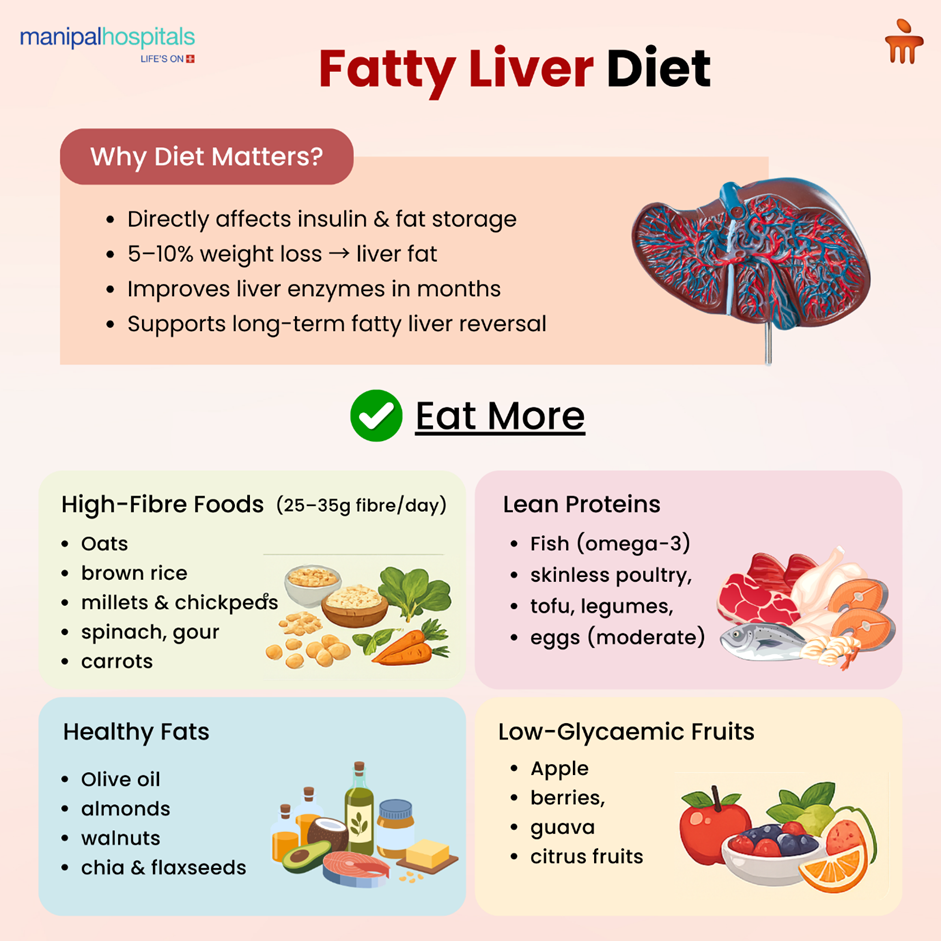
Food is not merely fuel. It directly influences insulin levels, inflammation, lipid metabolism, and liver fat storage. That is why a fatty liver diet is a central part of treatment.
When calorie quality improves, liver fat content can be reduced significantly within months. Studies show that even a 5%–10% reduction in body weight can decrease liver inflammation and improve enzyme levels. The liver has remarkable regenerative capacity, but it needs the right environment, and a leaner body with lesser fat content can effectively help create that ideal environment.
Best Foods for Fatty Liver
Small changes in diet can make a measurable difference to liver health, especially when applied consistently. However, it is crucial to understand that the focus is not on starvation or extreme dieting; it is about creating a metabolic balance.
High-Fibre Whole Foods
Fibre slows glucose absorption and improves insulin sensitivity. It also supports gut microbiota, which indirectly influences liver inflammation. To make your diet fibre-rich, you can include:
-
Oats and barley
-
Brown rice and millets
-
Lentils and chickpeas
-
Vegetables like spinach, okra, carrots, and gourds
Aim for at least 25-35 grams of fibre daily, and spread it across meals throughout the day, rather than consuming it all at once.
Lean Protein Sources
Protein helps reduce fat accumulation by promoting satiety and stabilising blood sugar levels. It also supports muscle mass, which improves metabolic efficiency. You can go for:
-
Skinless poultry
-
Fish rich in omega-3 fatty acids (such as sardines and mackerel)
-
Paneer made from low-fat milk
-
Tofu and legumes
Omega-3 fats, in particular, reduce triglycerides, which are some of the most prominent fatty liver causes.
Healthy Fats
Contrary to common belief, not all fats are harmful. In fact, the type of fat matters more than the quantity when it comes to eating a balanced diet.
Some beneficial sources include:
-
Extra virgin olive oil
-
Nuts such as almonds and walnuts
-
Seeds like flaxseed and chia
These fats help reduce systemic inflammation and support lipid regulation.
Low-Glycaemic Fruits
Fruit is often misunderstood as being rich in harmful sugar. However, it is important to understand that the problem lies not in the whole fruit but in processed fruit juices and excess fructose intake. You can benefit by foregoing such sugar-rich food items and instead opting for whole fruits like:
-
Apples
-
Berries
-
Guava
-
Citrus fruits
Even with such healthy, low-glycaemic fruits, it is important to limit portion sizes and avoid consuming fruit alongside high-carbohydrate meals.
Foods to Avoid
While adding beneficial foods is important, removing damaging ones is equally critical. Certain dietary patterns directly worsen insulin resistance and fat storage. As such, it is ideal to avoid the following foods, as these are consistently linked with the progression of fatty liver disease:
-
Sugary beverages, including packaged juices and soft drinks
-
Refined carbohydrates such as white bread, maida-based snacks, and bakery items
-
Deep-fried foods
-
Processed meats
-
Excess red meat
-
Alcohol in any quantity
-
Packaged snacks high in trans fats
Fructose, especially from sweetened drinks, is particularly harmful because it is metabolised primarily in the liver. Over time, this accelerates fat deposition and inflammation.
Sample Weekly Nutritional Framework
Below is an overview of a balanced nutritional approach. This is not a rigid template but a structural reference that you can further customise as per your preferences and dietary requirements.
|
Meal Timing |
Ideal Components |
Portion Guidance |
Metabolic Benefit |
|
Early Morning |
Warm water and soaked almonds |
5-6 almonds |
Supports lipid metabolism |
|
Breakfast |
Oats with seeds and a boiled egg OR vegetable poha with sprouts |
Moderate bowl |
Stabilises morning glucose |
|
Mid-Morning |
Whole fruit |
1 portion |
Prevents sugar spikes |
|
Lunch |
Brown rice/millet + dal + 2 vegetable servings + curd |
Balanced plate model |
Improves insulin sensitivity |
|
Evening |
Roasted chana or nuts |
Small handful |
Prevents evening cravings |
|
Dinner |
Grilled fish/tofu + sautéed vegetables |
Light portion |
Reduces overnight fat storage |
This structured approach complements a medically guided fatty liver diet plan and helps prevent erratic eating patterns that worsen metabolic imbalance.
Can Fatty Liver Be Reversed?
One of the most common questions patients ask is whether fatty liver reversal is actually possible. The answer depends on the stage.
In early-stage fatty liver, lifestyle changes alone can significantly reduce liver fat and normalise enzyme levels. Once inflammation progresses to steatohepatitis or fibrosis, medical supervision becomes essential, though dietary correction remains foundational.
Sustainable reversal involves:
-
Gradual weight reduction (0.5-1 kg per week)
-
Regular physical activity (150 minutes per week)
-
Tight control of blood sugar
-
Lipid management
-
Complete alcohol abstinence
The earlier the intervention begins, the greater the chance of recovery.
Recognising Symptoms and Seeking Diagnosis
Many individuals experience no symptoms. Others report fatigue, mild abdominal discomfort, or unexplained elevation in liver enzymes during blood tests.
Diagnosis usually involves:
-
Liver function tests
-
Ultrasound imaging
-
FibroScan for stiffness measurement
-
Assessment of metabolic risk factors
If you are considering evaluation or follow-up after a diagnosis, consult a specialist experienced in metabolic liver disease. The best option is to go for a specialised centre that offers structured dietary counselling alongside imaging and laboratory evaluation for comprehensive care.
Long-Term Lifestyle Principles
Diet alone is powerful, but consistency transforms outcomes. Beyond meal planning, patients should focus on:
-
Maintaining waist circumference within healthy limits
-
Sleeping 7-8 hours every night
-
Avoiding crash diets
-
Monitoring triglycerides regularly
-
Reviewing medications that may affect liver health
Remember, fatty liver causes are often interconnected with broader metabolic patterns. Treating the liver means addressing the whole system.
Conclusion
Fatty liver is not merely a laboratory finding; it is a warning signal from your metabolism. The encouraging news is that early stages are often reversible with disciplined, informed changes. By understanding fatty liver causes, adopting a structured fatty liver diet plan, eliminating the foods to avoid in fatty liver, and committing to steady lifestyle adjustments, meaningful fatty liver reversal is achievable for many individuals. Just remember this: supporting your liver’s health intentionally today can prevent unexpected complications tomorrow.
A timely medical consultation is essential if you have already received a diagnosis or are considering evaluation. For those seeking a fatty liver diagnosis in Malleshwaram, Bangalore, Manipal Hospital Malleshwaram expertly integrates clinical assessment with nutritional guidance and metabolic risk management.
FAQ's
Intermittent fasting can improve insulin sensitivity and reduce overall calorie intake, which may lower liver fat in selected individuals. However, it must be structured carefully. Skipping meals and then overeating processed food negates the benefit. Patients with diabetes or those on medication should only attempt fasting under medical supervision to prevent hypoglycaemia.
There is a genetic component influencing susceptibility to fat accumulation and inflammation. Certain gene variants affect lipid metabolism. However, genetics alone do not determine outcomes. Environmental factors such as diet quality, physical activity, and body weight remain decisive contributors.
Milk thistle and antioxidant supplements are often marketed for liver health, but evidence for consistent reversal is limited. Supplements may play a supportive role in selected cases, yet they cannot replace structured dietary correction, weight management, and metabolic control.
Frequency depends on severity and associated conditions. In uncomplicated cases, tests are often repeated every three to six months to monitor enzyme trends. Patients with fibrosis or additional metabolic disorders may require more frequent monitoring.
Advanced fatty liver disease, particularly when fibrosis or cirrhosis develops, can increase the risk of hepatocellular carcinoma. Regular follow-up and imaging are recommended in advanced stages. Early detection and lifestyle intervention significantly reduce long-term complications.
Share this article on:


