




 9 Min Read
Heart conditions are often misunderstood because many symptoms overlap. Two of the most commonly confused conditions are heart failure and heart attack. Although both affect the heart and can become life-threatening, they are not the same. Understanding the difference between heart attack and heart failure can help people recognise symptoms early and seek timely medical care. A heart attack happens suddenly when blood flow to the heart muscle gets blocked. Heart failure, on the other hand, is usually a long-term condition where the heart cannot pump blood effectively. Both conditions need medical attention, but the causes, symptoms, treatment, and outcomes are different. Knowing these differences can help reduce delays in diagnosis and treatment.
Synopsis
- What is a Heart Attack?
- Causes of Heart Attack
- Heart Attack Symptoms
- Silent Heart Attack Symptoms
- What is Heart Failure?
- Acute Heart Failure
- Stages of Heart Failure
- Heart Failure vs Heart Attack: Key Differences
- Symptoms Comparison: Heart Attack vs Heart Failure
- Can a Heart Attack Lead to Heart Failure?
- Diagnosis of Heart Attack and Heart Failure
- Treatment Options
- How to Reduce the Risk of Heart Disease
- When Should You Seek Medical Help?
- Conclusion
What is a Heart Attack?
A heart attack, also called myocardial infarction, occurs when blood flow to a part of the heart is blocked. This blockage is usually caused by fatty deposits called plaques in the coronary arteries. When the plaque ruptures, a blood clot forms and stops blood from reaching the heart muscle. Without oxygen-rich blood, the heart tissue begins to get damaged.
Heart attacks often happen suddenly and require emergency treatment. Some people experience severe chest pain, while others may have mild or unusual symptoms. In certain cases, symptoms may even go unnoticed, leading to what is known as a silent heart attack.
Causes of Heart Attack
Heart attacks usually occur when blood flow to the heart muscle becomes blocked. Several medical and lifestyle factors can increase the risk if developing this condition over time.
-
High blood pressure
Constant high pressure inside the arteries can damage blood vessels and make it easier for fatty deposits to build up. This increases the chances of artery blockage and heart attack.
-
High cholesterol levels
Excess bad cholesterol can form plaques inside the coronary arteries. Over time, these plaques narrow the arteries and reduce blood supply to the heart.
-
Smoking and tobacco use
Smoking damages blood vessels, reduces oxygen levels in the blood, and increases clot formation. Even passive smoking can raise heart disease risk.
-
Diabetes
High blood sugar levels can damage blood vessels and nerves that control the heart. People with uncontrolled diabetes have a significantly higher risk of heart attack.
-
Obesity and excess weight
Being overweight puts extra strain on the heart and is often linked with high cholesterol, diabetes, and high blood pressure.
-
Lack of physical activity
A sedentary lifestyle can weaken heart health and increase the risk of obesity, poor circulation, and blocked arteries.
-
Stress and poor sleep
Long-term stress and inadequate sleep may increase blood pressure and inflammation, both of which contribute to heart disease.
-
Family history of heart disease
People with close relatives who have experienced heart attacks may have a higher genetic risk of developing similar conditions.
Heart Attack Symptoms
Heart attack symptoms can vary from person to person. Some symptoms appear suddenly, while others develop gradually over hours or days.
Common heart attack symptoms include:
-
Chest pain or pressure
-
Pain spreading to the arm, neck, jaw, or back
-
Shortness of breath
-
Cold sweats
-
Dizziness or fainting
-
Nausea or vomiting
-
Extreme fatigue
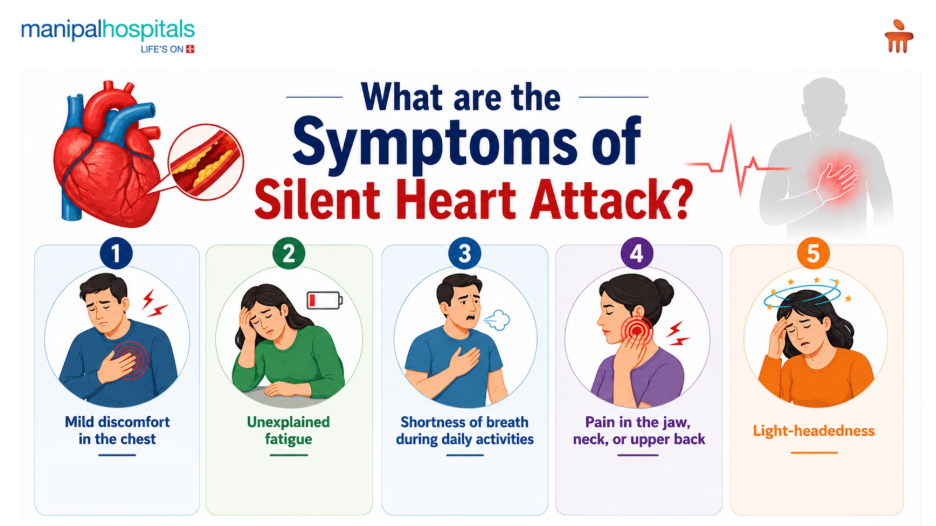
A silent heart attack may not cause severe chest pain. Instead, symptoms can be mild and easily mistaken for indigestion, tiredness, or muscle strain.
Common silent heart attack symptoms include:
-
Mild discomfort in the chest
-
Unexplained fatigue
-
Shortness of breath during daily activities
-
Pain in the jaw, neck, or upper back
-
Light-headedness
What is Heart Failure?
Heart failure does not mean the heart has stopped working. It means the heart cannot pump blood efficiently enough to meet the body’s needs. This condition develops gradually in most people, although acute heart failure can occur suddenly and become a medical emergency.
Heart failure often develops after the heart becomes weak or damaged due to conditions such as heart attacks, high blood pressure, or valve disease. Over time, the heart struggles to circulate blood properly, causing fluid buildup in the lungs and other parts of the body.
Acute Heart Failure
Acute heart failure refers to sudden worsening of heart failure symptoms. It can develop quickly and may require immediate hospitalisation. This condition can occur in people with existing heart failure or appear suddenly after a major heart event such as a heart attack.
-
Symptoms of acute heart failure may include:
-
Severe shortness of breath
-
Rapid swelling in the legs or abdomen
-
Sudden weight gain from fluid retention
-
Persistent coughing or wheezing
-
Difficulty breathing while lying down
Stages of Heart Failure
Heart failure progresses gradually over time. Doctors often classify it into stages to monitor severity and guide treatment.
Stage A
People are at high risk of heart failure but do not yet have symptoms or structural heart disease. Risk factors include diabetes, high blood pressure, and obesity.
Stage B
Structural heart disease begins to develop, but symptoms are still absent. Patients may have reduced heart function after a heart attack.
Stage C
Symptoms of heart failure become noticeable. Patients may experience fatigue, breathlessness, and swelling.
Stage D
This is advanced heart failure. Symptoms become severe and may continue even during rest. Specialised treatments or surgery may be needed.
Heart Failure vs Heart Attack: Key Differences
Although these conditions are connected, they affect the heart differently. Understanding the difference between heart attack and heart failure is important for early diagnosis and treatment.
| Heart Attack | Heart Failure | |
| Definition | Sudden blockage of blood flow to the heart | Heart cannot pump blood effectively |
| Onset | Sudden | Usually gradual |
| Main Cause | Blocked coronary artery | Weak or damaged heart muscle |
| Common Symptoms | Chest pain, sweating, nausea | Breathlessness, fatigue, swelling |
| Emergency Condition | Yes | Can become severe over time |
| Long-term Impact | Can damage heart muscle | Chronic condition needing lifelong management |
| Fluid Build-up | Rare | Common |
| Treatment Goal | Restore blood flow quickly | Improve heart function and symptom control |
Symptoms Comparison: Heart Attack vs Heart Failure
Recognising symptoms early can save lives. Some symptoms overlap, but others are more specific to each condition.
| Symptoms | Heart Attack | Heart Failure |
| Chest pain | Common and sudden | Less common |
| Shortness of breath | May occur suddenly | Very common and ongoing |
| Swelling in legs or feet | Rare | Common |
| Extreme fatigue | Possible | Very common |
| Nausea | Common | Less common |
| Persistent cough | Rare | Common |
| Sweating | Common | Less common |
| Difficulty lying flat | Rare | Common |
Can a Heart Attack Lead to Heart Failure?
A heart attack can damage the heart muscle permanently. If a large portion of the heart becomes weak, the heart may no longer pump blood efficiently. This can eventually lead to heart failure.
Not everyone who experiences a heart attack develops heart failure. However, the risk increases if treatment is delayed or if multiple heart attacks occur. Proper treatment, lifestyle changes, and regular follow-up care can reduce complications.
Diagnosis of Heart Attack and Heart Failure
Early diagnosis plays a major role in improving outcomes. Doctors use different tests to identify these conditions and understand the extent of heart damage.
Tests Used for Heart Attack
-
Electrocardiogram (ECG)
-
Blood tests for cardiac enzymes
-
Coronary angiography
-
Echocardiogram
Tests Used for Heart Failure
-
Echocardiogram
-
Chest X-ray
-
ECG
-
Blood tests
-
Stress testing
-
Cardiac MRI in selected cases
Treatment Options
Treatment depends on the condition, severity, and overall health of the patient. Quick medical care is essential for both conditions.
Heart Attack Treatment
The primary goal is to restore blood flow to the heart quickly.
Treatment options may include:
-
Emergency medications
-
Angioplasty and stenting
-
Coronary artery bypass surgery
-
Blood-thinning medicines
-
Lifestyle changes
Heart Failure Treatment
Heart failure treatment focuses on improving heart function and managing symptoms.
Treatment may include:
-
Medicines to reduce fluid buildup
-
Blood pressure control medicines
-
Lifestyle and dietary changes
-
Cardiac rehabilitation
-
Pacemakers or implantable devices in advanced cases
-
Surgery in severe conditions
How to Reduce the Risk of Heart Disease
Preventing heart disease starts with healthy lifestyle choices. Many risk factors can be controlled with proper care and awareness.
Helpful prevention tips include:
-
Maintain a healthy weight
-
Exercise regularly
-
Eat a balanced diet low in salt and unhealthy fats
-
Stop smoking
-
Limit alcohol intake
-
Manage stress
-
Control diabetes and blood pressure
-
Get regular health check-ups
When Should You Seek Medical Help?
Many people ignore early warning signs until symptoms become severe. Immediate medical attention is necessary if someone experiences chest pain, sudden breathlessness, fainting, or unexplained swelling. Delaying treatment during a heart attack can increase heart damage and raise the risk of heart failure later. Early intervention often improves recovery and long-term heart health.
Conclusion
Although heart failure and heart attack are closely related, they are very different medical conditions. A heart attack happens suddenly because of blocked blood flow, while heart failure develops when the heart becomes weak and cannot pump effectively. Recognising symptoms early and seeking prompt medical care can improve outcomes and prevent complications. The Department of Cardiology at Manipal Hospitals offers advanced cardiac care, experienced specialists, and modern treatment facilities for managing various heart conditions. Timely consultation and regular heart screening can help protect your heart health and support better recovery outcomes.
FAQ's
Yes, acute heart failure can occur suddenly and may cause severe breathing difficulty, fluid buildup, and rapid worsening of symptoms. It often requires immediate hospital treatment and careful monitoring.
No, some people experience mild symptoms or silent heart attack symptoms that are easy to overlook. Fatigue, mild chest discomfort, nausea, or breathlessness may sometimes be the only warning signs.
Many people recover well after a heart attack with early treatment, medicines, and lifestyle changes. However, recovery depends on how much heart muscle was damaged during the event.
No, chest pain is more common during a heart attack. Heart failure usually causes symptoms such as breathlessness, tiredness, swelling in the legs, and difficulty performing daily activities.
People with diabetes, obesity, high blood pressure, smoking habits, high cholesterol, or a family history of heart disease have a higher risk of developing both conditions.
Healthy lifestyle changes can significantly reduce the risk of heart failure. Regular exercise, balanced nutrition, blood pressure control, and avoiding smoking help protect long-term heart health.
Share this article on:


--Causes-and-Treatment.webp "blood in urine hematuria causes treatment")





