




 5 Min Read
A bone fracture, commonly known as a broken bone, is a frequent injury that can range from a small crack to a complete break. Although a fracture can be painful and concerning, the body has a natural ability to repair damaged bone tissue. Understanding the bone fracture healing time, the stages involved in recovery, and the care needed during this period can help ensure proper healing. With timely medical treatment, proper rest, and good cast care, most people recover well and gradually return to their normal activities.
Synopsis
Understanding Bone Fractures and the Healing Process
A bone fracture occurs when a strong force is applied to a bone. This can happen during falls, sports injuries, road accidents, or due to weakened bones caused by conditions such as osteoporosis.
Once a bone breaks, the body immediately begins a healing process. Blood collects around the fracture, specialised cells repair the damaged area, and new bone tissue gradually forms. Over time, this new bone becomes stronger and restores the bone's structure and function. Proper treatment and care are important during this period to support broken bone recovery and reduce the risk of complications.
Bone Fracture Healing Time: Stages of Recovery
The bone fracture healing time varies depending on the type of fracture, the bone involved, and the person’s age and health. However, most fractures heal through a series of natural stages.
-
Inflammatory Phase (First Few Days): Immediately after the fracture, blood vessels around the injured bone break and form a clot. This clot creates the foundation for healing and triggers inflammation, which brings specialised healing cells to the injured area.
-
Soft Callus Formation (2 to 3 Weeks): During this stage, the body begins producing a soft tissue called a callus around the fracture. This tissue connects the broken ends of the bone and provides initial stability.
-
Hard Callus Formation (4 to 12 Weeks): The soft callus gradually turns into harder bone tissue. This stage strengthens the fracture site and allows the bone to regain stability. In some cases, doctors may allow gradual movement or reduced support once the bone becomes stronger.
-
Bone Remodelling (Several Months): In the final stage, the body reshapes the newly formed bone and restores its normal structure. The bone gradually becomes stronger and more organised.
A small fracture may heal within six to eight weeks, while larger or complex fractures may take several months to recover fully.
Care Essentials After a Bone Fracture
Proper care during the healing period plays an important role in recovery. Following medical advice and maintaining good cast care can help ensure that the bone heals correctly.
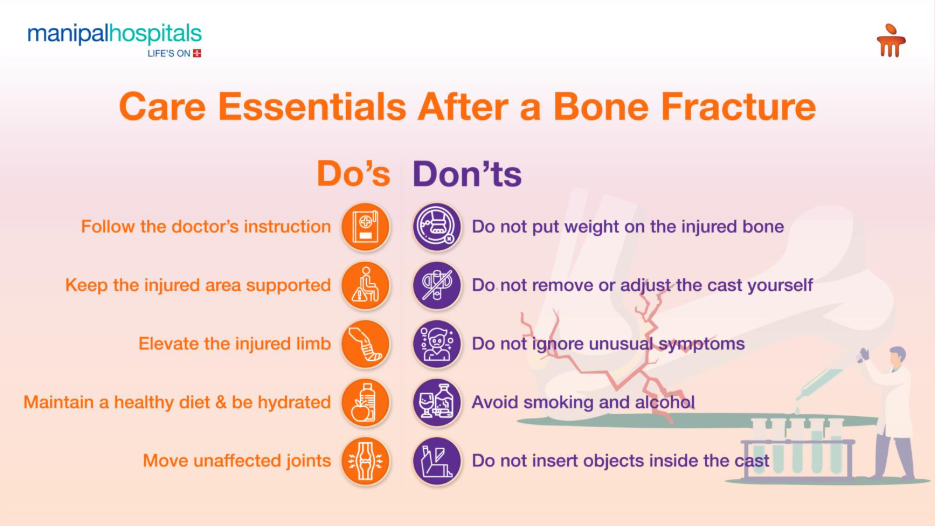
Do's for Faster Broken Bone Recovery
-
Follow your doctor’s instructions: Always follow guidance on rest, medications, and activity restrictions.
-
Keep the injured area supported: A cast, splint, or brace helps keep the bone stable and supports healing.
-
Elevate the injured limb: Keeping the injured arm or leg elevated can help reduce swelling and discomfort.
-
Maintain a healthy diet: Foods rich in calcium, vitamin D, and protein support bone repair.
-
Stay hydrated: Proper hydration supports overall healing.
-
Move unaffected joints: Gentle movement of nearby joints, if advised by your doctor, helps maintain flexibility.
-
Attend follow-up visits: Regular check-ups allow doctors to monitor healing through examinations or imaging tests.
Don'ts During Bone Fracture Healing
-
Do not put weight on the injured bone too early: Premature weight-bearing may delay healing or worsen the fracture.
-
Do not remove or adjust the cast yourself: Only a healthcare professional should remove or modify a cast or splint.
-
Do not ignore unusual symptoms: Severe pain, numbness, swelling, or skin colour changes should be reported to a doctor.
-
Avoid smoking and excessive alcohol: These habits can slow down bone healing.
-
Do not insert objects inside the cast: This can damage the skin and increase the risk of infection.
Possible Fracture Complications
Most fractures heal without problems when treated properly. However, in some cases, complications may occur. Common fracture complications include:
-
Delayed healing: Sometimes the bone takes longer than expected to heal.
-
Non-union: The bone fails to heal completely and may require additional treatment.
-
Malunion: The bone heals in an incorrect position, which may affect movement.
-
Infection: This risk is higher in open fractures where the bone breaks through the skin.
-
Nerve or blood vessel injury: Nearby nerves or blood vessels may be affected by the injury.
Recognising symptoms early and attending regular follow-up appointments helps doctors manage these issues promptly.
Supporting a Healthy Bone Recovery
Recovery after a fracture is not only about bone healing but also about regaining strength and mobility. Some helpful steps include:
-
Getting adequate rest
-
Maintaining balanced nutrition
-
Following physiotherapy, if recommended
-
Managing conditions such as osteoporosis or diabetes
-
Gradually returning to normal activities as advised by your doctor
Conclusion
A bone fracture can interrupt daily life, but with proper treatment and care, most fractures heal successfully. Understanding the bone fracture healing time, following good cast care, and adhering to medical advice are essential for safe and effective recovery. If you experience symptoms of a fracture or have sustained a bone injury, seeking timely medical attention is important. The orthopaedic specialist at Manipal Hospitals, Kolkata, provides comprehensive care for bone injuries, from diagnosis and treatment to rehabilitation, helping patients recover safely and regain mobility.
FAQ's
The bone fracture healing time depends on the type of fracture, the bone involved, and the patient’s overall health. Many simple fractures heal within six to eight weeks, while more complex injuries may take several months
Several factors may delay healing, including smoking, poor nutrition, certain medical conditions, severe fractures, or not following immobilisation instructions.
Good cast care involves keeping the cast clean and dry, avoiding pressure on it, and not inserting objects inside it. If the cast becomes tight, cracked, or causes severe discomfort, consult your doctor.
Foods rich in calcium, vitamin D, and protein support bone repair. Dairy products, leafy vegetables, nuts, fish, and lean meats are commonly recommended.
Returning to daily activities depends on how well the bone has healed. Your doctor will guide you on when it is safe to resume work, exercise, or sports.
Some pain and discomfort are common during the early stages of healing. However, increasing pain or unusual symptoms should be evaluated by a doctor.
Share this article on:





