6 Min Read
A hernia often starts as a small bulge, a mild pulling sensation, or discomfort while lifting something heavy. Over time, however, it can interfere with daily life, causing pain, uneasiness, and constant worry. A hernia occurs when an internal organ or fatty tissue pushes through a weak spot in the surrounding muscle, most commonly in the abdomen or groin. While hernias are common, one thing is certain: they do not heal on their own and usually require surgical treatment to avoid complications.
Earlier, open surgery was the standard option. Today, medical science has made it possible to treat hernias with far less pain and much faster recovery through laparoscopic hernia surgery. This minimally invasive technique has transformed the patient experience and is now widely preferred by both surgeons and patients.
At Manipal Hospital Pune, advanced laparoscopic techniques are combined with the expertise of experienced general surgeons to deliver safe, effective, and patient-centric hernia care. If you or a loved one has been diagnosed with a hernia, understanding laparoscopic hernia repair can help you take the next step with confidence.
Synopsis
What Is Laparoscopic Hernia Surgery?
Laparoscopic hernia surgery, also known as minimally invasive hernia repair, is a modern surgical approach that fixes a hernia using very small incisions instead of one large cut.
During the procedure:
-
The surgeon makes 2–3 tiny incisions, each usually less than one centimetre long
-
A laparoscope (a thin tube with a high-definition camera) is inserted through one incision, providing a clear, magnified view on a monitor
-
Special surgical instruments are used to place the herniated tissue back where it belongs, gently
-
A synthetic mesh is positioned over the weak area to strengthen the abdominal wall and prevent recurrence
The mesh acts as an internal support and allows natural tissue to grow over it. Because of this reinforcement, laparoscopic hernia repair has a very low recurrence rate, often between 1–5%, when performed by experienced surgeons.
How long does laparoscopic hernia surgery take?
A common concern among patients is the duration of surgery. In most cases, laparoscopic hernia surgery takes about 30 to 60 minutes, depending on the type and size of the hernia. Including preparation and recovery, patients usually spend only a short time in the hospital.
Why Laparoscopic Hernia Surgery Is Preferred
The biggest advantage of laparoscopic surgery lies in its minimally invasive nature. Compared to open surgery, it causes less damage to muscles and surrounding tissues, leading to a smoother recovery.
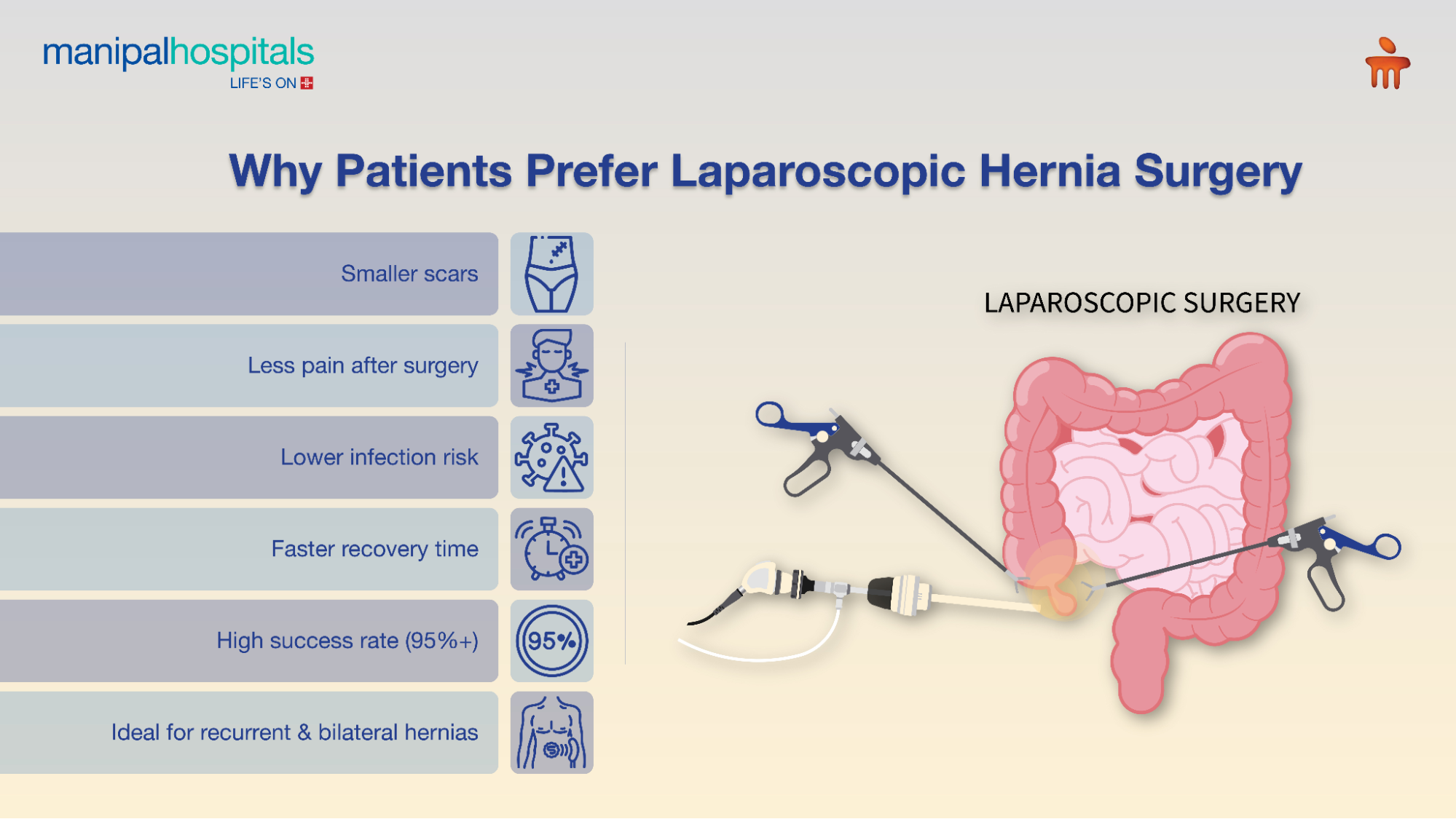
Key Benefits of Laparoscopic Hernia Repair
1. Less Post-Operative Pain
Because the incisions are small, patients experience significantly less pain after surgery. Most discomfort is mild and easily managed with medication.
2. Faster Recovery Time
The laparoscopic hernia surgery recovery time is much shorter than that of open surgery. Many patients return to light daily activities within 7–10 days.
3. Short Hospital Stay
Most patients are discharged on the same day or within 24 hours, making it convenient and comfortable.
4. Minimal Scarring
Instead of one long scar, there are only tiny marks that fade over time.
5. Lower Risk of Infection
Smaller wounds mean fewer chances of wound infections and faster healing.
6. Ideal for Certain Hernias
Laparoscopic surgery is especially helpful for bilateral hernias (both sides) and recurrent hernias after previous open surgery.
With success rates of over 95%, laparoscopic hernia surgery has become a reliable and trusted treatment option.
Laparoscopic Hernia Surgery Recovery Time: What to Expect
Recovery plays a major role in patient satisfaction. One of the reasons patients at Manipal Hospital Kharadi prefer laparoscopic repair is the smooth and predictable recovery process.
First 48 Hours
You may feel mild pain, bloating, or shoulder discomfort caused by the gas used during surgery. This is temporary. Gentle walking is encouraged to improve circulation and prevent stiffness.
Week 1
Most daily activities can be managed comfortably. Pain continues to reduce, and many patients no longer require strong painkillers. A fibre-rich diet is recommended to avoid constipation and straining.
Weeks 2–4
Patients can usually return to office work, driving, and light physical activity. Heavy lifting and strenuous exercise should still be avoided.
After 4 Weeks
By this stage, more than 90% of patients feel fully recovered. With the surgeon’s approval, normal exercise routines can be resumed. The mesh becomes well integrated, offering long-term strength and protection.
Do’s and Don’ts After Laparoscopic Hernia Surgery
Do’s
-
Walk short distances several times a day
-
Keep incision sites clean and dry
-
Eat fibre-rich foods and drink plenty of water
-
Attend all follow-up appointments
-
Support your abdomen while coughing or sneezing
Don’ts
-
Avoid lifting heavy objects until cleared by your surgeon
-
Do not strain during bowel movements
-
Avoid swimming or soaking until wounds heal
-
Do not smoke, as it delays healing
-
Do not ignore warning signs such as fever, redness, swelling, or discharge
Expert Hernia Care at Manipal Hospital Kharadi
Living with a hernia does not have to mean long-term discomfort or fear of surgery. With modern techniques like laparoscopic hernia surgery, treatment is safer, quicker, and far more comfortable than ever before.
At Manipal Hospital Kharadi, patients benefit from advanced surgical infrastructure, experienced general surgeons, and personalised care at every step from diagnosis to recovery. If you are noticing hernia symptoms or have already been diagnosed, book a consultation today and take the first step towards a faster, pain-free recovery.
Disclaimer: This article is for informational purposes only and does not replace professional medical advice. Always consult a qualified healthcare professional for diagnosis and treatment.
FAQ's
Pain is usually mild to moderate and significantly less than open surgery. Most patients feel comfortable within a few days.
Desk jobs can often be resumed within 1–2 weeks. Jobs involving heavy physical work may need 4–6 weeks.
Recurrence is rare when mesh repair is done correctly and post-operative instructions are followed.
Only small scars remain, which fade and become barely noticeable over time.
Not always. The surgeon will assess the hernia type, size, and your medical history before recommending the best approach.
Share this article on: