8 Min Read
Heart block, medically referred to as atrioventricular (AV) block, occurs when the electrical signals that control your heartbeat are delayed or completely blocked as they travel from the heart’s upper chambers (atria) to the lower chambers (ventricles). These signals usually pass through a vital relay point called the AV node.
When this pathway is disrupted, the heart may beat too slowly or irregularly, reducing its ability to pump enough oxygen-rich blood to the body. While some people may not notice symptoms initially, others may experience significant discomfort or even life-threatening complications if the condition progresses.
Early diagnosis and appropriate treatment can significantly improve outcomes. In fact, with timely care, more than 90% of people with symptomatic heart block can lead a healthy and active life.
Synopsis
- Types of Heart Block: Understanding the Severity Levels
- Heart Block Symptoms: Warning Signs You Shouldn’t Ignore
- Heart Block Causes: What Leads to This Condition?
- Diagnosing Heart Block: Accurate Tests for Timely Care
- Heart Block Treatment Options: Restoring a Healthy Rhythm
- Do’s and Don’ts for Managing Heart Block
Types of Heart Block: Understanding the Severity Levels
Heart block is broadly classified into three main types, depending on how much the electrical signal is affected:
1. First-Degree Heart Block
-
The electrical signal is delayed but still reaches the ventricles.
-
Often causes no symptoms and is usually detected during a routine ECG.
-
Typically does not require treatment, only regular monitoring.
2. Second-Degree Heart Block
In this type, some electrical signals fail to reach the ventricles, leading to skipped heartbeats.
Mobitz Type I (Wenckebach):
-
Gradual slowing of electrical signals until one beat is skipped.
-
Often harmless and may not need treatment unless symptoms occur.
Mobitz Type II:
-
Sudden blockage of electrical signals without warning.
-
More serious and often progresses to complete heart block.
-
Usually requires medical intervention, often a pacemaker.
3. Third-Degree Heart Block (Complete Heart Block)
-
No electrical signals pass from the atria to the ventricles.
-
The ventricles beat independently at a much slower rate.
-
This is a medical emergency and almost always requires immediate pacemaker implantation.
Heart Block Symptoms: Warning Signs You Shouldn’t Ignore
Symptoms vary depending on the severity of the block. Mild cases may go unnoticed, while severe heart block can cause alarming symptoms.
Common heart block symptoms include:
-
Dizziness or lightheadedness
-
Fainting (syncope) or near-fainting episodes
-
Persistent fatigue and weakness
-
Shortness of breath, especially during activity
-
Chest pain or discomfort
-
Palpitations or irregular heartbeat
-
Confusion or difficulty concentrating
If you or a loved one experiences these symptoms, it is essential to seek medical evaluation promptly.
Heart Block Causes: What Leads to This Condition?
Heart block can develop due to several underlying factors, including:
-
Age-related degeneration: Natural wear and tear of the heart’s electrical system, especially in people over 65.
-
Coronary artery disease or heart attack: Damage to heart tissue can affect electrical pathways.
-
Cardiomyopathy: Weakening or thickening of the heart muscle.
-
Congenital heart defects: Structural problems present from birth.
-
Infections: Conditions such as Lyme disease or myocarditis.
-
Medical conditions: Sarcoidosis, thyroid disorders, or haemochromatosis.
-
Cardiac surgery or procedures: Accidental injury to electrical pathways during heart operations.
Understanding the cause helps doctors choose the most effective treatment plan.
Diagnosing Heart Block: Accurate Tests for Timely Care
At Manipal Hospital Pune – Kharadi, diagnosing heart block involves a detailed clinical evaluation supported by advanced diagnostic tools:
-
Electrocardiogram (ECG): The primary test to detect electrical delays or blockages.
-
Holter monitoring: Continuous ECG recording over 24–48 hours to detect intermittent blocks.
-
Event monitor: Worn for longer durations to capture symptoms-related rhythm issues.
-
Electrophysiology (EP) study: A specialised test to precisely locate electrical abnormalities.
Heart Block Treatment Options: Restoring a Healthy Rhythm
Treatment depends on the type of heart block, symptom severity, and overall health of the patient.
-
Observation: Mild, asymptomatic cases may only require regular monitoring.
-
Medication adjustment: If heart block is drug-induced, medications may be modified.
-
Pacemaker implantation: The most effective treatment for symptomatic second-degree Mobitz II and all third-degree heart blocks. Modern pacemakers help maintain a normal heart rhythm and significantly improve the quality of life.
-
Treating underlying conditions: Managing infections or heart disease may improve or reverse certain types of heart block.
Pacemaker therapy has a success rate of over 95%, enabling patients to return to daily activities safely.
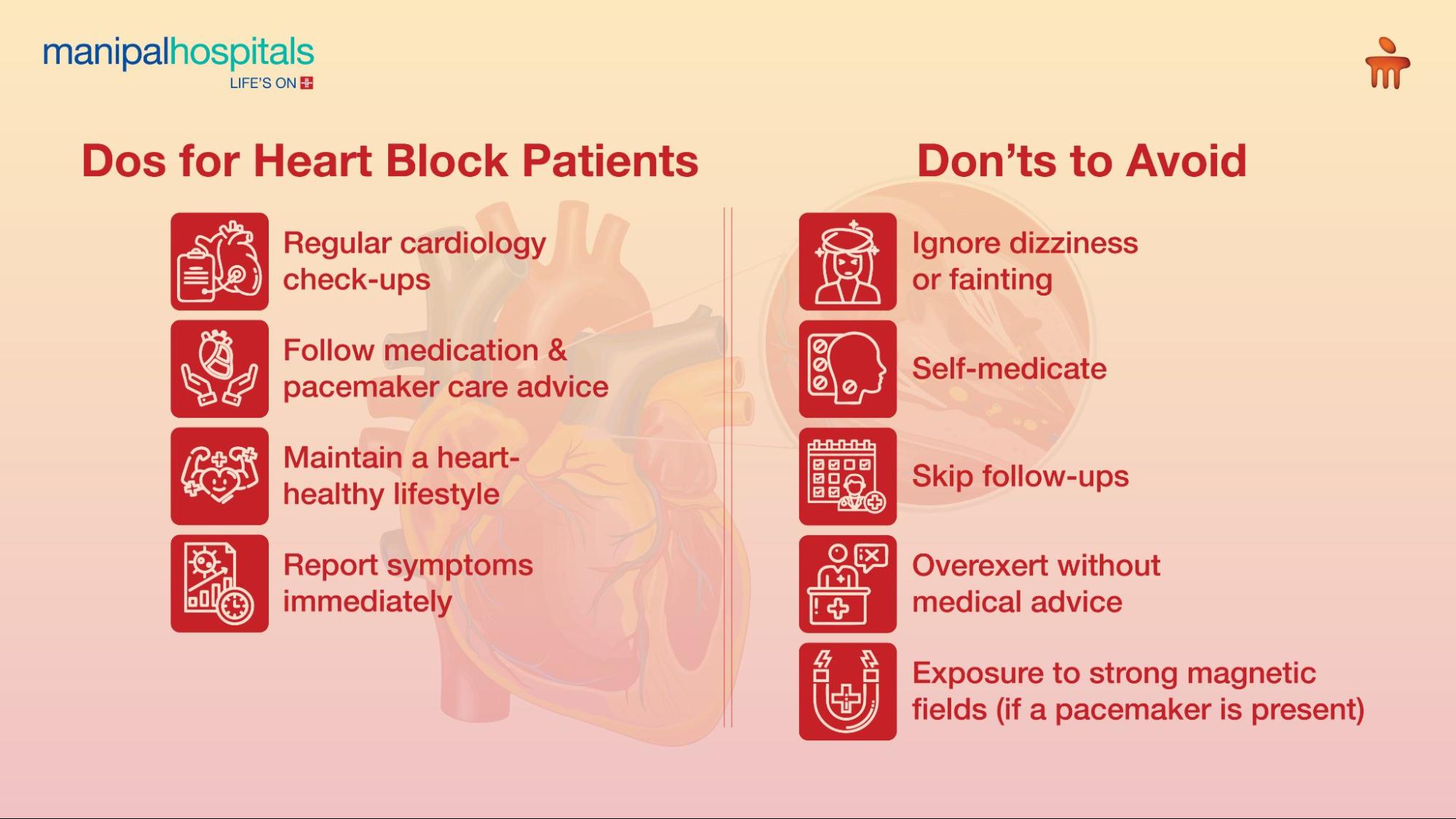
Do’s and Don’ts for Managing Heart Block
Do’s
-
Attend regular follow-ups with your cardiologist
-
Follow medication and pacemaker care instructions carefully
-
Maintain a heart-healthy lifestyle
-
Report new or worsening symptoms immediately
-
Carry medical identification and pacemaker details
Don’ts
-
Ignore symptoms like dizziness or fainting
-
Self-medicate without medical advice
-
Miss scheduled check-ups
-
Perform strenuous activities without a doctor's approval
-
Exposing pacemakers to strong electromagnetic fields unnecessarily
If you are experiencing symptoms of heart block or have concerns about your heart rhythm, early medical attention can make all the difference. Consult the experienced cardiologist in Kharadi, Pune for expert diagnosis, advanced treatment, and compassionate care.
Disclaimer: This article is for informational purposes only and should not be considered medical advice. Please consult a qualified healthcare professional for personalised guidance.
FAQ's
Heart block may not always be cured, but it can be effectively managed. Pacemakers successfully control heart rhythm and improve quality of life.
Mild forms are often harmless, but advanced heart block can be serious and requires prompt treatment.
Most pacemakers last between 8 and 12 years, depending on usage and settings.
Yes, most patients can resume normal activities after recovery, following medical advice.
Risks are minimal and uncommon. Your doctor will explain them in detail before the procedure.
Share this article on:


--Mood,-Pain-and-Bloating-Relief.webp "Premenstrual Syndrome (PMS)")