7 Min Read
Dystonia is a complex neurological movement disorder that can significantly affect a person’s daily life. People living with dystonia experience involuntary muscle contractions that cause twisting movements, repetitive spasms, and abnormal body postures. These symptoms may affect the neck, eyes, face, limbs, or voice, making simple activities such as writing, speaking, or even keeping the head straight extremely challenging.
Globally, dystonia affects nearly 250,000 people, with focal dystonias being the most common form. Although the condition can be distressing and sometimes painful, modern medical advances have made treatment more effective than ever. One of the most successful therapies today is targeted injection therapy, which has shown success rates of up to 85% in reducing muscle spasms and improving movement.
This guide explains dystonia, its causes, and how targeted injections are transforming treatment outcomes for patients.
Synopsis
Understanding Dystonia
Dystonia occurs when the brain sends incorrect signals to muscles, causing them to contract involuntarily. These contractions may be continuous or intermittent and often result in abnormal movements or sustained postures.
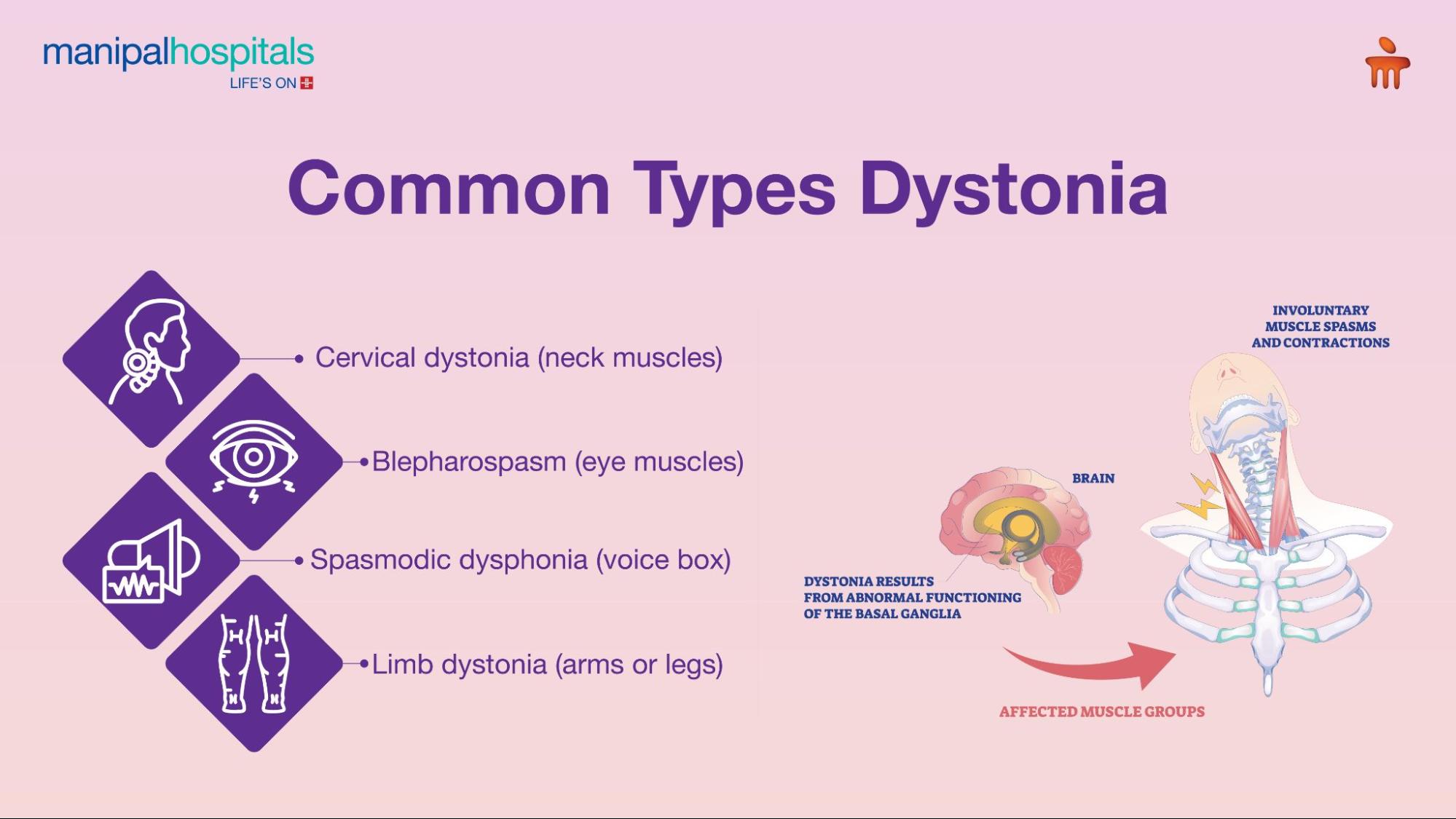
The disorder primarily involves the basal ganglia, a brain region responsible for controlling voluntary movement. When the signalling in this region becomes disrupted, muscles may contract without the person’s control.
Symptoms of dystonia vary from mild discomfort to severe muscle spasms that interfere with daily activities. Many patients also experience pain, fatigue, and emotional stress due to persistent muscle contractions.
Types of Dystonia
Dystonia can appear in different forms depending on which muscles are affected.
Focal Dystonia
This is the most common type and affects a single body part.
Examples include:
Cervical Dystonia (Torticollis)
This condition affects the neck muscles, causing the head to twist or tilt to one side. It is often associated with neck pain and stiffness.
Blepharospasm
Involuntary blinking or spasms of the muscles around the eyes, which may interfere with vision.
Spasmodic Dysphonia
Affects the vocal cords and leads to a strained, shaky, or breathy voice.
Limb Dystonia
Affects the arms or legs and may appear during specific tasks such as writing or playing a musical instrument.
Segmental Dystonia
Involves two or more adjacent parts of the body.
Multifocal Dystonia
Affects two or more body regions that are not next to each other.
Generalised Dystonia
A more widespread form that involves multiple parts of the body and may significantly affect movement and mobility.
Causes of Dystonia
The causes of dystonia vary depending on the type and underlying condition.
Primary Dystonia
Primary dystonia often has a genetic component and occurs without another identifiable neurological disorder.
Secondary Dystonia
Secondary dystonia develops as a result of another condition or external factor, such as:
-
Neurological disorders, including Parkinson’s disease
-
Brain injury or stroke
-
Exposure to certain toxins
-
Side effects of medications
-
Metabolic or genetic disorders
In some situations, dystonia can develop suddenly due to medications, requiring immediate medical evaluation and treatment.
Targeted Injection Therapy for Dystonia
One of the most effective treatments for focal and segmental dystonia is targeted injection therapy, which uses specialised neurotoxin injections to relax overactive muscles.
These injections are administered directly into the muscles responsible for the abnormal contractions.
How Targeted Injections Work
The injected medication temporarily blocks the nerve signals that trigger muscle contractions. As a result:
-
The overactive muscles relax
-
Muscle spasms decrease
-
Pain is reduced
-
Abnormal posture improves
The effects are temporary but highly effective, typically lasting three to four months. Repeat injections help maintain symptom control and improve long-term quality of life.
Conditions Treated with Targeted Injections
Targeted injection therapy is widely used for several movement disorders, including:
-
Cervical dystonia
-
Blepharospasm
-
Spasmodic dysphonia
-
Limb dystonia
-
Hemifacial spasm
Studies show that 70–80% of patients with cervical dystonia experience significant symptom relief, while overall success rates for reducing muscle spasms often exceed 85% when administered by experienced specialists.
The Treatment Process
-
Comprehensive Consultation - The first step involves a detailed neurological assessment. Doctors review medical history, evaluate symptoms, and identify the specific muscles responsible for the dystonic movements.
-
Precision Injection Procedure - Using guidance techniques such as Electromyography (EMG) or ultrasound, the doctor injects the medication directly into the affected muscles. This ensures accurate placement and maximum effectiveness.
-
Recovery and Results - Patients typically begin noticing improvement within 3 to 14 days, with peak benefits appearing after a few weeks.
-
Ongoing Treatment - Because the effects are temporary, injections are usually repeated every three to four months to maintain symptom relief.
-
Benefits of Targeted Injection Therapy - Targeted injection therapy offers several important benefits for people living with dystonia.
-
Reduced Muscle Spasms and Pain - The most immediate benefit is a significant reduction in muscle contractions, which helps relieve pain and discomfort.
-
Improved Movement and Posture - Relaxing the affected muscles allows patients to regain better control of their movements and posture.
-
Better Daily Function - Many patients find it easier to perform everyday tasks such as writing, eating, speaking, and walking.
-
Enhanced Quality of Life - More than 60% of patients report a noticeable improvement in their quality of life, including increased confidence and reduced stress.
Advanced Dystonia Treatment at Manipal Hospitals Kharadi
At Manipal Hospitals Kharadi, patients with dystonia receive specialised neurological care supported by advanced diagnostic technology and expert clinical guidance.
The neurology department provides comprehensive evaluation and treatment for movement disorders using modern techniques and evidence-based therapies. Experienced neurologists in Kharadi, Pune carefully assess each patient’s symptoms and develop a personalised treatment plan that may include targeted injection therapy, medications, physiotherapy, and rehabilitation support.
Advanced diagnostic tools such as Electromyography (EMG), Electroencephalography (EEG), and Nerve Conduction Studies (NCS) help specialists accurately identify the muscles responsible for abnormal contractions. This precision enables doctors to deliver targeted injections safely and effectively.
Patients also benefit from a multidisciplinary treatment approach, where neurologists collaborate with physiotherapists and rehabilitation experts to improve mobility, reduce symptoms, and support long-term recovery.
With advanced technology, experienced specialists, and patient-centred care, Manipal Hospitals Kharadi provides comprehensive treatment options to help individuals manage dystonia effectively and improve their overall quality of life.
Care Essentials: Do’s and Don’ts
Do’s
-
Follow your neurologist’s advice carefully
-
Attend all scheduled follow-up appointments
-
Maintain a record of symptoms and triggers
-
Consider physiotherapy or rehabilitation exercises
Don’ts
-
Do not expect immediate results after injections
-
Avoid self-medication or changing treatment without medical advice
-
Do not ignore unusual symptoms or side effects
-
Avoid strenuous activity for 24–48 hours after injections
When Should You See a Doctor?
Consult a neurologist if you experience:
-
Persistent muscle spasms
-
Involuntary neck or facial movements
-
Difficulty speaking due to muscle contractions
-
Repetitive twisting movements
-
Abnormal posture or stiffness
Early diagnosis and treatment can significantly improve symptom control and quality of life.
Conclusion
Dystonia can be a challenging condition, but modern medical advances have made treatment far more effective. Targeted injection therapy has transformed the management of focal dystonia, offering relief from muscle spasms, improved mobility, and better quality of life for many patients.
With expert neurological care and advanced treatment options available, individuals living with dystonia can regain greater control over their movements and daily activities.
If you or a loved one is experiencing symptoms of dystonia, seeking early medical guidance can make a meaningful difference in managing the condition and improving long-term outcomes.
FAQ's
Dystonia is a neurological disorder that causes involuntary muscle contractions, leading to twisting movements, abnormal postures, and muscle spasms.
Dystonia may occur due to genetic factors, neurological conditions, brain injury, stroke, or certain medications.
Targeted injection therapy can reduce muscle spasms in 70–85% of patients, improving movement and reducing pain.
The effects typically last 3 to 4 months, after which repeat injections may be required.
Specialised dystonia care and targeted injection therapy are available at Manipal Hospitals Kharadi.
Share this article on:


--What-It-Is-and-When-Doctors-Recommend-It.webp "endoscopic ultrasound")