7 Min Read
Constipation is something most people experience at some point in life. It may seem like a small issue, but when bowel movement problems continue for days, they can cause discomfort, bloating, and even affect your daily routine. Many people start searching for simple ways to get constipation relief, especially through natural remedies and lifestyle changes.
In simple terms, constipation occurs when bowel movements become infrequent or difficult to pass. The stool often becomes hard and dry, making the process uncomfortable. Diet, lack of physical activity, stress, dehydration, and certain medical conditions can all contribute to this issue.
Doctors at Manipal Hospital Kharadi explain that while occasional constipation is common, persistent symptoms should not be ignored. Making a few healthy changes in daily habits can often improve digestion and provide lasting constipation relief.
Synopsis
What Exactly is Constipation?
Constipation usually refers to having fewer than three bowel movements in a week or passing stools that are hard and difficult to expel. Some people may also feel that their bowel has not emptied.
Common symptoms include:
-
Hard or dry stools
-
Straining during bowel movements
-
Feeling of incomplete bowel emptying
-
Abdominal bloating or discomfort
-
Irregular bowel habits
If these bowel movement problems continue for several weeks, it may indicate deeper digestive concerns.
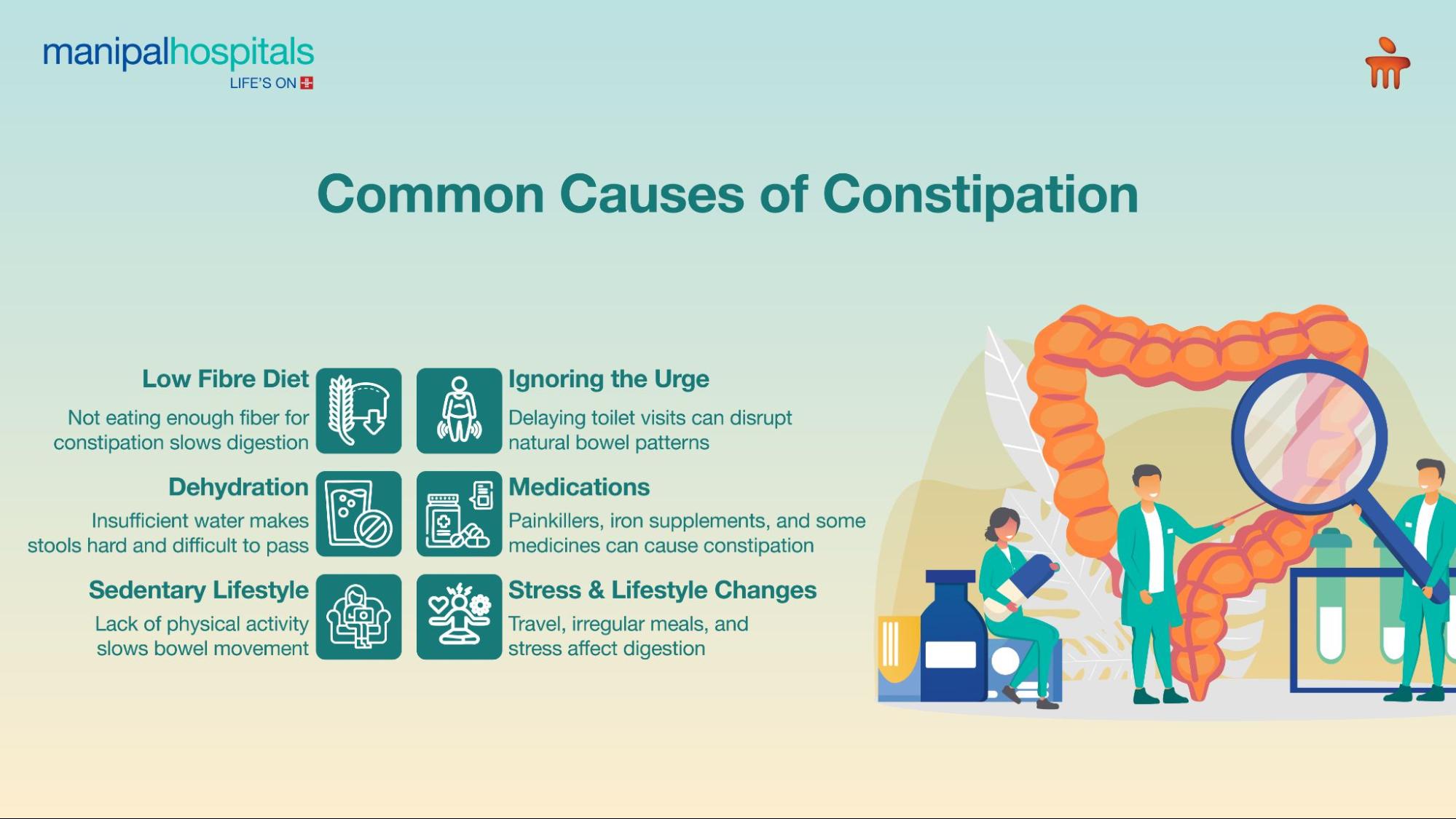
Common Causes of Constipation
Understanding the causes can help you find the right constipation relief approach.
Low Fibre Intake
One of the most common causes of chronic constipation is a diet low in fibre. Fibre adds bulk to the stool and helps it move smoothly through the digestive system. Without enough fiber for constipation, bowel movements may become slow and difficult.
Not Drinking Enough Water
Water plays an important role in digestion. When the body is dehydrated, the stool becomes harder, which makes passing it more difficult.
Lack of Physical Activity
A sedentary lifestyle can slow down digestion. Regular movement helps stimulate intestinal muscles and supports healthy bowel function.
Ignoring the Urge
Sometimes people delay going to the toilet due to busy schedules or inconvenience. Repeatedly ignoring the urge can disturb natural bowel patterns.
Stress and Routine Changes
Travel, work stress, irregular meals, or sleep disturbances can also contribute to bowel movement problems.
Certain Medications
Pain medications, iron supplements, and some antidepressants may also lead to constipation.
Natural Remedies for Constipation Relief
The good news is that many people can achieve effective constipation relief through simple natural methods.
Increase Fibre in Your Diet
Adding more fiber for constipation is one of the easiest and most effective ways to improve digestion.
Foods rich in fibre include:
-
Oats and whole grains
-
Fruits like apples, pears, and papaya
-
Green leafy vegetables
-
Lentils and beans
-
Nuts and seeds
However, fibre intake should be increased gradually to avoid bloating.
Drink Plenty of Fluids
Water helps soften stool and supports the digestive process. Drinking adequate fluids is essential for maintaining regular bowel movements.
Try these simple tips:
-
Drink at least 8–10 glasses of water daily
-
Start the day with warm water or lemon water
-
Include fluids like coconut water or soups
Hydration is an important step towards achieving natural constipation relief.
Stay Physically Active
Regular exercise stimulates the muscles in the digestive tract. Even light physical activity can improve bowel function.
Helpful activities include:
-
Daily walking
-
Yoga or stretching
-
Light jogging or cycling
A simple 30-minute walk every day can reduce bowel movement problems significantly.
Develop a Healthy Toilet Routine
Your body works best with routine. Setting a fixed time to visit the bathroom can help regulate bowel movements.
Useful habits include:
-
Going to the toilet at the same time each day
-
Avoiding rushing during bowel movements
-
Responding promptly when you feel the urge
These small habits can greatly improve long-term constipation relief.
Try Natural Digestive Foods
Certain foods naturally support digestion and help regulate bowel movements.
Examples include:
-
Soaked raisins or prunes
-
Flaxseeds or chia seeds
-
Yogurt and probiotic foods
-
Warm herbal teas
These natural remedies support gut health and help relieve bowel movement problems.
Foods That Help Improve Digestion
A balanced diet is essential for preventing constipation. Including fibre-rich foods daily can support digestive health.
Good options include:
-
Whole grains and brown rice
-
Fruits like bananas, oranges, and figs
-
Vegetables such as spinach and carrots
-
Nuts and seeds
-
Fermented foods like curd
Regular consumption of fiber for constipation helps maintain smoother digestion.
When Constipation Becomes Chronic
Occasional constipation is common, but long-term symptoms may indicate underlying health conditions.
Some chronic constipation causes include:
-
Irritable bowel syndrome (IBS)
-
Thyroid disorders
-
Hormonal imbalances
-
Neurological conditions
-
Colon or rectal disorders
Persistent constipation should always be evaluated by a doctor.
When Should You See a Doctor?
You should seek medical advice if you notice:
-
Constipation lasting more than two weeks
-
Severe abdominal pain
-
Sudden weight loss
-
Persistent bloating or nausea
Experts at Manipal Hospital Kharadi provide specialised evaluation and treatment for digestive disorders. Early diagnosis helps identify the exact causes of chronic constipation and ensures appropriate treatment.
Medical Treatments for Constipation
If natural remedies do not provide adequate constipation relief, doctors may recommend medical treatment options such as:
-
Fibre supplements
-
Stool softeners
-
Laxatives (for short-term use)
-
Probiotics
-
Prescription medications
In some cases, further diagnostic tests may be required to identify underlying digestive conditions.
Simple Tips to Prevent Constipation
Preventing constipation is easier than treating it. A few healthy habits can help maintain regular bowel movements.
Follow these simple tips:
-
Eat a fibre-rich diet
-
Drink enough water daily
-
Exercise regularly
-
Maintain consistent meal times
-
Reduce processed foods
-
Manage stress levels
These lifestyle changes can help prevent bowel movement problems and support long-term digestive health.
Constipation may be common, but it should never be ignored when it becomes frequent or uncomfortable. Simple lifestyle adjustments, such as increasing fiber intake for constipation, staying hydrated, and maintaining an active routine, can provide effective constipation relief.
However, if symptoms persist or worsen, it is important to seek medical advice. Early diagnosis can help identify the causes of chronic constipation and ensure proper treatment.
If you are experiencing persistent digestive issues, consult the Gastroenterologist at Manipal Hospital Kharadi for expert guidance and personalised care.
FAQ's
Increasing fibre intake, drinking enough water, and regular exercise are among the most effective natural remedies.
Fruits, vegetables, whole grains, and legumes rich in fiber for constipation help improve digestion.
Low fibre diet, dehydration, medications, thyroid disorders, and digestive conditions like IBS are common causes.
Adults should aim for around 25–35 grams of dietary fibre per day.
If constipation lasts more than two weeks or is associated with pain, bleeding, or weight loss, medical evaluation is necessary.
Share this article on:


--What-It-Is-and-When-Doctors-Recommend-It.webp "endoscopic ultrasound")


--Mood,-Pain-and-Bloating-Relief.webp "Premenstrual Syndrome (PMS)")