6 Min Read
Being told that you or a loved one may have a brain tumour can feel overwhelming. Fear, uncertainty, and countless questions often surface all at once. At Manipal Hospitals in Pune, we understand how emotionally challenging this journey can be and how important it is to have clear, trustworthy information during such times.
Our experienced neuroscience team has thoughtfully prepared this guide to help you better understand brain tumours. From recognising early symptoms to learning about modern treatment options, we aim to empower patients and families with knowledge, clarity, and hope.
Synopsis
What Is a Brain Tumour?
A brain tumour develops when certain cells in the brain begin to grow abnormally and multiply without control. Under normal conditions, the body carefully regulates the growth and replacement of cells. When this balance is disrupted, an abnormal mass of cells known as a tumour forms.
Brain tumours are commonly classified as:
Primary and Secondary Brain Tumours
-
Primary brain tumours originate in the brain itself.
-
Secondary (metastatic) brain tumours - spread to the brain from cancers elsewhere in the body, such as the lungs or breasts.
Benign and Malignant Brain Tumours
-
Benign brain tumours are non-cancerous and usually slow-growing. However, even benign tumours can cause serious problems due to pressure on vital brain structures.
-
Malignant brain tumours are cancerous, tend to grow rapidly, and may invade surrounding brain tissue.
With over 120 different types of brain tumours, accurate diagnosis and personalised treatment planning are essential.
Brain Tumour Symptoms: Early Signs to Watch For
Brain tumour symptoms vary depending on the tumour’s size, location, and rate of growth. Because the brain is enclosed within the skull, even a small tumour can increase pressure inside the head and lead to noticeable symptoms.
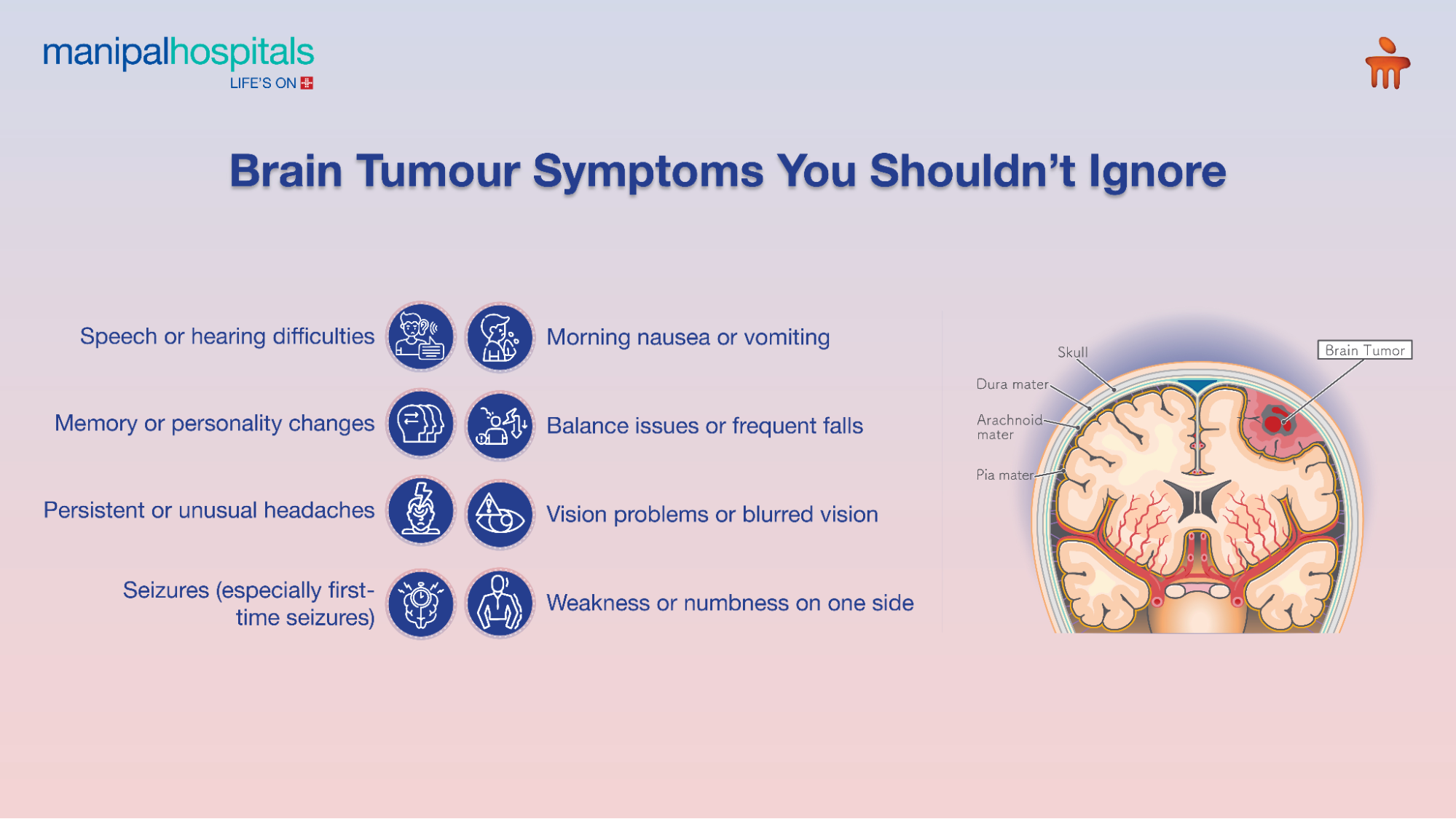
Common Brain Tumour Symptoms Include:
-
Persistent or unusual headaches - Headaches that are new, different from usual patterns, worse in the morning, or aggravated by coughing or bending.
-
Seizures - A first-time seizure in adulthood is a major warning sign that requires immediate medical evaluation.
-
Cognitive or personality changes - Memory problems, difficulty concentrating, confusion, or noticeable changes in behaviour or mood.
-
Weakness or numbness - Loss of strength or sensation, often affecting one side of the body.
-
Vision problems - Blurred vision, double vision, or loss of side vision.
-
Balance and coordination issues - Difficulty walking, dizziness, or frequent falls.
-
Speech or hearing difficulties - Slurred speech, trouble finding words, or hearing loss in one ear.
-
Persistent nausea or vomiting - Especially when symptoms are worse in the morning without digestive causes.
If these symptoms persist or worsen, early consultation at a specialised centre like Manipal Hospitals in Pune can significantly improve outcomes.
Brain Tumour Causes and Risk Factors
In most cases, the exact cause of a brain tumour is not known. Research has not found strong evidence linking brain tumours to lifestyle factors such as diet or mobile phone usage. However, certain risk factors are recognised.
Known Risk Factors Include:
-
Exposure to high-dose radiation - Particularly, radiation therapy to the head during childhood.
-
Inherited genetic conditions - Rare syndromes such as neurofibromatosis or Li-Fraumeni syndrome.
-
Cancer elsewhere in the body - Certain cancers can spread to the brain, leading to secondary brain tumors.
It is important to remember that many people diagnosed with brain tumours have no identifiable risk factors.
Modern Brain Tumour Treatment at Manipal Hospitals in Pune
A brain tumour diagnosis is serious, but advances in medical technology have made treatment more precise and effective than ever before. At Manipal Hospitals in Pune, care is delivered through a multidisciplinary approach involving neurosurgeons, neurologists, radiation oncologists, and medical oncologists.
Brain Tumour Treatment Options Include:
1. Surgery
Surgery is often the first line of treatment to remove as much of the tumour as safely possible. Using advanced neuronavigation systems and precision imaging, surgical success rates for common benign tumours such as meningiomas can exceed 90%.
2. Radiation Therapy
Radiation therapy uses high-energy beams to destroy tumour cells. Techniques like stereotactic radiosurgery (SRS) allow highly focused treatment with tumour control rates of 85–95%, while minimising damage to healthy brain tissue.
3. Chemotherapy
Chemotherapy involves the use of specialised medications to kill cancer cells and is often used alongside surgery or radiation for malignant brain tumours.
4. Targeted Therapy
Targeted therapies work by attacking specific abnormalities within tumour cells, offering effective treatment with fewer side effects than traditional chemotherapy.
Patients also have access to advanced care at centres such as Manipal Hospital Kharadi, one of the key units contributing to comprehensive neurosciences services in Pune.
Care Essentials: Do’s and Don’ts
Do’s
-
Seek medical attention early if symptoms persist
-
Keep a record of symptoms and their progression
-
Follow treatment plans and attend follow-up appointments
-
Rely on family and emotional support systems
Don’ts
-
Do not ignore new or worsening symptoms
-
Avoid self-diagnosis or unverified online information
-
Do not alter treatment without consulting your doctor
-
Never hesitate to ask questions; understanding your condition matters
When to Seek Expert Care
If you or a loved one is experiencing persistent neurological symptoms, a timely medical evaluation can make a significant difference. Early diagnosis and the right treatment approach often lead to better outcomes and improved quality of life.
The neurosciences team at Manipal Hospital Kharadi offers advanced diagnostics, personalised treatment plans, and compassionate care at every stage from evaluation to recovery.
Book an appointment with experts at Manipal Hospitals in Pune to receive trusted, comprehensive brain tumour care.
Disclaimer
This content is intended for informational purposes only and does not replace professional medical advice. Please consult a qualified healthcare professional for diagnosis and treatment.
FAQ's
No. Many brain tumours are benign but may still require treatment due to their location.
Currently, there is no proven way to prevent primary brain tumours.
Diagnosis includes neurological examination, imaging tests such as MRI or CT scans, and confirmation through biopsy.
Recovery varies widely and can range from a few weeks to several months.
Only about 5–10% of brain tumours are linked to inherited genetic conditions.
Yes. Even non-cancerous tumours can cause serious complications depending on their location.
Share this article on:


15.png)


--Mood,-Pain-and-Bloating-Relief.webp "Premenstrual Syndrome (PMS)")