8 Min Read
Do you often feel unusually full after eating, struggle with repeated vomiting, or notice pain in your upper abdomen? At first, it may seem like simple indigestion, but persistent symptoms may indicate a more serious condition called gastric outlet obstruction (GOO). It happens when the passage between your stomach and small intestine gets blocked, affecting the movement of food.
The good news is that with early diagnosis and the right treatment, such as medicine or surgery, most people recover well and feel better again. In this blog, we explain the symptoms, causes, and treatment options for gastric outlet obstruction and why early medical attention is important.
Synopsis
- What Happens in Gastric Outlet Obstruction?
- Symptoms of Gastric Outlet Obstruction
- What Causes Gastric Outlet Obstruction?
- Possible Complications
- Treatment Options for Gastric Outlet Obstruction
- How to Treat Gastric Outlet Obstruction
- Recovery After Gastric Outlet Obstruction Treatment
- Lifestyle and Dietary Changes
- When to Seek Medical Help?
- Conclusion
What Happens in Gastric Outlet Obstruction?
Gastric Outlet Obstruction happens when the passage between your stomach and small intestine (pylorus) is blocked. The pylorus is a small opening in the stomach that allows food to pass into the small intestine after the stomach breaks it down. When there is a blockage or narrowing in this area, the passage becomes smaller. As a result, food and fluids cannot pass efficiently into the small intestine. As pressure builds up, it can cause discomfort and lead to vomiting.
Symptoms of Gastric Outlet Obstruction
The body often shows early warning signs, even if they are mild at first. Some common gastric outlet obstruction symptoms that patients often notice:
-
Vomiting, especially after meals
-
Often feeling full with small meals (early satiety)
-
Abdominal bloating
-
Dehydration in severe cases
Some people may notice they vomit food eaten several hours earlier. This means the stomach is taking longer to empty, which is a sign of gastric obstruction. While the symptoms can feel uncomfortable, most cases respond well to treatment when diagnosed early.
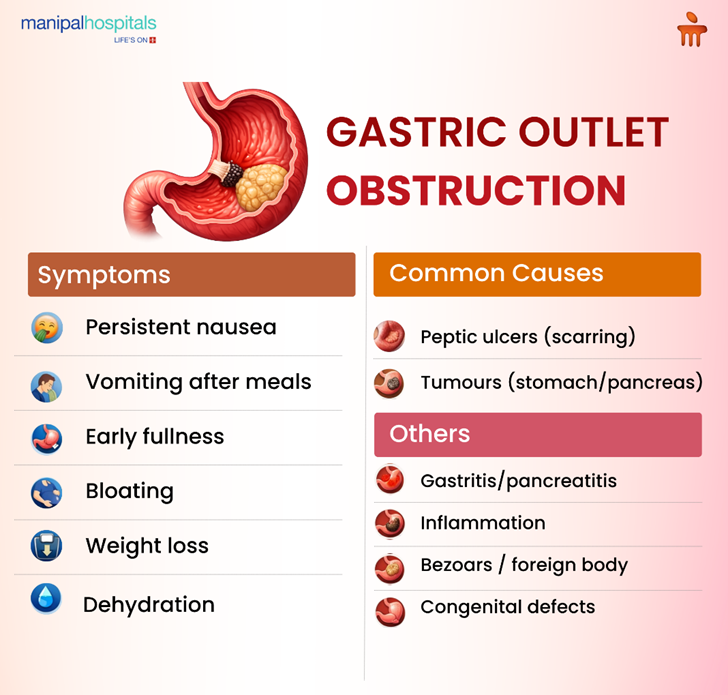
What Causes Gastric Outlet Obstruction?
Understanding the gastric outlet obstruction causes can help you make informed treatment decisions. Some common causes include both mechanical obstruction and inflammation:
Peptic Ulcer Disease
Long-term ulcers are one of the most common causes of gastric outlet obstruction. Long-term inflammation causes swelling, while scar tissue narrows the passage.
Tumours
Both benign and malignant tumours can block the opening of the stomach. Malignant tumours may include stomach cancer, pancreatic cancer, or growths near the pylorus. A doctor should investigate these serious causes as soon as possible.
Inflammation and Swelling
Conditions such as pancreatitis or severe inflammation (for example, from ulcers) can narrow the passage. Eosinophilic gastroenteritis is a rare inflammatory disorder that also causes narrowing of the pylorus.
Rare Causes
Some rare causes include congenital abnormalities and ingesting a foreign body, such as a bezoar. Each of these can cause gastric outlet obstruction differently, so it helps to identify the exact cause.
Risk factors for this condition include Helicobacter pylori infection, long-term anti-inflammatory drug use, and previous stomach surgery. Chronic ulcers remain one of the leading causes globally.
Possible Complications
-
Severe dehydration caused by persistent vomiting.
-
Electrolyte imbalances can affect nerve function.
-
Malnutrition can lead to muscle loss and weakness.
-
Complications such as aspiration pneumonia.
Early and proper treatment can help lower the risk of these complications.
Treatment Options for Gastric Outlet Obstruction
Doctors use a combination of tests to confirm the diagnosis, including:
-
Endoscopy: A camera-fitted tube is inserted into the stomach to inspect the blockage.
-
CT scan: Provides structural details of your stomach and surrounding organs.
-
Blood tests: They help assess dehydration and electrolyte imbalances.
-
Abdominal X-rays: May show signs of obstruction, but are less detailed than CT scans.
-
Contrast imaging: Provides details on how quickly food exits the stomach.
These tests help identify the exact cause of this condition and guide the best treatment plan for gastric outlet obstruction in Kanakapura Road.
How to Treat Gastric Outlet Obstruction
Treatment depends on how severe the condition is and what is causing it.
|
Treatment |
What It Means |
Why It Helps |
|
Initial Medical Management |
IV fluids restore hydration, electrolytes are used to correct imbalances, and a nasogastric tube relieves stomach pressure. |
Stabilises the patient and eases discomfort before further treatment. |
|
Medications |
Acid-lowering drugs help ulcers heal, while antibiotics fight infections. |
Targets reversible causes and reduces irritation in the stomach lining. |
|
Endoscopic Procedure |
Balloon dilation uses a scope to gently widen the narrowed passage. |
Improves food flow without major surgery, often giving quick relief. |
|
Surgery |
Options include endoscopic procedures or surgery such as gastrojejunostomy, which creates a new pathway for food to bypass the blockage. |
Best for severe or recurring cases; restores normal digestion and improves quality of life. |
If the blockage is permanent, surgery is usually the best choice for severe or recurring cases. Patients who have surgery often see better results and recover more effectively.
Recovery After Gastric Outlet Obstruction Treatment
Recovery depends on the severity of the blockage and the treatment provided. Early diagnosis and prompt treatment help prevent serious complications and help prevent complications and improve outcomes.
What to Expect After Surgery?
-
Hospital stay for monitoring
-
Gradual return to oral intake
-
Nutritional support
Recovery Timeline
-
First few days: Liquid diet
-
Weeks: Move to soft foods
-
Months: Return to regular diet
Following dietary advice and regular follow-up care after the surgery is very important for long-term success. For many, especially those who undergo surgery to resolve the problem, the transformation is striking. They often experience significant relief, renewed energy, and a greatly improved quality of life. It's a strong reminder of how prompt care and following medical advice can change a tough diagnosis into a story of strength and healing.
Lifestyle and Dietary Changes
Making small but important changes to your daily routine is part of managing recovery. Some effective modifications suggested are as follows:
-
Eat small, frequent meals
-
Avoid spicy or heavy foods initially
-
Stay well hydrated with fluids
-
Quit smoking for digestive health
-
Manage stress through regular physical activity
-
Follow doctor-recommended diet plans
-
Avoid hard-to-digest or high-fibre foods initially
These steps support your body’s healing after treatment for a better quality of life.
When to Seek Medical Help?
If you notice any of the following warning signs, consult a doctor immediately.
-
Persistent vomiting
-
Rapid weight loss
-
Severe abdominal discomfort
-
Food intolerance with smaller meals
Early intervention and prompt treatment are crucial for patients with gastric outlet obstruction.
Conclusion
Gastric outlet obstruction needs careful attention, but it can be managed well with the right care. Noticing symptoms early, knowing the causes, and getting treatment quickly are important steps. People seeking medical assistance can visit Manipal Hospitals Kanakapura Road, where doctors use advanced tests and create treatment plans tailored to each patient. With good advice and timely support, patients can recover and get back to living comfortably.
FAQ's
It usually gets worse over time, but symptoms may appear suddenly if the blockage becomes severe or complete.
No, many cases are due to benign conditions like ulcers or inflammation, although cancer is one possible cause.
Yes, mild cases may respond to medications or endoscopic treatment, but severe cases often require gastric outlet obstruction surgery.
Recovery varies and may take several weeks, depending on the procedure and overall health.
Yes, following a balanced diet, avoiding irritants, and managing underlying conditions can reduce the risk of recurrence.
Share this article on:


.webp "Irritable Bowel Syndrome Unveiled: From Triggers to Treatment")