7 Min Read
Some women learn about fibroids in the uterus during a routine scan and feel fine, while others experience heavy bleeding, pain, or trouble getting pregnant. Fibroids in the uterus are very common, and most of the time, they are not cancerous. Many women live with them without needing any help. However, in some cases, fibroids can grow larger or lead to symptoms that begin to affect daily comfort, overall health, and quality of life. This blog explains the causes of fibroids, common symptoms, available treatments, and when surgery might be needed.
Synopsis
What Are Uterine Fibroids?
Fibroids in the uterus, which are also known as uterine fibroids or leiomyomas, are lumps that grow in the muscle layer of the uterus (womb) and are not cancerous. They come in different sizes, numbers, and places.
Fibroids can be:
-
As small as a pea
-
As big as a melon
-
One or more
Fibroids are usually non-cancerous and often harmless, but in some cases, they can lead to complications depending on their size and location.
Types of Uterine Fibroids
Understanding the different types of uterine fibroids helps doctors decide the most suitable treatment approach and helps patients better understand their symptoms and care options. The following explains the main types of uterine fibroids:
|
Types of Fibroid |
What It Means |
Common Symptoms or Effects |
|
Intramural Fibroids |
The most common type of fibroid grows within the muscular wall of the uterus. |
Can cause heavy or prolonged periods, pelvic pain, pressure in the lower abdomen, and, in some cases, difficulty conceiving if the fibroid becomes large. |
|
Submucosal Fibroids |
Fibroids that grow just beneath the inner lining of the uterus may extend into the uterine cavity. |
Often linked with heavy menstrual bleeding, irregular periods, and fertility challenges because they can affect the shape of the uterine cavity. |
|
Subserosal Fibroids |
Fibroids that grow on the outer surface of the uterus expand outward. |
Usually causes pressure-related symptoms such as frequent urination, constipation, or lower back discomfort rather than heavy bleeding. |
|
Pedunculated Fibroids |
Fibroids that grow on a stalk, either inside or outside the uterus. |
May cause sharp or sudden pain if the stalk twists. Symptoms depend on their size and location. |
|
Cervical Fibroids |
Cervical fibroids, a less common type, develop in the cervix, the lower part of the uterus. |
Cervical fibroids can cause pelvic pain, discomfort during intercourse, difficulty with urination, and sometimes unusual bleeding. |
What Causes Fibroids?
Women have always wondered what causes fibroids in the uterus. Some of the possible causes have been identified by medical professionals, but the reasons are still not clear. Some of the possible fibroid causes include:
-
Hormonal influence: Fibroids are known to develop during the reproductive years of women and shrink after menopause because of the hormonal influence of estrogen and progesterone.
-
Genetic Factors: Women who have a history of fibroids in the family are likely to develop the condition.
-
Age: Fibroids typically affect women between the ages of 30 and 50.
-
Lifestyle factors: Healthy lifestyle habits can help manage symptoms and support overall reproductive health, but they do not directly remove fibroids.
Signs & Symptoms of Fibroids
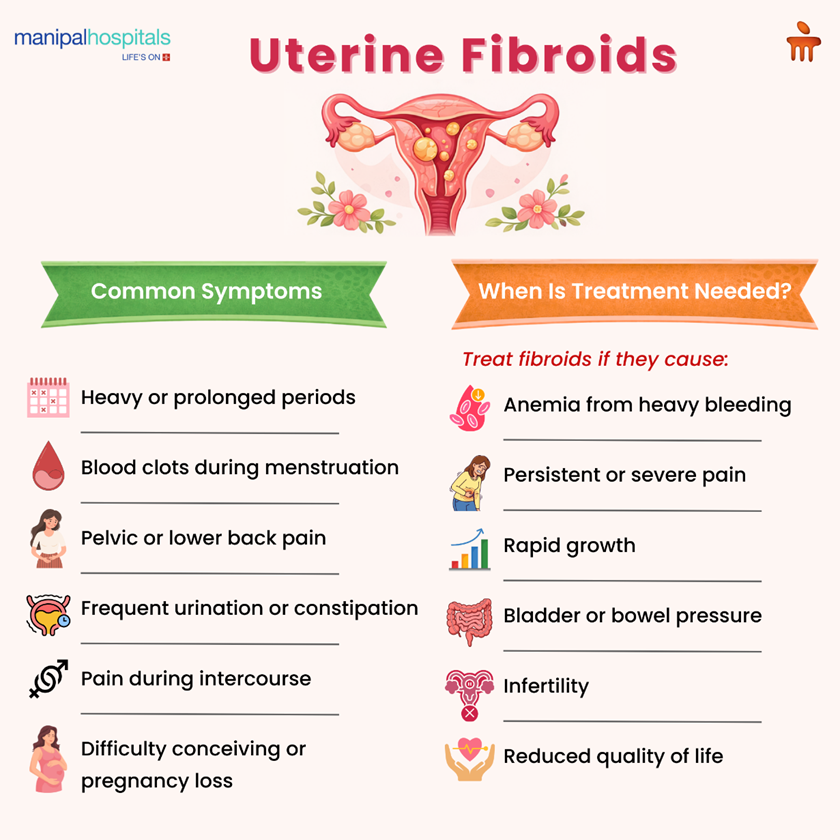
Not all women with fibroids have symptoms. Many fibroids in uterus are found by chance. When symptoms do appear, they can range from mild to severe. The following are some of the common fibroid symptoms:
-
Heavy or long-lasting periods
-
Having blood clots during your period
-
Pain or pressure in the pelvis
-
Pain in the lower back
-
Having trouble emptying the bladder
-
Problems getting pregnant or losing a pregnancy more than once
If fibroid symptoms begin to interfere with your daily life, it's important to see a doctor. Getting evaluated early helps ensure that fibroid treatment is timely and effective.
How Are Fibroids Diagnosed?
Fibroids are usually diagnosed during a pelvic examination when a doctor checks for changes in the size or shape of the uterus. To confirm the diagnosis, imaging tests such as ultrasound are commonly used because they clearly show the size, number, and location of fibroids. In some cases, doctors may suggest MRI scans or hysteroscopy for a more detailed view, especially when planning treatment or investigating symptoms like heavy bleeding or fertility concerns.
When Should You Treat Fibroids?
If fibroids in uterus lead to serious health issues or symptoms, treatment is recommended.
Treatment is needed if you have heavy bleeding causing anemia, persistent or severe pelvic pain, rapidly growing fibroids, bladder or bowel problems, infertility, or reduced quality of life.
-
Heavy bleeding causes anemia
-
Pelvic pain is either persistent or severe
-
Fibroids grow quickly
-
Changes in bladder or bowel habits occur due to pressure from fibroids
-
Fertility is affected
-
Quality of life is affected
-
Pressure symptoms affect organs
Age, symptoms, fibroid size, plans for future pregnancy, and overall health all help determine the best treatment for fibroids.
Non-Surgical Treatment Options
A lot of women find that non-surgical methods work for them, especially when their symptoms aren't too bad. Some popular non-surgical methods to treat fibroids in uterus:
-
Drugs: Hormonal pills or shots, anti-inflammatory medicines, and medicines that stop heavy bleeding. These help with the symptoms of fibroids, but they may not make them smaller for good.
-
IUDs (intrauterine devices): Hormonal IUDs can help stop heavy bleeding caused by fibroids.
-
Changes to your lifestyle: Maintaining weight, a balanced diet, regular exercise, and effective stress management.
Surgery of Fibroids
The type of surgery depends on your individual needs and the kind of fibroid you have. The following are the usual surgical options for treating fibroids:
|
Surgical Option |
What It Means |
When It Is Usually Recommended |
|
Myomectomy |
A procedure that removes fibroids while keeping the uterus intact. |
Often recommended for women who want to preserve fertility or plan to become pregnant in the future. |
|
Hysterectomy |
A surgery that removes the uterus completely. |
It is usually suggested when fibroids are large, causing severe symptoms, or when other treatments have not worked, especially if pregnancy is not planned. |
|
Laparoscopic (Minimally Invasive) Surgery |
A keyhole surgery is performed using small cuts and specialised instruments to remove fibroids or the uterus. |
Suitable for selected patients with smaller or fewer fibroids and those who prefer faster recovery. |
|
Hysteroscopic Myomectomy |
A procedure where fibroids inside the uterus are removed through the vagina using a thin telescope-like instrument. |
This procedure is recommended when fibroids grow inside the uterus and cause heavy bleeding or fertility problems. |
|
Abdominal (Open) Myomectomy |
A traditional surgery where a larger cut is made in the abdomen to remove fibroids. |
Used when fibroids are very large, numerous, or difficult to remove through minimally invasive methods. |
Conclusion
Fibroids in uterus are common and treatable. Deciding when to monitor and when to treat can make a big difference. By learning about the causes, symptoms, and treatment options, women can take charge of their health. Manipal Hospital Jayanagar provides the best fibroid treatment in Jayanagar, combining expertise and compassionate fibroid care tailored to each woman's needs.
If you are experiencing symptoms such as heavy bleeding, pelvic pain, frequent urination, or fertility concerns, consult the experienced gynecology specialists at Manipal Hospitals. Early diagnosis and the right treatment approach can help manage fibroids effectively and protect your long term reproductive and overall health.
FAQ's
Yes. Living with heavy bleeding, pain, or worries about fertility can leave someone feeling anxious, drained, or embarrassed. It is normal to feel upset or stressed. Talking openly with your doctor and joining patient support groups often helps people feel less alone and more in control.
If fibroids are small and not causing symptoms, many doctors suggest a follow-up scan every six to twelve months to check for change. The plan is usually personalised, so any new pain, heavier bleeding, or pressure should prompt an earlier review with a clinician.
Diet will not cure fibroids, but simple changes can ease how someone feels. Eating plenty of fruit, vegetables, and whole grains; cutting back on alcohol and processed foods; keeping active; and maintaining a healthy weight all help. If periods are very heavy, checking iron levels and getting advice on supplements from a clinician is sensible.
Sometimes they can. Fibroids may cause pain, increase the chance of preterm labour, or affect the baby’s position, but many women with fibroids have perfectly healthy pregnancies. A gynecologist will monitor the situation closely and plan any care needed during pregnancy and delivery.
No. Many treatments aim to preserve the uterus and future fertility, for example, myomectomy or certain medications. Hysterectomy does remove the ability to become pregnant, so it is usually reserved for those who don’t want more children or when other options are unsuitable. It is important to discuss family plans before choosing treatment.
Share this article on:


--Symptoms-and-Septoplasty-Recovery.webp "Deviated Nasal Septum (DNS): Symptoms and Septoplasty Recovery")