7 Min Read
Many people find their food habits changing once pregnancy starts. Some days feel easy and predictable, while others shift without much reason, and small meal choices can help bring a bit of balance. This is where pregnancy nutrition and a balanced diet during pregnancy begin to shape everyday life. It often starts with noticing what the body asks for and how simple, steady meals can support each stage.
Synopsis
- Pregnancy Nutrition: What is Needed?
- Why Balanced Choices Matter?
- Diet During Pregnancy: Nutrition Across Each Trimester
- Helpful Food Groups to Include
- Foods to Avoid or Limit
- Hydration as Part of the Routine
- Movement and Rest Supporting Nutrition
- Expectation Setting and Flexibility
- Practical Everyday Tips
- Building Confidence in Food Choices
- Final Thoughts
Pregnancy Nutrition: What is Needed?
Healthy pregnancy nutrition refers to everyday eating patterns that support both the parent and baby without requiring complicated plans. It relies on regular meals that offer steady energy throughout the day. Many women during pregnancy adjust their diet as their appetite and comfort levels shift through the weeks. The goal stays consistent, which is choosing varied pregnancy foods that feel manageable and give the body what it needs. This idea also highlights how nutrition during pregnancy works best when taken step by step. People often learn what suits them as the weeks move.
Proper nutrition for a healthy pregnancy is also personal. What feels right for one mother may feel different for another, and this flexibility helps build confidence around food choices.
Why Balanced Choices Matter?
Many families pay attention to nutritious foods because what someone eats can influence energy, digestion, and overall comfort. A supportive diet during pregnancy helps keep moods steadier and may reduce small discomforts. Meals that are planned with care often make days feel more manageable, even when the body is changing.
Seen from another angle, steady meals help people feel more grounded. Food becomes a helpful tool through each stage rather than something that adds pressure.
Healthy nutrition also helps prepare the body for later months, giving a sense of continuity and control during a time that can feel unpredictable.
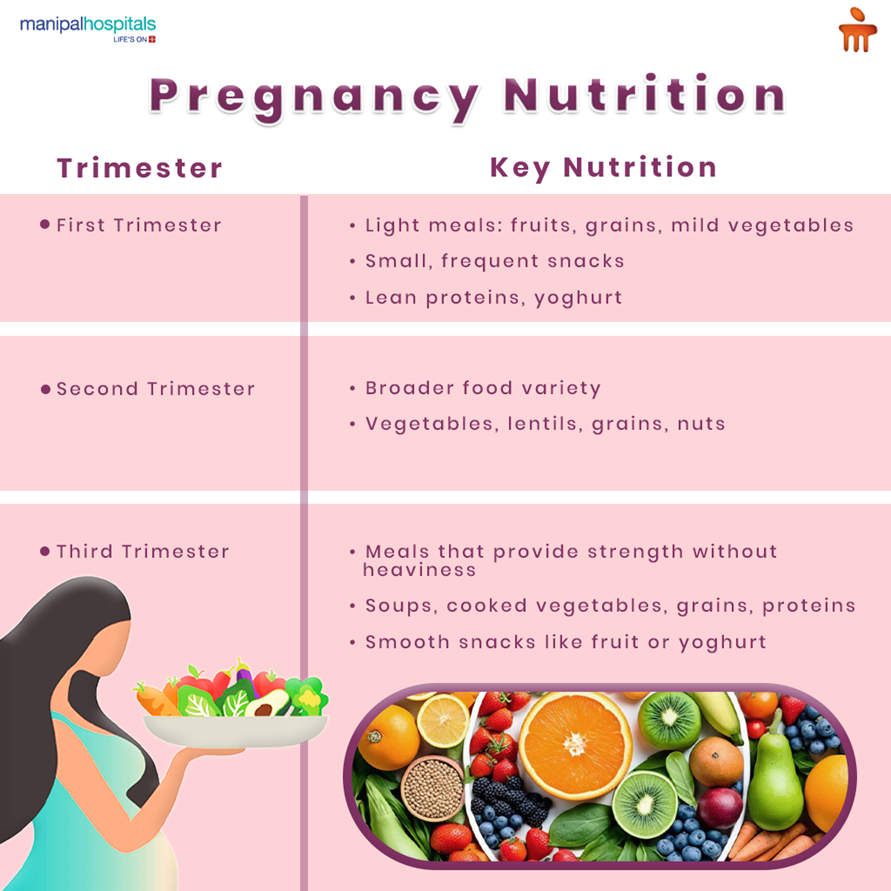
Diet During Pregnancy: Nutrition Across Each Trimester
Food needs can vary across each trimester. Appetite rises and falls, and taste can change in unexpected ways. People often notice that foods that worked earlier may not feel the same later, and this natural shift is part of the process. Choosing a good mix of pregnancy foods makes it easier to stay comfortable while meeting nutritional needs. This pattern can also be seen as phases. Each trimester comes with its own needs and asks you to make a few small changes along the way.
First Trimester
The first trimester usually brings new sensations, including nausea or sudden hunger changes. This can influence how someone approaches pregnancy nutrition. Simple meals with fruits, grains, and mild vegetables tend to sit well. Many rely on light snacks between meals to avoid dips in energy. Lean proteins or yoghurt can also support this stage. People often gravitate towards familiar pregnancy diet that feel easier to manage.
Another way to look at this stage is through predictability. Eating small meals at regular times can bring relief when appetite shifts. A comfortable diet during pregnancy helps maintain energy even on days that feel uneven.
Second Trimester
In the second trimester, many experience a more stable appetite and energy. Add vegetables, lentils, grains, and nuts - they bring a range of nutrients and are usually digestible. People often enjoy exploring more diverse pregnancy foods during this period. Flavours that were difficult earlier may now feel more appealing.
When described another way, this trimester often feels like a middle ground. Healthy pregnancy nutrition grows naturally because the body handles meals more steadily.
Third Trimester
During the third trimester, hunger can increase even though digestion sometimes slows. Meals that provide steady strength without feeling heavy are helpful. People often choose soups, cooked vegetables, proteins, and grains during this stage. Many mothers return to simple pregnancy foods that comfort them while giving enough fuel for the long days. Smooth snacks like fruit or yoghurt may also help maintain energy.
Another way to understand this period is through preparation. A clear diet during pregnancy supports the body as it approaches labour, helping people feel more prepared through practical choices. Healthy pregnancy nutrition at this point gives the foundation for the final stretch, making each day feel slightly easier to manage.
Helpful Food Groups to Include
A balanced plate during pregnancy often includes vegetables, fruits, grains, proteins, and healthy fats. Many pregnant women build these gradually into their diet as they understand what feels right. Vegetables and fruits bring vitamins that support daily function. Whole grains provide slow and steady energy. Lentils, eggs, fish, and similar options help support growth. Including a few food groups in each meal gives the body the support it needs without any sense of strictness. Healthy pregnancy nutrition forms more easily when people choose meals that offer variety across the week.
Examples of Helpful Additions
-
Fruits like bananas, berries, citrus
-
Vegetables such as spinach, carrots, and cauliflower
-
Whole grains like oats, brown rice, and whole wheat
-
Proteins from lentils, eggs, chicken, paneer
-
Nuts and seeds for added texture
Foods to Avoid or Limit
There are some items that people commonly avoid during pregnancy. Raw seafood is usually skipped for safety. Unpasteurised dairy can also be risky. Many limit high caffeine drinks because they may cause discomfort or restlessness. Some avoid reheated street foods because they can upset digestion. Reducing heavily fried snacks may also help people feel better throughout the day. These adjustments protect the flow of pregnancy nutrition and reduce the chances of stomach issues.
When explained again, it becomes clear that caution helps people stay comfortable. Choosing safer pregnancy foods allows the body to remain more stable during this time.
Working towards a supportive diet during pregnancy does not mean removing everything. It simply involves making choices that keep digestion and energy steady.
Hydration as Part of the Routine
Water plays a steady role during pregnancy and supports the entire body. Hydration helps digestion move more smoothly and prevents tiredness from building too quickly. Many track their water intake alongside their diet so they feel more balanced throughout the day. Some prefer herbal drinks or diluted juices for variety. This habit becomes a simple part of pregnancy nutrition, helping the body handle changes that come with each trimester.
Hydration also works well with chosen pregnancy foods because it assists in nutrient absorption and comfort. Keeping a bottle nearby often becomes an easy reminder that supports the routine.
Movement and Rest Supporting Nutrition
Light movement can help digestion and improve comfort after meals. Walking or stretching works well alongside a balanced diet during pregnancy, and people often find the combination useful. Rest also plays an important role. When both activity and rest are treated with similar care, they support the body’s ability to use nutrients effectively.
Over time, this shapes their sense of healthy pregnancy nutrition and helps them adjust what they eat. Both movement and rest help maintain better routines throughout the pregnancy journey.
Expectation Setting and Flexibility
No two pregnancies move in the same way. Appetite, mood, and comfort can shift daily. Many realise that flexibility makes the process easier. When someone understands that their pregnancy nutrition can change without being wrong, it removes unnecessary pressure. Some days will feel predictable while others will need adjustments. Accepting this helps people approach meals with more ease. Supporting the body with consistent pregnancy foods throughout the week helps maintain balance even when the days differ.
Practical Everyday Tips
These ideas can help people organise their meals without adding stress.
Easy ways to support nutrition
-
Keep meals planned in advance to avoid rushed choices
-
Choose snacks that fit comfortably into your daily routine
-
Add colours to the plate for more nutrients
-
Eat at regular intervals to avoid sharp hunger dips
-
Rest after meals if the body feels tired
These points help people return to simple habits that strengthen pregnancy nutrition in a natural way.
Building Confidence in Food Choices
Pregnancy can bring uncertainty, and food is often part of that. Building confidence in daily meals helps people feel more settled during the months ahead. Many find comfort in choosing pregnancy foods they trust and repeating them throughout the week. Others enjoy adding new foods slowly to test how they feel. Both approaches can work well if they support comfort and nutrition.
Final Thoughts
Pregnancy eating does not need to feel complicated. People often do well when they notice how their body responds and adjust their meals accordingly. This approach supports physical health and makes each trimester easier to navigate. Balanced pregnancy nutrition through a thoughtful diet during pregnancy creates a foundation that supports both the mother and the baby. A clear understanding of what works for each stage makes the journey smoother and builds habits that last beyond pregnancy.
For guidance or clarity about pregnancy and nutrition, our team at Manipal Hospitals Jayanagar can offer supportive care that fits your needs.
FAQ's
Many people start with small steps like regular meals, steady hydration and plenty of rest. The body works quietly in the background, so simple care goes a long way. Speak with your doctor if anything feels too heavy or unusual.
Most home-cooked meals and fresh produce work well during pregnancy. It helps to avoid raw seafood and food that sits out too long. Choose clean, balanced meals that keep you energised without feeling too full.
Many describe the second trimester as a calmer stretch where the body feels a little lighter. Energy may settle, and day-to-day life often becomes easier. You may also feel gentle movements that make the experience more real.
Comfort comes from soft daily habits like stretching, slow walks and cosy sleep routines. Wearing supportive clothing also makes a difference. Try to listen to your body when it asks you to pause or change pace.
Reach out whenever something feels out of place or when you need reassurance. Regular check-ups keep you informed and help you feel safe through every stage. No concern is too small during pregnancy.
Share this article on:


--Symptoms-and-Septoplasty-Recovery.webp "Deviated Nasal Septum (DNS): Symptoms and Septoplasty Recovery")