6 Min Read
Struggling to keep energy up while breastfeeding and wondering which meals actually help with breast milk?
Breastfeeding needs extra calories, protein, and micronutrients, and certain Indian food choices deliver these efficiently. This blog reviews nutrient-rich options, like oats, ragi, moringa, nuts, and modest use of fenugreek, explains how they support lactation biologically, and shows simple, practical ways to include them in regular meals. You’ll also get guidance on hydration, safe portioning, and when to consult a lactation specialist if supply or baby weight gain is a concern.
Synopsis
Role of Diet in Breast Milk Production
A healthy breast milk supply needs adequate fluid and regular removal of milk. Drink plain water, milk, coconut water, or light soups throughout the day. Herbal drinks used in some communities, such as mild fennel or cumin infusions, support digestion and comfort. To maintain supply, aim to breastfeed or express frequently. Short naps and stress reduction also improve energy and help you stick to a nutritious meal plan. Mothers in Jayanagar can follow these simple practices to support consistent milk production and overall well-being.
Top Indian Foods to Increase Milk Supply
Many traditional diets include specific foods to increase milk supply. Below are the most useful options, why they help, and how to use them.
|
Food |
Key Nutrients |
How It Helps |
Serving Suggestion |
|
Oats |
Complex carbs, iron, fibre |
Sustains energy and supports lactation hormones |
Oat porridge with milk and nuts each morning |
|
Fenugreek (methi) seeds |
Saponins, fibre |
Traditional galactagogue; may raise milk volume for some mothers |
1 tsp soaked seeds in water or fenugreek tea |
|
Moringa leaves (drumstick leaves) |
Protein, iron, calcium, vitamins A and C |
Nutrient-dense green that supports milk quality |
Add to dal, sambar, or stir-fries |
|
Ragi (finger millet) |
Calcium, protein, fibre |
Good for bone-supporting nutrients and steady energy |
Ragi porridge or ragi dosa |
|
Sesame seeds |
Calcium, healthy fats |
Provide energy and micronutrients for lactation |
Sprinkle on chutneys or mix into laddoos |
|
Almonds and dates |
Healthy fats, vitamin E, and iron |
Quick energy and micronutrient support |
Soaked almonds or date-almond shakes |
|
Spinach and leafy greens |
Iron, folate |
Supports haemoglobin and energy, which affect milk supply indirectly |
Add to curries, soups, or parathas |
|
Garlic and cumin |
Antimicrobial compounds |
May support digestion and comfort; used traditionally in lactation recipes |
Use in tempering for dals and soups |
How to Use These Foods in Daily Meals
Follow the steps below:
-
Start the day with a warm bowl of oats made with milk and a handful of almonds or dates. This supports steady energy and breast milk production.
-
Add moringa leaves or spinach to lentil-based dishes such as dal and sambar. These meals are typical Indian food staples and supply iron and protein.
-
Include a small serving of ragi porridge or dosa a few times a week for calcium and complex carbohydrates.
-
Use fenugreek seeds in small amounts as tea or soaked seeds. Avoid large amounts if you are breastfeeding and have a history of allergies.
-
Snack on sesame seed laddoos or roasted seeds when you need quick calories and calcium during the day.
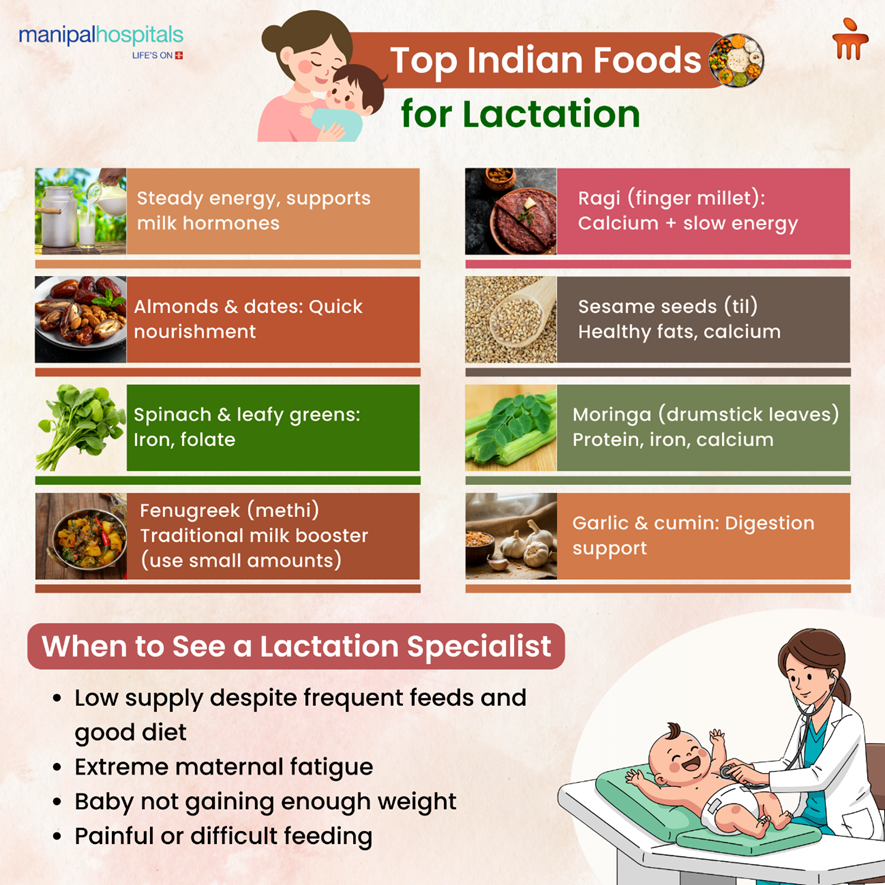
Aim for balanced meals rather than relying on one single item. Combining protein, healthy fat, and complex carbohydrates at each meal supports sustained milk production.
Hydration, Rest, and Feeding Patterns
A healthy breast milk supply needs adequate fluid and regular removal of milk. Drink plain water, milk, coconut water, or light soups throughout the day. Herbal drinks used in some communities, such as mild fennel or cumin infusions, support digestion and comfort. To maintain supply, aim to breastfeed or express frequently. Short naps and stress reduction also improve energy and help you stick to a nutritious meal plan.
When to Avoid Certain Foods
Most of the foods listed are safe and common in Indian food diets. A few precautions:
-
Fenugreek can cause body odour or gastrointestinal upset in some women and should be used in moderation.
-
If you have a food allergy or your baby shows signs of intolerance (excessive fussiness, rash, or blood in stools), stop the suspected food and consult your clinician.
-
Large amounts of caffeine or very spicy meals may upset some babies and affect feeding patterns. Moderate these items.
When in doubt, test one food at a time and observe your baby and your milk supply.
Quick Practical Meal Plan
A simple, balanced daily meal plan focused on nourishing foods:
-
Breakfast: Oat porridge with milk and chopped almonds.
-
Mid-morning snack: dates or a sesame laddu.
-
Lunch: Rice or roti, dal with moringa leaves, and a side of vegetables.
-
Afternoon snack: Buttermilk or coconut water and roasted seeds.
-
Dinner: Ragi dosa or chapati, vegetable curry with spinach and tempered cumin.
-
Hydration: Aim for clear fluids regularly throughout the day.
These are simple Indian food options that are easy to prepare and support steady breast milk production.
Conclusion
Choosing the right Indian food can support lactation naturally and help mothers who are feeling tired by providing steady energy and essential nutrients. Focus on balanced meals that include oats, leafy greens, ragi, nuts, seeds, and modest use of fenugreek. Frequent feeding and good hydration remain central to maintaining supply. For personalised advice, testing, and a nutrition plan that fits your dietary preferences and health needs, contact the maternal nutrition and lactation team at Manipal Hospital Jayanagar. Our specialists provide tailored counselling and clinical support to optimise your breastfeeding journey.
Book an appointment at Manipal Hospital Jayanagar today for expert lactation support and a personalised nutrition plan.
FAQ's
Oats, warm dal with moringa or spinach, soaked almonds and dates, and modest fenugreek preparations often show a noticeable effect within days for some women. Responses vary, so watch what works for you.
Fenugreek is commonly used, but it is not suitable for everyone. Use small amounts and stop if you or your baby have side effects such as gastrointestinal upset or allergic reactions. Check with your clinician if you have health conditions.
Multivitamins can help when tests show deficiencies, but whole Indian food meals provide calories, protein, fibre, and benefits that supplements alone cannot replace. Use supplements only as advised by your clinician.
Drink regularly so you stay hydrated. There is no strict volume for everyone, but aim to replace fluids lost during feeds and maintain clear urine. Include plain water, milk, and light soups.
See a lactation specialist if you have concerns about low milk supply despite diet and frequent feeding, if your baby is not gaining weight adequately, or if feeding is painful or difficult. Manipal Hospital Jayanagar offers lactation clinics and nutrition support.
Share this article on:


--Symptoms-and-Septoplasty-Recovery.webp "Deviated Nasal Septum (DNS): Symptoms and Septoplasty Recovery")