7 Min Read
Pollution gathers in the air around us, and smoking only adds to that load. Many people notice their breathing feels heavier on busy days, yet they brush it aside. The lungs work steadily through these changes, so caring for them becomes a routine habit rather than a sudden task. This topic feels close to many homes, and starting simple makes the whole picture easier to follow. A calm understanding settles in when we learn how daily choices shape breathing comfort.
Synopsis
- What Is Lung Health?
- Everyday Exposure and Breathing Strain
- The Early Effects of Pollution on Lungs
- How Smoking Shapes Lung Health?
- Practical Lung Protection Tips for Daily Life
- Home Environment and Cleaner Air
- The Deeper Effects of Pollution on Lungs
- What Happens When Smoking and Pollution Combine?
- Strengthening Your Breathing System
- Lung Protection and Screening
- Breathing Comfort Through Daily Choices
- A Closing Note
What Is Lung Health?
Lung health refers to how well the lungs move air, filter particles, and support the body through oxygen flow. It describes how strong the lungs feel during normal activities and how resilient they remain when faced with pollution or smoke. People often think lungs only struggle during illness, yet they respond to small irritants every day. This explanation is easier when we talk about the lungs as partners that adapt and shift with our habits.
Good respiratory health also means the airways stay open and flexible. Clean air supports that process, so even minor improvements help. When the lungs function steadily, we feel more energetic and less tired during routine movements. Thinking of the lungs as consistent workers helps this idea feel more grounded.
Everyday Exposure and Breathing Strain
Air quality changes through the day. Dust rises, vehicles move, and smoke hangs a little longer in closed spaces. These shifts can cause pressure in the chest, especially if someone already feels sensitive to polluted air. Many people do not notice the early signs because they arrive slowly.
Why it Matters
-
Polluted air can irritate the inner lining of the lungs.
-
Smoking affects how well the lungs clean themselves.
-
Exposure over time affects breathing comfort during simple tasks.
Steady steps often make a large difference when taken consistently.
The Early Effects of Pollution on Lungs
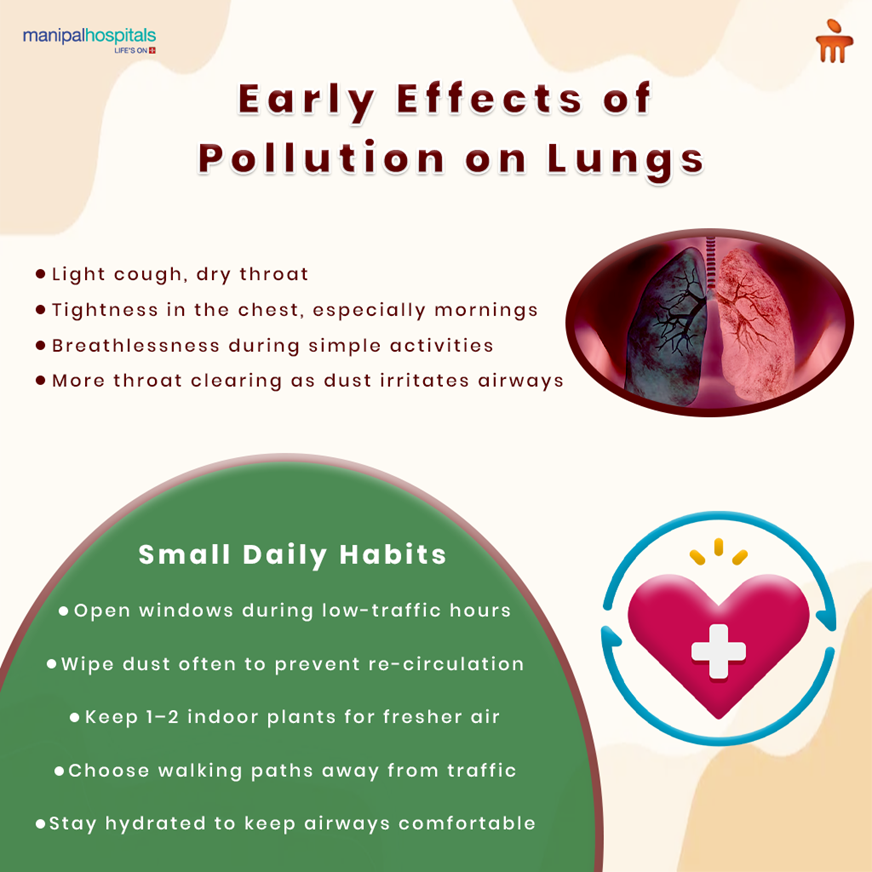
The early effects of pollution on lungs appear subtle. People may feel a light cough or a dry throat after walking near traffic. Sometimes the chest feels tight during early mornings when the air is still. These signs can fade quickly, so they are often ignored.
Over time, pollution on the respiratory system can make breathing feel harder during workouts. Air particles can settle deeper in the lung passages, creating irritation. Many people only realise this after climbing stairs or carrying something slightly heavy. Seeing these changes helps us notice patterns in our breathing.
Prolonged exposure also affects how the lungs filter dust. The lining can become sensitive, leading to more frequent throat clearing. Pollution make the body work harder, and that extra effort shows up in small ways.
How Smoking Shapes Lung Health?
Smoking harms lung health by slowing the movement of tiny protective structures inside the airways. They help remove dust and particles, so smoking makes this process lag. This leads to more irritation and more pressure on the lung tissue. Even occasional smoking leaves an imprint.
People who smoke often notice shortness of breath during simple tasks. The chemicals in smoke create inflammation, which tightens the air passage. This slows air movement and changes how the lungs react to stress. Maintaining good respiratory function becomes tough when smoke continues entering the system.
Smoking also changes how the lungs repair themselves. Recovery slows down, which affects long-term breathing comfort and makes the lungs more susceptible to pollution. When both pollution and smoking mix, the impact on the respiratory system grows stronger. This creates a firmer sense of why cutting down makes breathing easier.
Practical Lung Protection Tips for Daily Life
There are simple ways to support breathing comfort through the day. These lung protection tips fit easily into everyday routines. People often feel a gradual improvement when these habits become regular. The goal is not perfection, but steadiness.
Small Habits That Help
-
Open windows during low traffic hours so fresh air can circulate.
-
Wipe surfaces often because settled dust re-enters the air easily.
-
Keep a few indoor plants because they help the air feel fresher and make the space nicer to breathe in.
-
Choose walking paths that stay away from heavy traffic, so your lungs get cleaner air while you move.
-
Drink enough water since it helps your mucus move smoothly and keeps your breathing pathways comfortable.
Supportive Behaviours
Many people find it useful to track how the air feels at certain times of day. Noting down when the breathing feels heavier helps spot patterns. Wearing a simple mask during peak traffic hours reduces exposure. Strengthening the breathing muscles through light activity is also a part of respiratory care. Slow walks or breathing exercises improve air movement. These lung protection tips work better when paired with small lifestyle tweaks.
Home Environment and Cleaner Air
A cleaner home environment supports stable lung health. Many irritants come from inside the house rather than outside. Dust, fabric fibres, and cooking smoke circulate in rooms without much notice. Improving this environment helps the lungs rest when at home.
Vacuuming more often reduces fine particles that float into the air. Using simple exhaust fans during cooking pulls out smoke and steam. People who live near traffic often keep an air purifier in one room to support cleaner breathing. A clear environment encourages better airflow.
Adding fragrance-free cleaning products also helps. Strong scents can irritate sensitive airways. Small switches make the home feel calmer, and this supports long-term pulmonary function.
The Deeper Effects of Pollution on Lungs
The long-term effects of pollution on lungs reach deeper spaces of the airway. Fine particles can slip past the larger passages and sit in areas that take longer to clear. This strain creates a cycle of irritation that comes and goes. Many people feel this in the form of a lingering cough.
It also slows down the cleaning process and weakens natural defence layers. People who face high exposure may feel a dull ache in their chest more often. Breathing may feel fuller or heavier during humid weather because particles mix with moisture. This breakdown gives the body’s response more context.
Over the years, pollution can also influence lung capacity. Activities that once felt easy may feel slightly tiring. Recognising these signs early helps maintain strong lung capacity and function for longer.
What Happens When Smoking and Pollution Combine?
Smoking already affects lung health, and adding polluted air on top of that becomes heavier for the lungs to manage. The airways experience irritation from two directions. Smoke slows healing while pollution adds fresh irritants. This combination makes breathing feel tight in many people.
People who smoke in polluted environments often report morning coughs. Their lungs try to clear the irritants, and that effort becomes noticeable. Maintaining pulmonary health becomes more challenging when both influences continue in the background. This brings attention back to small improvements that help.
Cutting down on smoking or reducing exposure to polluted air helps the lungs recover. Even slight changes in patterns offer relief. Focusing on easy routines gives people a starting point that feels doable. This simplified approach makes the path to change more grounded.
Strengthening Your Breathing System
Supporting the breathing muscles benefits lung health in consistent and helpful ways. Light exercises increase airflow and build comfort. Many people find morning stretches helpful. They loosen the chest area and allow deeper breaths. This practice brings fresh clarity to the lungs.
Helpful Breathing Exercises
-
Slowly inhaling through the nose and steady exhaling through the mouth.
-
Sitting upright and taking expanding breaths.
-
Short breathing cycles to ease the chest during stressful moments.
These movements support smoother breathing without feeling demanding.
When done regularly, these exercises help maintain lung health even when the surrounding air quality changes. They also offer a simple way to unwind after a long day.
Lung Protection and Screening
Screening helps track the condition of the lungs before symptoms become severe. These checks give clarity about how the airways are functioning. They also show how pollution or smoking may have shaped lung health over time. Knowing this makes planning easier.
Many screenings involve simple breathing tests. They show lung capacity and airflow rates. These results help doctors understand how well the lungs are coping with exposure. They also guide people on which lung protection tips suit their lifestyle. This helps the next steps feel more personalised.
Screening becomes more important for those facing long-term pollution or smoking habits. It provides early information about irritation or reduced capacity. This link between lung health and screening supports early habits that keep breathing strong. This view helps people feel more prepared.
Breathing Comfort Through Daily Choices
Many daily choices shape long-term lung health. From the air we breathe to the routes we take on walks, each choice plays a part. When these habits stay steady, the lungs feel supported. People often notice better breathing comfort after a few weeks. A steady rhythm in choices helps the lungs feel better.
The right lung protection tips reduce strain and support the lungs through city life. They guide small shifts that do not feel overwhelming. The lungs respond steadily to these improvements and sustain capacity for longer. A balanced approach makes caring for the lungs more natural.
Routine habits help the lungs cope with pollution and smoking. Working with simple steps makes long-term breathing more comfortable. Each everyday choice contributes to a healthier breathing pattern and stronger lung health. This reminder brings the idea full circle.
A Closing Note
If you feel ready to take a step towards better breathing, you can speak with a care team that guides people with practical clarity. The experts at Manipal Hospitals Jayanagar offer screening support and simple paths that help you understand your lungs better.
FAQ's
Good lung health helps you breathe with ease while you work, walk or rest. When the lungs feel strained, even small tasks can feel tiring. Caring for them early keeps your days smoother and more comfortable.
People with a history of smoking or long exposure to pollution benefit from regular lung screening. Many doctors suggest a yearly check, but it differs from person to person. A specialist can guide you based on your lifestyle and risks.
Yes, daily habits can make a real difference to lung health. Clean indoor air, movement, deep breathing and staying hydrated all help the lungs work better. Small steps add up and support long-term wellness.
Try to reduce direct exposure to smoke, dust and heavy traffic areas. Using masks during high pollution days and keeping windows closed during peak hours can help. Your lungs feel better when the air you breathe is cleaner.
Yes, they can happen in younger people too, especially in places with high pollution or second-hand smoke. Some young adults notice symptoms after infections or long screen time indoors. Early care keeps issues from growing.
Share this article on:


--Symptoms-and-Septoplasty-Recovery.webp "Deviated Nasal Septum (DNS): Symptoms and Septoplasty Recovery")