7 Min Read
--Symptoms-and-Septoplasty-Recovery.webp "Deviated Nasal Septum (DNS): Symptoms and Septoplasty Recovery")
Do you often feel that one side of your nose is always blocked, no matter the season or medication? A deviated nasal septum is one of the most common reasons why people have trouble breathing through their noses. Many people live with this condition for years without knowing the real cause of their nasal discomfort.
In this blog, we talk about what a deviated nasal septum is, common DNS symptoms, why your nose might be blocked, treatment options, and what to expect during the recovery period after septoplasty.
Synopsis
- What is a Deviated Nasal Septum?
- What Does DNS Have to Do With Nasal Blockage?
- How is a Deviated Nasal Septum Diagnosed?
- Deviated Nasal Septum Non-surgical Treatment Options
- Surgical Procedure: Septoplasty
- Who Should Have Septoplasty Surgery?
- What to Look Forward to After Septoplasty
- Possible Risks and Complications
- Life After Septoplasty Surgery
- When to See a Doctor?
- Conclusion
What is a Deviated Nasal Septum?
The nasal septum is the part of the nose that separates the left and right airways. A perfectly midline septum is uncommon, but it supports smooth airflow and normal breathing. For many people, however, the septum is tilted or shifted to one side. A deviated nasal septum occurs when the thin wall of bone and cartilage separating the two nasal passages is off-centre.
This condition can be present at birth or develop later due to nasal trauma, including sports injuries, accidents, or falls. Studies suggest that nearly 70–80% of people have some degree of septal deviation, most of which is mild. However, significant deviation can make breathing difficult, cause frequent nasal blockage, and affect overall quality of life. While mild cases may not require treatment, severe deviation may need septoplasty surgery.
What Does DNS Have to Do With Nasal Blockage?
Not everyone with a deviated septum has noticeable issues, but moderate to severe deviation can cause troubling symptoms.
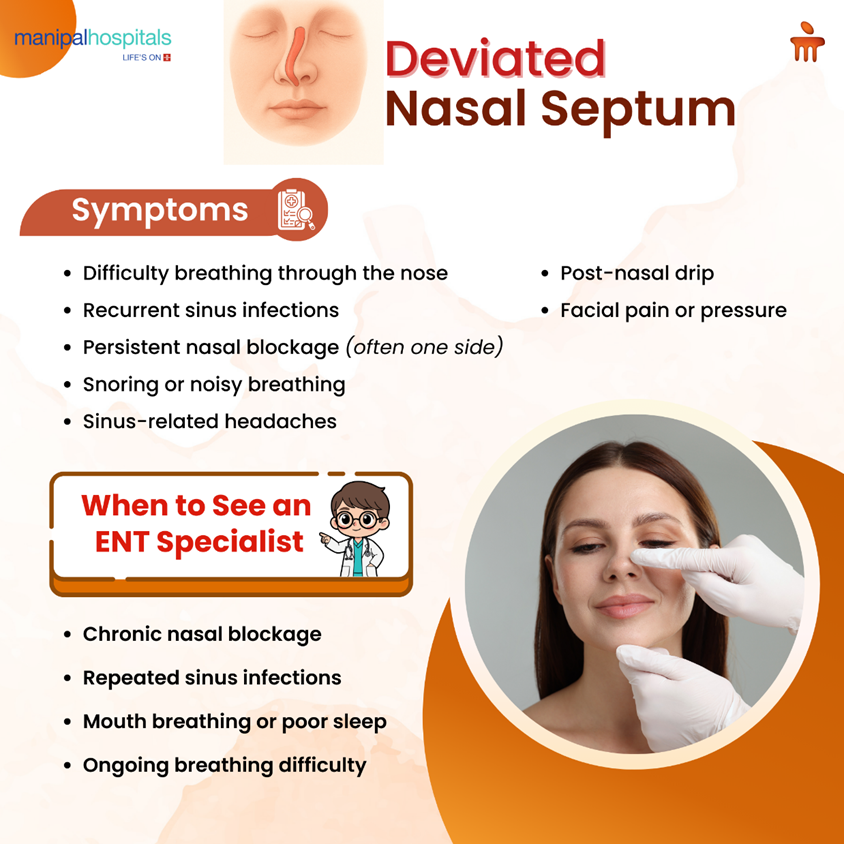
Common DNS symptoms include:
-
Persistent nasal obstruction, mostly on one side
-
Difficulty breathing through the nose
-
Recurrent sinus infections
-
Pain or pressure in the face
-
Loud breathing or snoring
-
Nasal discharge or drip
-
Headaches related to sinus pressure
How is a Deviated Nasal Septum Diagnosed?
Nasal blockage can occur for many reasons, including allergies, sinus infections, nasal polyps, and colds. Among all nasal blockage causes, a deviated septum is one of the most common and persistent. When airflow is limited, it can dry out the nasal passages, which makes them more likely to get irritated or infected. Bad breathing through the nose can also make it hard to sleep, which can make you tired and less focused during the day. If nasal blockage lasts for weeks or months despite treatment, it is important to evaluate whether a deviated septum is responsible.
Deviated Nasal Septum Non-surgical Treatment Options
Diagnosis begins with a detailed medical history and physical examination by an ENT specialist. The doctor may examine the inside of your nose using a nasal speculum or an endoscope.
If sinus disease is suspected along with a deviated nasal septum, imaging tests such as a CT scan may be recommended. An accurate diagnosis helps determine whether medications can relieve symptoms or if surgery is required to correct the problem.
Surgical Procedure: Septoplasty
For mild cases, non-surgical treatment mainly focuses on relieving symptoms. These treatments help reduce inflammation and improve airflow temporarily, but they do not correct the underlying septal deviation.
-
Saline nasal sprays
-
Antihistamines for allergies
-
Decongestants (for short-term use only)
-
Steroid nasal sprays
If symptoms continue despite medication, surgical treatment may be advised.
Who Should Have Septoplasty Surgery?
Septoplasty surgery may be recommended if:
-
Nasal blockage makes everyday life harder
-
Sinus infections come back again and again
-
Snoring or sleep issues are related to nasal obstruction
-
Nosebleeds are frequent
-
Breathing difficulty persists despite medication
What to Look Forward to After Septoplasty
Knowing the septoplasty recovery time helps patients get ready for the healing process mentally and physically.
Immediate Recovery
-
Most patients go home the same day.
-
A lot of people have mild pain, swelling, and stuffy noses.
-
You may need to wear nasal packing or splints for a short time.
The First Two Weeks
-
Breathing gradually improves.
-
Swelling reduces steadily.
-
Avoid heavy lifting and strenuous exercise.
Full Recovery
-
It could take 6 to 8 weeks for full healing.
-
Over time, the nasal airflow gets better.
Possible Risks and Complications
Septoplasty surgery is generally safe, but like all surgical procedures, it carries certain risks:
-
Bleeding
-
Infection
-
Temporary numbness
-
Persistent symptoms in rare cases
Life After Septoplasty Surgery
Most patients report significant improvement in breathing and sleep quality after surgery. Reduced nasal blockage, fewer sinus infections, and better overall comfort are common benefits.
Attending follow-up visits and avoiding nasal trauma during the healing period are important. Long-term results are usually excellent when surgery is performed for the right reasons.
When to See a Doctor?
If you have any of the following, you should see an ENT specialist in Jayanagar:
-
Chronic nasal blockage
-
Frequent sinus infections
-
Breathing difficulty through the nose
-
Poor sleep due to nasal obstruction
Conclusion
A deviated nasal septum may seem like a small issue, but it can significantly affect breathing, sleep, and overall well-being. Knowing what DNS symptoms are, what causes nasal blockage, and when septoplasty surgery is necessary can make a big difference. If you have long-standing nasal problems that don’t improve with medication, deviated nasal septum surgery at Manipal Hospital Jayanagar can help you breathe easier and regain comfort in everyday life.
FAQ's
A deviated nasal septum itself doesn't usually get worse, but if treatment is put off, ongoing nasal blockage can cause repeated sinus infections, poor sleep, breathing through the mouth, and a lower quality of life.
Not always. Some people are born with a deviated nasal septum, but symptoms may not show up until later. This can happen because of an injury to the nose, changes that come with age, or more inflammation that makes it harder for air to flow through.
Septoplasty surgery is meant to fix the inside of the nose. It usually doesn't change how the outside of the nose looks unless it is done with cosmetic nasal surgery for medical or cosmetic reasons.
Septoplasty surgery is usually delayed until nasal growth is complete, but in severe cases causing breathing or sleep problems, ENT specialists may recommend carefully planned surgery at a younger age.
Septoplasty greatly improves airflow that is blocked by a deviated nasal septum. However, if allergies or sinus inflammation are causing the blockage, surgery alone may not be enough to fix the problem.
Share this article on: