6 Min Read
Do you often feel out of breath when you climb stairs, walk short distances, or perform daily tasks? A lot of people believe these symptoms are simply due to ageing, poor physical fitness, or having seasonal allergies. But if you have ongoing trouble breathing, it could be a sign of a chronic lung condition like asthma or COPD. Asthma and COPD involve airway inflammation and obstructed airflow but have different causes, progressions, and treatment approaches. Understanding the key distinctions between COPD and asthma helps in early identification and appropriate medical intervention.
In this blog, you will learn the differences between COPD and asthma, along with their diagnostic methods and available treatment options we can offer.
Synopsis
- What is Asthma?
- What is Chronic Obstructive Pulmonary Disease (COPD)?
- COPD vs Asthma: Key Differences
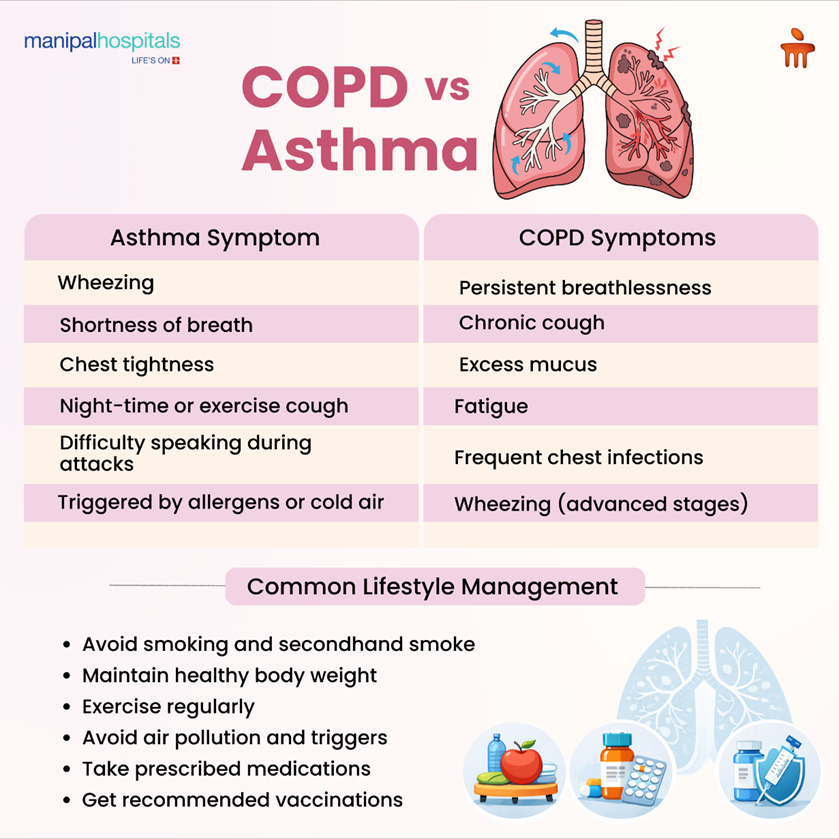
- Typical Asthma Symptoms
- COPD Symptoms
- What Causes Asthma and COPD?
- How Doctors Diagnose COPD and Asthma?
- How Are Asthma and COPD Treated?
- Lifestyle for Managing Both Conditions
- When Should You See a Doctor?
- Conclusion
What is Asthma?
Asthma is a long-term inflammatory disease that affects the airways. In a person with asthma, the airways become inflamed and narrowed and produce excess mucus. This action makes it hard for air to move in and out of the lungs. Asthma symptoms typically occur in episodes or attacks, often triggered by allergens, cold air, physical exertion, or respiratory infections.
What is Chronic Obstructive Pulmonary Disease (COPD)?
Chronic Obstructive Pulmonary Disease (COPD) is a lung disease that generally gets worse over time and limits airflow. It often develops over many years, mainly due to long-term exposure to things like cigarette smoke.
COPD commonly includes two conditions:
-
Chronic bronchitis: The lining of the airways gets inflamed and produces too much mucus.
-
Emphysema: When the air sacs in the lungs get damaged, it makes it harder for oxygen to get in and carbon dioxide to get out.
COPD vs Asthma: Key Differences
COPD and asthma have some symptoms in common, but some important differences help doctors tell them apart.
The table below lists the major differences between asthma and COPD:
|
Feature |
Asthma |
COPD |
|
Age of Onset |
Often begins in childhood or as a young adult |
Usually develops after age 40 |
|
Cause |
Allergies, genetic factors, and environmental triggers |
Long-term smoking or exposure to irritants |
|
Airflow obstruction |
Usually reversible with treatment |
Partially reversible or irreversible |
|
Disease Progression |
Symptoms occur in episodes |
Usually progressive and persistent |
|
Main Symptoms |
Wheezing, tightness in the chest, breathlessness |
Chronic cough, breathlessness, and mucus production |
Understanding these differences enables healthcare professionals to establish the diagnosis accurately and to prescribe appropriate treatment.
Typical Asthma Symptoms
Symptoms of asthma can range from mild to severe and often come in episodes. Common signs of asthma include:
-
A wheezing sound while breathing
-
Tightness in the chest
-
Persistent cough, especially at night
-
Breathlessness while exercising
-
Dust, pollen, smoke, exercise, or cold air can trigger symptoms
Asthma attacks can happen at any time, and medicine can improve symptoms.
COPD Symptoms
Symptoms of COPD usually develop slowly and may get worse over time. Typical symptoms include the following:
-
Persistent breathlessness
-
Chronic cough
-
Excess mucus secretion
-
Frequent respiratory infections
-
Tiredness / fatigue
-
Wheezing, in advanced stages
-
Progressive breathlessness during activity
Many people don't pay attention to these signs at first because they think they are linked to smoking or ageing.
What Causes Asthma and COPD?
Common causes of asthma:
-
Allergic reactions (dust mites, pollen, pet dander from pet cats, dogs)
-
Genetic predisposition
-
Air pollution
-
Respiratory infections in childhood
-
Exposure to chemicals at work
Common causes of COPD:
-
Prolonged cigarette smoking
-
Being around air pollution
-
Occupational exposure to dust and chemicals
-
Exposure to biomass fuel
-
Genetic factors, including alpha-1 antitrypsin deficiency
Around the world, smoking is still the most common cause of COPD.
How Doctors Diagnose COPD and Asthma?
It's important to get the right diagnosis because the treatment strategies for these conditions differ significantly. Most of the time, doctors at Jayanagar start with a thorough medical history and physical exam:
|
Test |
Purpose |
|
Spirometry / Pulmonary Function Test (PFT) |
Measures lung function and airflow limitation |
|
Chest X-ray |
Helps detect lung damage or infections |
|
CT Scan |
Provides detailed pictures of the lungs |
|
Allergy Testing |
Identifies factors triggering asthma |
|
Blood Tests |
Helps identify infection, eosinophils, IgE level and alpha-1 antitrypsin deficiency |
How Are Asthma and COPD Treated?
The goal of treatment is to make symptoms less severe, make breathing easier, and prevent complications from happening.
Asthma:
Treatment options
-
Inhaled bronchodilators, corticosteroids
-
Leukotriene modifiers
-
Allergy medications
-
Biologic therapy such as Benralizumab, Mepolizumab, Omalizumab
-
Lifestyle changes to avoid triggers
Goal of treatment
-
Reduce airway inflammation
-
Ease breathing
-
Prevent complications
-
Optimize lung function
-
Prevent complications
COPD:
Treatment options:
-
Inhaler bronchodilators
-
Inhaled corticosteroids
-
Pulmonary rehabilitation programs
-
Oxygen therapy (severe cases)
-
Vaccinations to prevent infections
Goal of treatment:
-
Optimize lung function
-
Prevent disease progression
-
Prevent complications
Lifestyle for Managing Both Conditions
For people with asthma or COPD, making some changes to their daily lives can greatly improve their respiratory health. Follow these healthy lung habits:
-
Don't smoke or breathe in second hand smoke.
-
Engage in regular physical activity.
-
Maintain a healthy body weight.
-
Avoid exposure to air pollution.
-
Adhere to prescribed medication regimens.
-
Get recommended vaccinations.
These measures help reduce symptoms and prevent disease progression.
When Should You See a Doctor?
Persistent respiratory symptoms should not be ignored. Seek medical advice if you experience:
-
Frequent shortness of breath
-
Chronic cough lasting more than three weeks
-
Wheezing or chest tightness
-
Difficulty performing daily chores
-
Repeated respiratory infections
Early detection enables timely intervention and may prevent disease progression.
Conclusion
COPD and asthma are two common pulmonary diseases that have similar symptoms but different causes, progression patterns, and treatments. Asthma usually starts earlier in life and causes reversible airway narrowing. COPD, on the other hand, generally develops later and may result in progressive lung damage.
Understanding the distinctions between COPD and asthma facilitates appropriate care and reduces the risk of complications. Manipal Hospitals Jayanagar, Bangalore, provides comprehensive evaluation and advanced treatment options for respiratory conditions such as COPD and asthma. Patients benefit from personalised care, precise diagnoses, and contemporary therapeutic options to support optimal respiratory health.
FAQ's
Asthma usually starts when you're younger and causes reversible airway inflammation. COPD, on the other hand, usually gets worse over time and causes permanent airflow limitation.
Yes. Some people may have both asthma and COPD, which is sometimes referred to as asthma-COPD overlap (ACO).
COPD usually gets worse over time without treatment and may cause progressive lung damage. However, uncontrolled asthma, which is left untreated, can also worsen lung function and require hospitalization.
While asthma cannot be cured, it is highly controllable. Many people may go into long-term remission, where they have no symptoms for years. With modern treatment options, most patients can live a completely normal life with no symptoms. While COPD cannot be cured, we can significantly prevent or slow its progression. Pulmonary rehabilitation, long-acting bronchodilators, vaccination, and, in specific cases, lung volume reduction surgery or transplants can improve quality of life and longevity.
If you often have trouble breathing, wheeze, have a chronic cough, feel tightness in your chest, or get respiratory infections that make it difficult to do everyday things, you should see a doctor.
Share this article on:


--Symptoms-and-Septoplasty-Recovery.webp "Deviated Nasal Septum (DNS): Symptoms and Septoplasty Recovery")