8 Min Read
Everyone feels tired occasionally. A late night, a demanding work schedule, emotional stress, or even a busy week can leave you feeling drained. Usually, a good night’s sleep or a relaxing weekend restores your energy. But when tiredness lingers for weeks or months, it may signal that something deeper is going on. Persistent fatigue can affect concentration, mood, productivity, and even relationships. Many people dismiss it as part of a hectic lifestyle, but ongoing exhaustion often has identifiable reasons. That’s why it’s important to know more about the common causes of fatigue, which will help address the root cause and improve overall health.
In this blog, we explore the most common causes of fatigue, explain why they happen, and discuss practical ways to restore energy and well-being.
Synopsis
Understanding Fatigue and Its Effects
Fatigue is not simply the urge to sleep—it is a persistent state of mental or physical exhaustion that may not improve even after adequate rest. People experiencing fatigue often describe feeling “drained” or "sluggish" or unable to focus on tasks that were once no-brainers.
Some typical fatigue symptoms include:
-
Persistent low energy throughout the day
-
Difficulty concentrating or remembering things
-
Reduced motivation or productivity
-
Muscle weakness or general body discomfort
-
Feeling mentally overwhelmed by simple tasks
-
Irritability or mood changes
Please note, these fatigue symptoms can vary from person to person. For some, fatigue may show up as physical exhaustion; for others, it may feel more like mental burnout. Either way, when energy levels stay low for extended periods, it is worth looking at possible underlying causes.
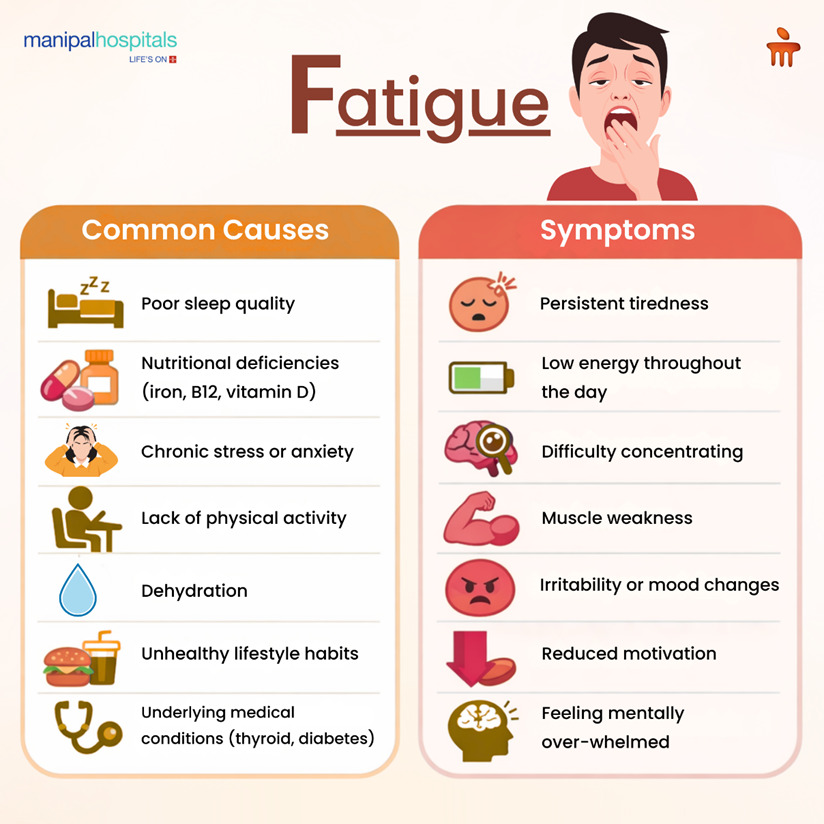
Common Causes of Fatigue
Fatigue can arise from many different sources. Lifestyle habits, emotional well-being, and physical health conditions all play a role. Understanding the most frequent triggers can help identify what might be contributing to persistent tiredness.
Below are the most common causes of fatigue you need to keep in mind:
1. Poor Sleep Quality
Sleep is the body’s primary method of restoration. During sleep, the brain processes information, muscles repair themselves, and important hormones are regulated. When sleep is disrupted or insufficient, the body struggles to recover fully.
Poor sleep remains one of the common causes of fatigue and may occur due to several factors:
-
Irregular sleep schedules
-
Excessive screen time before bedtime
-
Stress or anxiety interfering with sleep
-
Sleep disorders such as insomnia or sleep apnea
Even when someone spends enough hours in bed, poor sleep quality can still leave them feeling exhausted the next day. Over time, this lack of restorative sleep builds up and leads to persistent tiredness.
Improving sleep habits, such as maintaining a consistent bedtime, reducing nighttime screen exposure, and creating a calm sleep environment, can significantly improve energy levels.
2. Nutritional Deficiencies
Food provides the energy your body needs to function. When essential nutrients are lacking, the body cannot efficiently produce energy, leading to tiredness. Common nutritional deficiencies associated with fatigue include:
-
Iron deficiency, which can lead to anaemia
-
Vitamin B12 deficiency
-
Vitamin D deficiency
-
Magnesium deficiency
These deficiencies often produce noticeable fatigue symptoms, such as dizziness, weakness, and difficulty concentrating. Iron deficiency, for example, reduces the oxygen-carrying capacity of red blood cells, leaving tissues and organs without sufficient oxygen.
Eating a balanced diet that includes lean proteins, whole grains, fruits, vegetables, and healthy fats helps support steady energy levels throughout the day.
3. Chronic Stress and Emotional Strain
The mind and body are deeply connected. When someone experiences prolonged stress, the body releases hormones like cortisol and adrenaline that prepare it to respond to challenges. While helpful in short bursts, constant stress eventually exhausts the body. Emotional strain is one of the major chronic tiredness causes and may stem from:
-
Work-related pressure
-
Financial worries
-
Personal or relationship challenges
-
Anxiety or depression
Over time, chronic stress can disturb sleep, weaken the immune system, and reduce mental clarity. People dealing with emotional fatigue often feel mentally overwhelmed, even when their physical workload is not excessive.
Practices such as mindfulness, meditation, counselling, or simply taking time for relaxation can help restore balance and reduce stress-related fatigue.
4. Lack of Physical Activity
It may seem surprising, but not moving enough can actually increase fatigue. When the body remains inactive for long periods, circulation slows down, and muscles lose strength.
A sedentary lifestyle is among the overlooked reasons for constant tiredness. Without regular movement, oxygen and nutrients are delivered less efficiently throughout the body, making people feel sluggish and low on energy.
Regular physical activity improves cardiovascular health, boosts mood, and enhances overall stamina. Even light exercise, such as walking, stretching, or yoga, can make a noticeable difference in daily energy levels.
5. Underlying Medical Conditions
Sometimes fatigue signals an underlying health condition that requires medical attention. Persistent tiredness may be associated with conditions such as:
-
Thyroid disorders
-
Diabetes
-
Chronic infections
-
Heart disease
-
Chronic fatigue syndrome
-
Autoimmune conditions
When fatigue results from a medical issue, addressing the underlying condition becomes essential. Doctors may recommend tests to determine the cause and suggest appropriate fatigue treatment options based on the diagnosis.
Recognising fatigue as a possible symptom of illness is important because early diagnosis often leads to better treatment outcomes.
6. Dehydration
Water is essential for maintaining energy levels. Even mild dehydration can disrupt normal bodily functions, affecting circulation, digestion, and temperature regulation.
Many people do not realise that dehydration can contribute to reasons for constant tiredness. When the body lacks adequate fluids, blood volume decreases, forcing the heart to work harder to deliver oxygen and nutrients to tissues. Signs of dehydration-related fatigue may include the following:
-
Lightheadedness
-
Reduced concentration
-
Dry mouth
-
Low energy levels
Drinking sufficient water throughout the day helps support metabolism and maintain physical and mental alertness.
7. Unhealthy Lifestyle Habits
Daily habits can quietly influence how energetic you feel. Certain behaviours gradually drain energy and contribute to chronic tiredness causes, including:
-
Excessive caffeine consumption
-
Alcohol use, particularly in the evening
-
Irregular meal patterns
-
Working long hours without rest
-
Excessive screen time, especially late at night
While these habits may seem harmless individually, over time, they can disrupt sleep patterns, reduce nutrient intake, and increase mental strain. Making small lifestyle adjustments, such as taking regular breaks, limiting caffeine, and maintaining balanced meals, can help restore energy.
Ways to Improve Energy Levels
Improving energy often begins with simple but consistent lifestyle changes. Many people notice significant improvements by adjusting daily routines and prioritising overall well-being. Here are some practical strategies:
-
Maintain a consistent sleep schedule, even on weekends.
-
Eat balanced meals that combine protein, fibre, and healthy fats.
-
Stay physically active with regular moderate exercise.
-
Drink enough water throughout the day.
-
Take short breaks during work to avoid mental fatigue.
-
Practice relaxation techniques such as meditation or breathing exercises.
-
Limit caffeine intake later in the day.
These approaches can work alongside medical fatigue treatment options when fatigue is linked to health conditions.
When Should You Seek Medical Advice?
Occasional tiredness is a normal part of life. However, persistent fatigue that does not improve with rest or lifestyle adjustments should not be ignored. You may consider when to see a doctor for fatigue if:
-
Tiredness lasts for several weeks or longer
-
It interferes with daily responsibilities
-
You experience unexplained weight changes
-
Fatigue is accompanied by dizziness, chest pain, or shortness of breath
-
You feel unusually weak or mentally confused
A healthcare professional in Jayanagar can evaluate possible causes, recommend tests if needed, and suggest appropriate treatment strategies.
Conclusion
Fatigue seeps into every corner of life, work, mood, relationships, and how you enjoy downtime. Occasional tiredness is normal; persistent exhaustion is a signal that something needs attention. Knowing the common causes of fatigue, from poor sleep and stress to nutrient gaps, inactivity, dehydration, or medical issues, lets you target fixes that actually help. Small, consistent steps (better sleep habits, balanced meals, regular movement, hydration, and stress management) add up quickly. If you need a professional evaluation, visit us at Manipal Hospital Jayanagar; we can run the right tests and help build a practical plan. With steady habits and the right care, you can get your energy back and feel more like yourself again.
FAQ's
The usual culprits are poor sleep, ongoing stress, nutrient shortfalls, inactivity, dehydration, and some medical conditions. Identifying the common causes of fatigue helps you pick targeted steps, sleep, diet, movement, or medical checks to start feeling better.
Yes. Consistent sleep, balanced meals, regular movement, hydration, and stress management are powerful first steps. These practical fatigue treatment options often cut through low energy quickly, and they pair well with medical advice if a doctor finds an underlying issue.
Not always. Poor sleep is a big player, but chronic tiredness causes also include hormonal issues, infections, medication effects, mental health problems, and nutrient gaps. A full picture, not just nights of bad rest, usually reveals what’s really draining you.
Give lifestyle fixes a few weeks, but don’t wait if fatigue disrupts work, daily tasks, or safety. Seek help sooner if you have weight loss, breathlessness, fainting, or confusion. These are clear signs it’s time to discuss when to see a doctor for fatigue.
Treatment depends on the cause: improving sleep, correcting deficiencies, tailored exercise plans, therapy for stress or depression, treating medical conditions, or medications when appropriate. Your clinician will recommend specific fatigue treatment options based on tests and personal health factors.
Share this article on:


--Symptoms-and-Septoplasty-Recovery.webp "Deviated Nasal Septum (DNS): Symptoms and Septoplasty Recovery")