8 Min Read
Painful stomach cramps are an extremely universal experience. They can manifest as a dull, nagging ache due to bloating or as sharp, debilitating spasms caused by menstrual cramps, an IBS flare-up, or a stomach infection. Often, this pain can be felt in both the upper and lower belly. If your lower belly pain is persistent and affects your daily life, that is when you should consider visiting a doctor to understand the underlying causes of stomachache.
Understanding the causes of stomachaches that localise in the lower belly is the first step toward finding relief and ensuring that a minor issue isn't masking something more serious. In this blog, we examine five primary causes of lower belly pain and stomach cramps and discuss potential remedies and treatments.
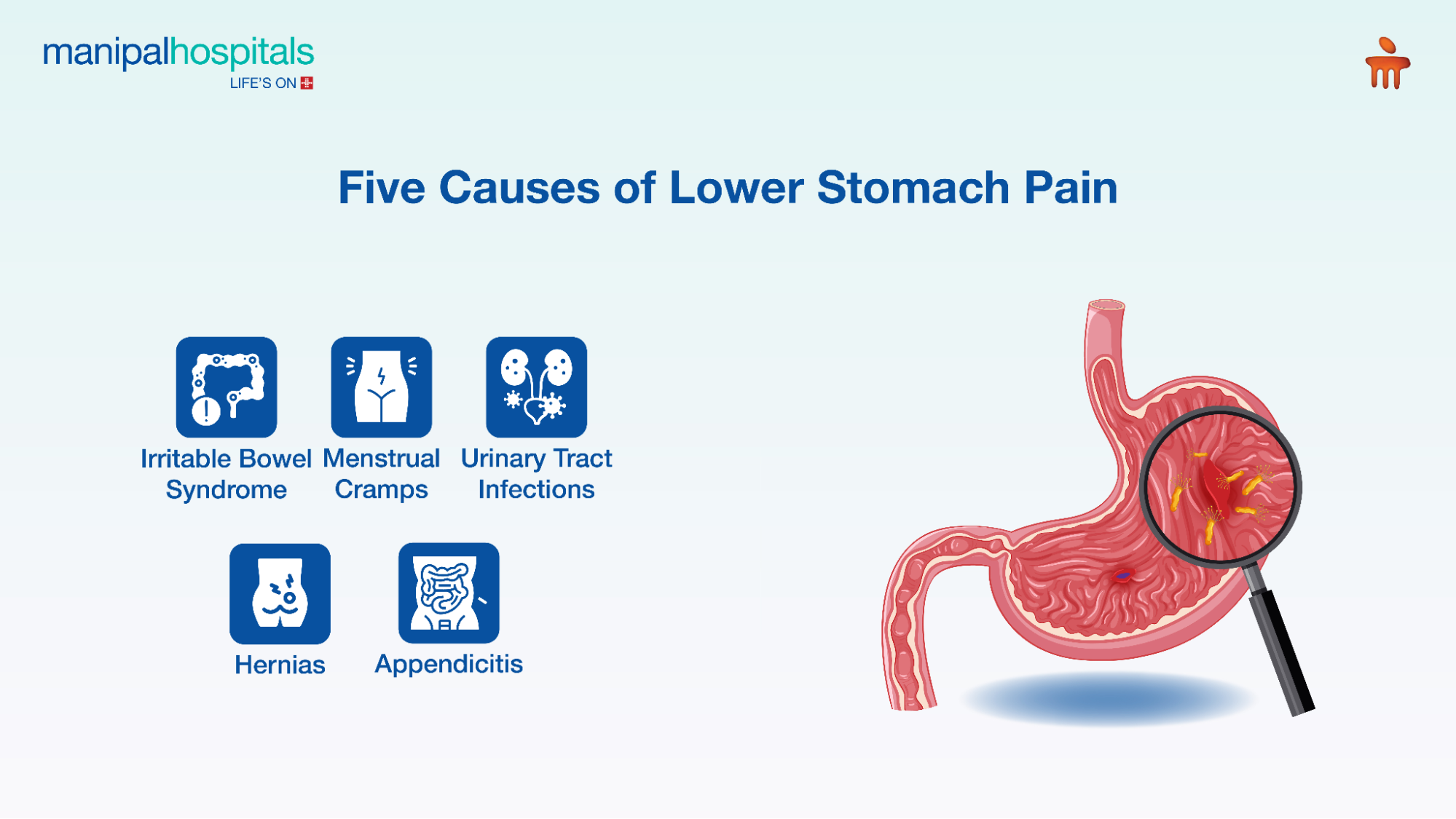
Synopsis
1. Irritable Bowel Syndrome (IBS) and Chronic Digestive Disorders
Any disruptions to the digestive tract can cause chronic or recurring lower abdominal pain. Among these disruptions, Irritable Bowel Syndrome (IBS) stands out as a pervasive and frustrating condition.
What is IBS?
IBS is a functional gastrointestinal disorder, meaning there is no visible damage or inflammation to the digestive tract, but there is altered gut function. It primarily affects the large intestine, causing several symptoms that include stomach cramps and pain (often relieved after a bowel movement), bloating, gas, and a persistent change in bowel habits (diarrhoea, constipation, or alternating between both).
The pain in the lower belly associated with IBS could be due to hypersensitivity to certain substances and stress, which causes abnormal contractions of the colon muscles.
Related Conditions:
-
Inflammatory Bowel Disease (IBD): Unlike IBS, IBD (which includes Crohn's Disease and Ulcerative Colitis) involves actual inflammation and damage to the gut lining. Symptoms are often more severe and can include bloody diarrhoea, significant weight loss, etc, along with intense lower abdomen pain requiring intensive medical management.
-
Diverticulitis: In this condition, small pouches (diverticula) that can form in the wall of the colon (especially in the left abdomen) become inflamed or infected. It causes severe, localised, painful stomach cramps along with fever and nausea.
-
Chronic Constipation: Prolonged constipation can cause significant lower abdominal pressure and cramping as the colon becomes distended with stool.
Prevention and Management Tips:
-
Dietary Adjustments (FODMAPs): For people suffering from IBS, they can find relief by limiting high-FODMAP foods (Fermentable Oligosaccharides, Disaccharides, Monosaccharides, and Polyols).
-
Stress Reduction: Since the gut-brain axis plays a role in IBS, incorporating mindfulness, yoga, and adequate sleep can help alleviate stomach cramps and pain.
-
Fibre Intake: Balancing soluble and insoluble fibre helps regulate bowel movements.
-
Water Intake: Drinking around 2.5 litres of water a day eases the movement of food in the digestive system.
When To See A Doctor
Do consult the doctor if you observe the following
1. Rectal Bleeding
2. Fever
3. Weight Loss
4. Feeling of a lump in the stomach/abdomen
5. Dark, sticky, or tarry stools (Malena)
6. Symptoms lasting more than 6 weeks
2. Gynaecological and Uterine Causes
For many women, recurring lower abdominal pain is linked with the reproductive system. This pain can be due to normal contractions during menstruation or more complex reproductive issues such as endometriosis.
Menstrual Cramps (Dysmenorrhea)
Primary dysmenorrhea is caused by high levels of prostaglandins that trigger strong uterine muscle contractions during the menstrual cycle. These contractions cause the familiar, often intense, painful stomach cramps felt just above the pubic bone.
Serious Gynaecological Conditions:
-
Endometriosis: This debilitating condition occurs when endometrial tissue (tissue that is found on the inner lining of the uterus) grows outside the uterus, most commonly on the ovaries, fallopian tubes, and pelvic lining. It can cause severe, chronic pain in the lower abdomen, especially around menstruation. There is also often pain during intercourse and bowel movements.
-
Ovarian Cysts: Fluid-filled sacs on the ovaries are a common occurence. While most are harmless and resolve on their own, large cysts can cause dull or sharp stomach cramps and pain. A ruptured cyst or ovarian torsion (twisting) can cause sudden, agonising pain requiring emergency care.
-
Pelvic Inflammatory Disease (PID): An infection of the reproductive organs, often caused by untreated sexually transmitted infections. PID can cause chronic pain in the lower belly, fever, and unusual vaginal discharge.
When to Seek Immediate Care:
If you experience sudden, sharp, one-sided lower abdominal pain accompanied by dizziness or fainting, it could indicate an emergency like a ruptured ovarian cyst or an ectopic pregnancy, and you should seek medical help immediately.
3. Urinary Tract Infections (UTIs) and Kidney Issues
The urinary tract—comprising the kidneys, ureters, bladder, and urethra—sits in proximity to the lower abdomen, meaning infections or blockages here can easily register as lower belly pain.
Urinary Tract Infections (UTIs)
A UTI, which is typically a bladder infection (cystitis), can feel like a deep, persistent ache or cramping low in the pelvic region. Bacteria cause the bladder lining to become irritated and inflamed.
Key Symptoms of UTI:
-
Painful stomach cramps or pressure in the lower pelvis.
-
A burning sensation during urination (dysuria).
-
Frequent and intense urge to urinate, even if little comes out.
-
Cloudy, dark, or foul-smelling urine.
-
Kidney Stones
While less common, a kidney stone passing through the ureter can cause some of the most intense and painful stomach cramps. The pain, called renal colic, usually starts in the flank (side and back) but can radiate down into the lower abdomen and groin, causing a severe ache.
Drinking plenty of water helps flush the urinary tract, preventing the accumulation of bacteria and minerals that can lead to UTIs and stones.
4. Appendicitis
While the previous three causes account for most chronic or recurring episodes of stomach cramps and pain, appendicitis should be addressed immediately, as it requires surgical intervention.
Appendicitis Pain:
Appendicitis occurs when the appendix, a small pouch attached to the large intestine, becomes inflamed and infected, usually due to a blockage.
-
The pain often begins subtly around the belly button
-
Over 12 to 24 hours, the pain becomes confined to the lower right quadrant of the abdomen
-
The painful stomach cramps become sharp and are aggravated by walking, coughing, or any jarring movement.
Warning Signs of Appendicitis:
-
Loss of appetite
-
Nausea and vomiting soon after the pain begins
-
Low-grade fever
-
Inability to pass gas or have a bowel movement
5. Muscle Strain and Hernias
The muscles and connective tissues surrounding the abdomen can also be the source of stomach cramps and pain.
Abdominal Muscle Strain
Vigorous exercise, heavy lifting (especially with improper form), or even intense coughing/sneezing fits can cause micro-tears in the lower abdominal muscles. The resulting pain can feel like deep, painful stomach cramps that worsen when you engage those muscles (e.g., sitting up from a lying position).
Hernias
An abdominal wall hernia occurs when an organ, such as the intestine, pushes through a weak spot in the muscle or tissue that holds it in place. Inguinal hernias, which occur in the lower groin area, are common and can cause a dull ache or intermittent lower belly pain that intensifies when straining (lifting, coughing).
If a hernia becomes "incarcerated" (trapped) or "strangulated" (blood supply cut off), it will cause extremely severe, sudden stomach cramps and pain, often with nausea and vomiting. This requires emergency surgery.
Different Causes of Lower Stomach Cramps
|
Cause |
Key Symptoms and Location |
|
IBS |
Recurring cramps, bloating, alternating diarrhoea/constipation, and pain are often relieved after a bowel movement. |
|
Menstrual |
Cyclical pain in the mid-pelvis can be severe with endometriosis. |
|
UTI |
Burning urination, frequent urge, deep pressure/cramps in the lower pelvis. |
|
Appendicitis |
Pain starts near the navel, shifts to the lower right abdomen, is severe, worsens with movement and fever. |
|
Muscle Strain |
Pain worsens with movement/touch, localised, tender. |
Conclusion
If you are dealing with persistent pain in your lower belly or painful stomach cramps, especially those that interfere with your daily life, please schedule an appointment with your healthcare provider. But for severe, sudden, or escalating pain accompanied by symptoms like fever, vomiting, or blood, seek emergency medical care immediately.
At Manipal Hospitals, Goa, our expert in the Department of Gastrointestinal Science will help you understand the cause of your lower stomach pain and develop treatment strategies accordingly.
FAQ's
Lower stomach pain can be caused by various issues, primarily related to the digestive, urinary, or reproductive systems. Common causes include Irritable Bowel Syndrome (IBS) and other digestive problems (constipation, diverticulitis), Menstrual Cramps or gynaecological conditions (like endometriosis or ovarian cysts), Urinary Tract Infections (UTIs), Muscle Strain, and in serious cases, Appendicitis.
Treatment depends entirely on the cause. For mild, generalised stomach cramps and pain, remedies such as a warm compress, over-the-counter pain relievers, and rest may help. However, for specific causes:
-
IBS is managed through diet changes (e.g., low-FODMAP), stress reduction, and medication.
-
Appendicitis, Inflammatory Bowel Disease, and certain gynaecological emergencies require surgical intervention.
Always consult a doctor for persistent or severe pain to determine the correct treatment.
It depends on the underlying causes of the stomachache. Pain from mild indigestion, gas, or normal menstrual cramps often goes away on its own or with rest and simple remedies. However, pain caused by infections (UTIs), inflammation, or serious conditions (Appendicitis, severe Endometriosis) will not go away without medical treatment and may worsen significantly.
For mild, non-severe stomach cramps and pain related to digestion or menstrual cycles, try these home remedies:
-
Warm Compress or Heating Pad
-
Hydration
-
Ginger Tea
-
Rest
Share this article on: