8 Min Read
Our skin is the largest organ in the body, and it is a strong protective barrier against the outside world. But sometimes, this barrier reacts to external triggers, which can often result in skin rashes, red spots, persistent rash, or itchy skin on the body. These symptoms can be very frustrating and even cause pain and itchiness. Understanding what causes red, itchy spots on the skin can help with finding relief and recovery.
Oftentimes, certain triggers can cause inflammation in the skin. This inflammation occurs due to neuroimmune interactions with allergens or pathogens. These interactions increase blood flow to the affected area, which causes redness and itchiness on the skin. Some of the common causes of itching and skin rashes on the body include:
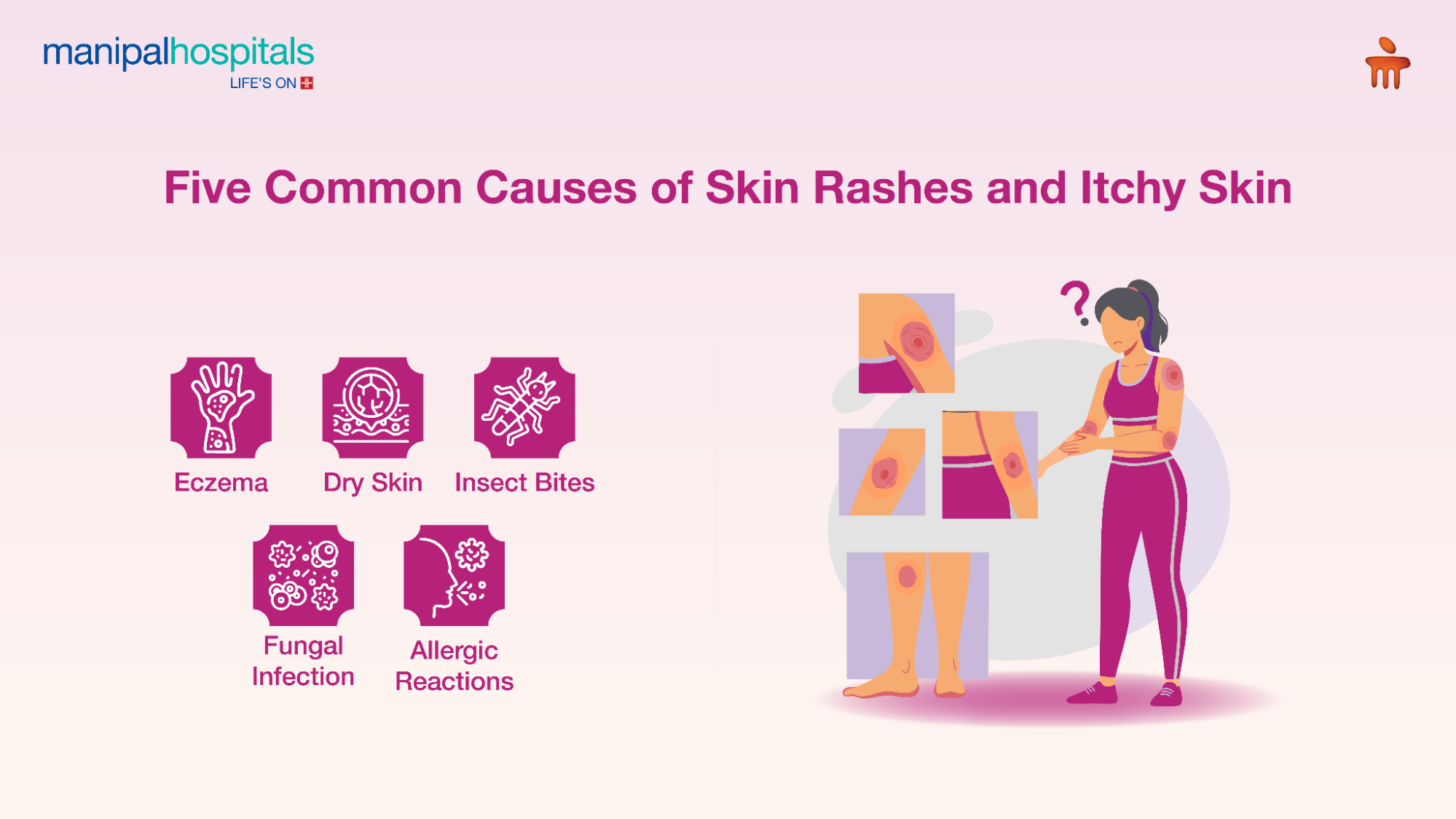
Synopsis
Allergic Reactions
One of the most common reasons for a rash and itchy skin is an allergic reaction. This occurs when your immune system mistakenly identifies a harmless substance (an allergen) as a threat, causing a localised or widespread rash, often accompanied by intense itching. Contact Dermatitis is a prime example of an allergic reaction. It happens when your skin comes into direct contact with an allergen. Common triggers include:
-
Nickel, which is found in jewellery, belt buckles, and even some smartphone casings.
-
The plants like poison ivy, oak, and sumac contain oily resins that can cause an intensely itchy, blistering rash.
-
Fragrances and preservatives are found in cosmetics, soaps, detergents, and lotions.
-
The rash from contact dermatitis typically appears only where the allergen touched the skin, presenting as red, itchy spots, sometimes with small blisters.
Beyond direct contact, allergic reactions can also be systemic, triggered by something you’ve ingested or inhaled. Food allergies, medication allergies, and even environmental allergens like pollen can manifest as hives—raised, red, very itchy welts that can appear anywhere on the body.
Eczema (Atopic Dermatitis)
Eczema is a chronic inflammatory skin condition characterised by dry, itchy, inflamed patches of skin. It is often linked to a combination of genetic factors, environmental triggers, and the effects of medication. If you frequently experience a rash and itchy skin that tends to flare up periodically, eczema could be the reason for your body itching.
Individuals with eczema have a compromised skin barrier, making their skin more susceptible to irritants and allergens. This often causes itching and scratching, which further damages the skin and exacerbates the rash. Common symptoms include:
-
Dry, scaly patches are found in the creases of the elbows and knees, on the neck, wrists, and ankles.
-
Intense itching, especially at night.
-
Redness and inflammation.
-
Small, raised bumps that may produce clear fluid when scratched.
-
Repeated scratching can cause the skin to become leathery and thickened (lichenification).
While there is no cure for eczema, a combination of emollients (moisturisers), topical corticosteroids, and avoiding known triggers can help manage the condition.
Fungal Infections
Fungal infections are another common cause of itching and skin rashes on the body. These microscopic organisms thrive in warm, moist environments and can infect different parts of the skin, nails, and hair.
Common fungal infections include:
-
Ringworm (Tinea Corporis): Despite its name, ringworm is not caused by a worm. It is a fungal infection that often presents as a circular, red, itchy rash with raised edges and a clearer centre, resembling a ring. It can appear anywhere on the body.
-
Athlete's Foot (Tinea Pedis): This common fungal infection affects the feet, causing itching, redness, scaling, and sometimes blistering between the toes or on the soles of the feet.
-
Jock Itch (Tinea Cruris): Affecting the groin area, jock itch causes an itchy, red, sometimes scaly rash that can extend down the inner thighs.
-
Yeast Infections (Candidiasis): Caused by the Candida fungus, these infections often occur in warm, moist areas like skin folds (under breasts, in the groin, or armpits) and can lead to bright red, intensely itchy rashes with small "satellite" lesions.
Fungal infections are often contagious and can be spread through direct contact or by sharing contaminated items such as towels or clothing. Maintaining good hygiene, keeping skin dry, and using antifungal creams or medications are typically effective treatments for these red, itchy spots on the skin.
Insect Bites and Stings
Insect bites and stings are a very common cause of itching and localised skin rashes on the body. Different insects produce different reactions:
-
Mosquito Bites: Typically result in small, itchy, red bumps that appear shortly after the bite.
-
Flea Bites: Often appear as small, red, intensely itchy bumps, sometimes in clusters, particularly around the ankles and lower legs.
-
Bed Bug Bites: These can be particularly troublesome, appearing as itchy, red welts, often in a line or cluster, typically on exposed skin during sleep. The itching can be severe.
-
Spider Bites: While most spider bites are harmless and cause only mild irritation, some can lead to more significant localised reactions with redness, swelling, and pain.
-
Bee and Wasp Stings: These can cause immediate sharp pain, followed by redness, swelling, and itching at the sting site. For those with severe allergies, a sting can trigger a life-threatening anaphylactic reaction.
While most insect bites and stings can be managed with over-the-counter anti-itch creams and cold compresses, it is important to be aware of signs of allergic reactions (difficulty breathing, widespread swelling, dizziness) and seek medical attention if they occur. The appearance of red spots inside the skin with severe itching after outdoor activity is a strong indicator of insect involvement.
Dry Skin (Xerosis)
Sometimes, the cause of itching on the body could be simply a lack of moisture. Dry skin, or xerosis, is an extremely common problem, especially in colder climates, during winter months, or with frequent hot showers. When the skin's natural barrier is affected due to dryness, it loses its ability to retain moisture, leading to symptoms such as:
-
The skin may appear dull, rough, and shed small flakes.
-
A feeling of tightness, especially after showering or bathing.
-
Severe dryness can lead to small cracks in the skin, which can be painful and increase the risk of infection.
Perhaps the most bothersome symptom, dry skin can cause persistent, generalised itching, often without a noticeable red mark or obvious rash initially. However, persistent scratching can certainly lead to red, itchy spots on the skin and even localised inflammation.
When to Seek Medical Attention
While many causes of skin rashes and itching are minor and resolve on their own or with home care, it is important to know when to consult a doctor. You should seek medical attention if:
-
The rash is widespread or covers a large area of your body.
-
The itching is severe and interferes with your sleep or daily activities.
-
The rash appears suddenly and spreads rapidly.
-
You experience other symptoms like fever, joint pain, or difficulty breathing alongside the rash.
-
The rash shows signs of infection (pus, increased pain, warmth).
-
The rash doesn't improve with over-the-counter treatments or home care within a few days.
Home Remedies for Skin Rashes and Itching
Some home remedies can help soothe and moisturise dry and itchy skin. Here are some general tips:
-
Apply a fragrance-free moisturiser several times a day, especially after washing your hands or bathing, to seal in moisture.
-
Look for ingredients like ceramides, urea, glycerin, or shea butter.
-
Limit baths or showers to 5-10 minutes and use lukewarm, not hot water, as hot water strips your skin of its natural oils.
-
Use a mild, fragrance-free, gentle cleanser or non-soap cleansing cream instead of harsh, scented soaps.
-
In dry weather, using a portable home humidifier can add moisture back into the air, which helps your skin stay hydrated.
-
Choose clothing made of natural fibres like cotton, and use laundry detergents without dyes or perfumes.
Conclusion
Skin rashes, redness, and itching are often common and go away on their own. But if your dry and itchy skin is severe, persistent, or accompanied by other symptoms like open sores, bleeding, or signs of infection, you should consult an expert. The expert from the Department of Dermatology at Manipal Hospital, Goa, can help to rule out an underlying condition like eczema or psoriasis and provide the proper treatment.
FAQ's
Skin rashes and itching are caused by inflammation, most commonly triggered by allergic reactions, irritants like harsh soaps, or underlying chronic conditions like eczema and psoriasis. Infections (viral, bacterial, or fungal) and severe dry skin are also frequent culprits behind irritating skin symptoms.
The best treatment depends on the specific cause, but generally involves applying soothing fragrance-free moisturisers and a short course of over-the-counter hydrocortisone cream to reduce inflammation. Taking an oral antihistamine can help relieve itching, especially at night, and simple cool compresses provide immediate relief.
Fungal rashes often appear as a red, scaly patch with a raised or distinct border, sometimes forming a clear ring shape, like in ringworm. They thrive in moist areas of the body, so they are commonly found in skin folds, between the toes, or under the breasts.
You must seek medical attention if your rash is accompanied by a fever, spreads rapidly, or involves blisters and open sores. Also, see a doctor if the rash is intensely painful, affects your face or genitals, or does not improve after a few days of home care.
Share this article on: