.webp "Dr. Sonali Dey | Top Rheumatologist in EM Bypass, Kolkata | Manipal Hospitals")
 5 Min Read
Joint pain is a prevalent issue across the world, and it becomes more common with increasing age. However, joint pain is not the same everywhere. Rheumatoid arthritis (RA) and osteoarthritis (OA) both affect joints but differ significantly in their origins, symptoms, and treatment. This blog highlights the key differences between rheumatoid arthritis and osteoarthritis, as understanding these distinctions is crucial for accurate diagnosis and management.
Synopsis
Understanding Arthritis
Arthritis primarily refers to joint inflammation, and rheumatoid arthritis and osteoarthritis are the two most common types of arthritis that represent fundamentally different disease processes.
-
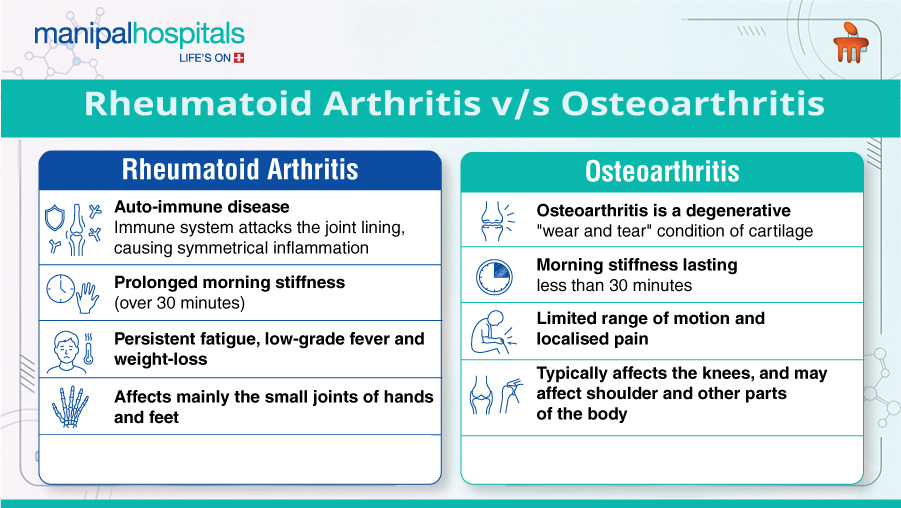
Rheumatoid Arthritis (RA): It is an autoimmune disease where the body's immune system mistakenly attacks its own tissues, primarily the synovium (the lining of membranes surrounding the joints).
-
Osteoarthritis (OA): It is a degenerative joint disease caused by the breakdown of cartilage, the protective tissue that provides cushioning to the ends of your bones. Repeated "wear and tear" leads to bones rubbing against each other.
Rheumatoid Arthritis
Rheumatoid arthritis is a chronic inflammatory autoimmune disorder where the immune system attacks joint linings, often affecting various body systems with symmetrical joint involvement.
Common rheumatoid arthritis symptoms include:
-
Joint Pain and Swelling: pain and swelling in the symmetrical, small joints of the hands and feet.
-
Morning Stiffness: Prolonged stiffness that may be experienced for over 30 min.
-
Fatigue: General feeling of tiredness felt throughout the day.
-
Fever and Weight Loss: Low-grade fever and weight loss.
-
Nodules: Small cluster of cells or benign tumours forming under the skin or near other organs. Rare, usually not seen unless proper medication is not taken.
Early diagnosis and intervention are vital for effective RA management, preventing joint damage and improving outcomes.
Osteoarthritis
Osteoarthritis, the most common arthritis, is a mechanical issue where protective cartilage wears away due to ageing, injury, or stress. Key symptoms of OA often include:
-
Joint Pain: The most prominent symptom, which usually worsens with activity.
-
Stiffness: Often experienced after prolonged activity or sitting.
-
Tenderness: Feeling of burning or tenderness around the affected joint.
-
Loss of Flexibility: Difficulty in walking and limited range of motion.
-
Grating Sensation: Heard when rough surfaces of bone rub against each other.
Unlike RA, OA usually affects joints asymmetrically, often targeting weight-bearing joints. While progressive, lifestyle modifications and interventions can improve quality of life.
Diagnosis and Treatment
Rheumatoid arthritis and osteoarthritis are both chronic and debilitating conditions that require prompt medical intervention for proper management. Imaging tests like X-ray, musculoskeletal USG and, if required, CT scans and MRIs are done for proper diagnosis and curating personalised arthritis treatment plans.
Conclusion
The key difference between rheumatoid arthritis and osteoarthritis lies in the fact that rheumatoid arthritis is an autoimmune disease, whereas osteoarthritis is a degenerative disorder. Getting timely treatment is essential for proper management of both of these conditions and preventing flare-ups. At Manipal Hospitals EM Bypass, our Department of Rheumatology is powered by experts who use only the advanced diagnostic approaches to create personalised treatment plans for each patient’s individual needs. If you are suffering from any of the above rheumatoid arthritis symptoms, do not delay! Visit Manipal Hospitals EM Bypass for comprehensive care.
FAQ's
The main difference lies in their cause and nature. Rheumatoid arthritis (RA) is an autoimmune disease where the body's immune system mistakenly attacks its own joint tissues, leading to systemic inflammation. Osteoarthritis (OA), on the other hand, is a degenerative condition caused by the wear and tear of cartilage, often due to aging or injury.
Common rheumatoid arthritis symptoms include symmetrical joint pain and swelling, especially in small joints like the hands and feet, prolonged morning stiffness lasting over 30 minutes; significant fatigue; and sometimes fever and weight loss.
Treatment for rheumatoid arthritis primarily focuses on suppressing the overactive immune system to prevent joint damage and manage symptoms. This often involves disease-modifying anti-rheumatic drugs (DMARDs), biological agents, and sometimes corticosteroids or NSAIDs. Physical therapy is also crucial to maintain joint flexibility and strength, aiming to improve the patient's quality of life and prevent long-term disability.
Unlike RA, osteoarthritis treatment aims to manage pain, improve joint function, and slow the progression of cartilage degeneration, as it is not an autoimmune condition. This typically involves a combination of lifestyle modifications (like weight management and low-impact exercise), physical therapy, pain relievers (NSAIDs, acetaminophen), and sometimes injections or, in severe cases, surgery (e.g., joint replacement).
Early diagnosis, especially for conditions like Rheumatoid Arthritis, is vital because prompt arthritis treatment can significantly slow disease progression, prevent irreversible joint damage, preserve joint function and avoid extra-articular manifestations. For rheumatoid arthritis and osteoarthritis, understanding the specific type of arthritis allows for a targeted and effective treatment plan, which can drastically improve a patient's quality of life and reduce long-term complications.
Yes. Rheumatoid Arthritis is a systemic disease, and extra-articular manifestations can be present in 30% of cases. Apart from joints, other organs like skin, eyes, lungs, heart, nerves and kidneys can be affected. So consultation with a Rheumatologist is of utmost importance for comprehensive management of the disease.
Share this article on: