6 Min Read
Receiving a diagnosis of a benign brain tumour can be an overwhelming experience. While the term ‘benign’ offers reassurance that the tumour is non-cancerous and typically slow-growing, it does not diminish the natural concerns about its impact on health and daily life. These anxieties require compassionate, state-of-the-art care that can guide you through every step of your journey from diagnosis to recovery. An expert multidisciplinary team of neurosurgeons, neurologists, oncologists, and rehabilitation specialists can ensure a holistic approach, focusing on the best possible outcomes for the patient.
Synopsis
What are Benign Brain Tumours?
A benign brain tumour is a non-cancerous growth of cells within the brain. Unlike malignant (cancerous) tumours, they generally do not spread to other parts of the body. However, their location and size can still exert pressure on delicate brain tissue, leading to a variety of symptoms. While they are not considered life-threatening in the same way as malignant tumours, timely diagnosis and appropriate treatment are crucial to prevent complications and preserve neurological function. Statistics show that benign tumours account for a significant portion of all brain tumour diagnoses, and with advanced medical care, the outlook for individuals with these conditions is increasingly positive.
Recognising Benign Brain Tumour Symptoms
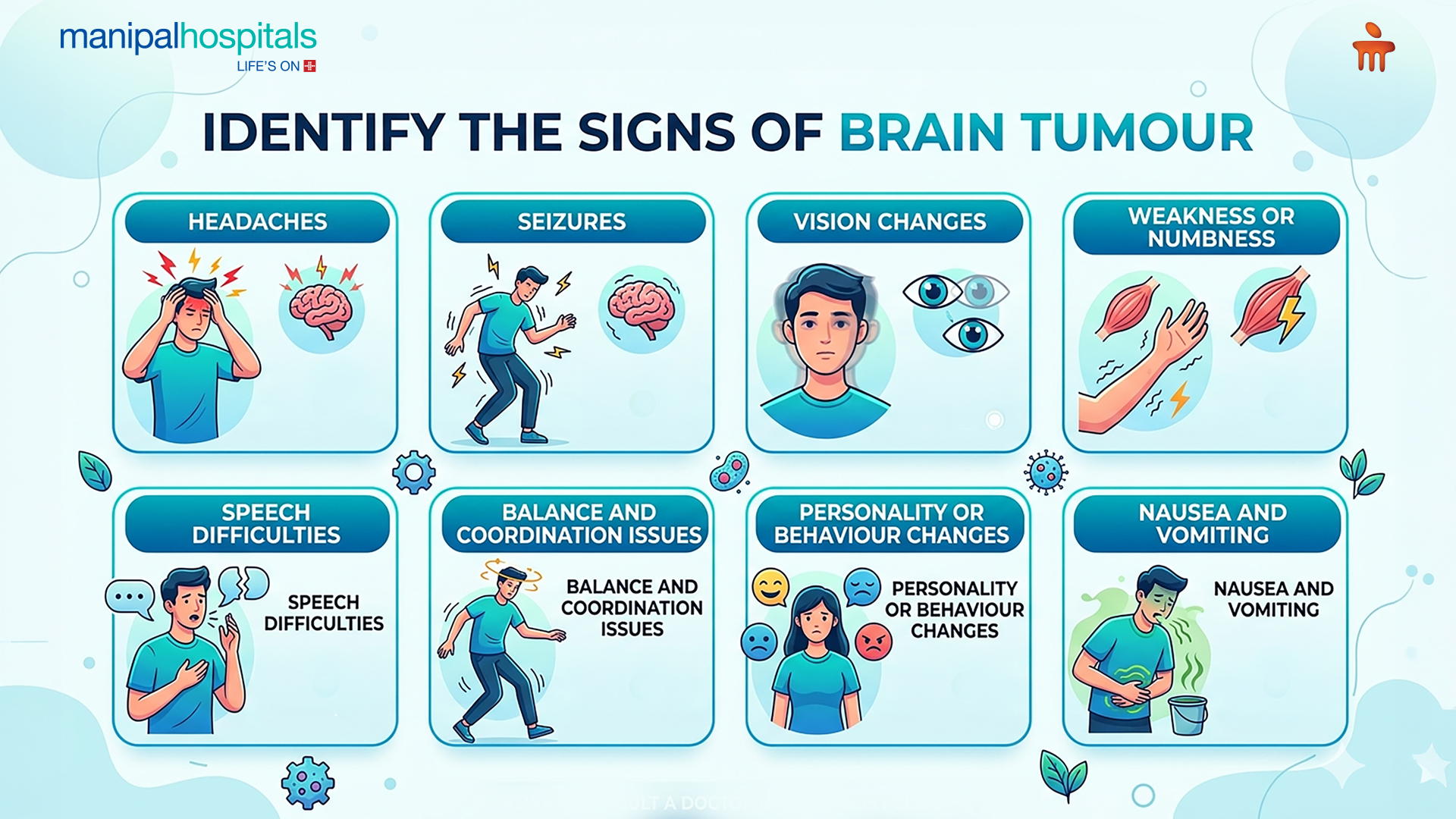
The manifestation of benign brain tumour symptoms can vary widely depending on the tumour's size, location, and rate of growth. It is vital to be aware of potential indicators and seek medical attention if they persist or worsen. If you experience any of the mentioned symptoms, especially new-onset or progressively worsening ones, it is important to consult a specialist. Early diagnosis significantly improves treatment effectiveness and outcomes. Common symptoms include:
-
Headaches – Often persistent and severe and may worsen over time, especially in the morning.
-
Seizures – These can range from subtle changes in awareness to full-body convulsions.
-
Vision changes – Blurred vision, double vision, or loss of peripheral vision.
-
Weakness or numbness – on one side of the body.
-
Speech difficulties – trouble finding words or slurred speech.
-
Balance and coordination problems – Dizziness or unsteadiness.
-
Personality or behaviour changes – mood swings, irritability, or confusion.
-
Nausea and vomiting – Especially when associated with headaches.
When is Surgery Required for Brain Tumours?
Benign brain tumour surgery is often the primary treatment for these growths, especially when the tumour is causing symptoms, growing, or is accessible without undue risk. The decision for surgery is made after a thorough evaluation, including advanced imaging (MRI, CT scans) and considering the tumour's characteristics, your overall health, and potential risks versus benefits.
Types of Benign Brain Tumour Surgery
Modern neurosurgery offers several advanced techniques for removing benign brain tumours. The choice of surgical approach depends on the tumour's location, size, and type:
-
Craniotomy – This traditional approach involves opening a section of the skull to access and remove the tumour. Advances in neuro-navigation and intraoperative monitoring have made this procedure safer and more precise.
-
Minimally Invasive Techniques – For certain tumours, less invasive methods, such as endoscopic or keyhole surgeries, may be an option, involving smaller incisions and faster recovery times.
-
Stereotactic Radiosurgery – While not traditional surgery, this highly precise form of radiation therapy can be used for some benign tumours, delivering targeted radiation doses to destroy tumour cells without affecting surrounding healthy tissue.
Recovery and Rehabilitation
With dedicated rehabilitation, a vast majority – over 90% of our patients – experience significant improvement in their quality of life and neurological function, often returning to their normal activities within a few months. Regular follow-up appointments, including imaging, are crucial to monitor your progress and ensure long-term well-being. This essentially involves:
-
Immediate post-operative care – After a benign brain tumour surgery, you will be closely monitored in our intensive care unit before moving to a regular ward. The initial recovery phase focuses on managing pain, preventing complications, and assessing neurological function. Our dedicated nursing staff and medical team provide continuous support and care.
-
Rehabilitation and long-term recovery – Recovery is a journey that supports you at every step of the way. Many patients experience a remarkably smooth recovery. For those who require it, a comprehensive rehabilitation programme is tailored to individual needs, which may include:
-
Physiotherapy – To regain strength, balance, and mobility.
-
Occupational Therapy – To help you adapt to daily activities and regain independence.
-
Speech Therapy – If the tumour or surgery affected speech or swallowing.
-
Neuropsychological Support – To address any cognitive or emotional changes.
Care essentials
|
Do's |
Don’ts |
|
Follow all post-operative instructions carefully |
Do not self-medicate or alter prescribed dosages without consulting your doctor |
|
Attend all scheduled follow-up appointments and rehabilitation sessions |
Engage in strenuous activities or heavy lifting until cleared by your surgeon |
|
Communicate any new or worsening symptoms to your medical team promptly |
Ignore any changes in your health, however minor they may seem |
|
Maintain a healthy lifestyle, including a balanced diet and adequate rest |
Drive until your doctor has given you explicit permission |
|
Seek support from family, friends, or support groups if you feel overwhelmed |
Hesitate to ask questions or express your concerns to your care team |
Conclusion
A benign brain tumour diagnosis can be challenging, but timely treatment and expert care can lead to excellent outcomes. At Manipal Hospitals, our experienced neurosurgical team combines advanced technology with personalised care to deliver safe and effective treatment for benign brain tumours. If you are experiencing concerning symptoms or have been diagnosed with a brain tumour, book a consultation with our neurosurgery specialists at Manipal Hospitals EM Bypass for a comprehensive evaluation and expert guidance on the most appropriate treatment options.
FAQ's
While uncommon, certain benign brain tumours may undergo malignant transformation over an extended period, although this occurs very rarely. Regular follow-up appointments, imaging studies, and ongoing monitoring are essential to detect any changes early and ensure timely intervention if required.
Recovery time varies greatly depending on the tumour's size, location, surgical approach, and individual factors. It can range from a few weeks to several months for full recovery and rehabilitation.
Some patients may require medications after surgery to manage seizures, headaches, swelling, or other neurological symptoms, particularly during the early stages of recovery. The type and duration of treatment will be carefully determined and monitored by your neurologist based on your individual condition and recovery progress.
Like any surgery, risks include infection, bleeding, and adverse reactions to anaesthesia. Specific to brain surgery, there's a small risk of neurological deficits, which our team works diligently to minimise.
While complete surgical removal significantly reduces the chance of recurrence, it is possible for some benign tumours to grow back. This is why regular follow-up imaging is essential.
Share this article on: