5 Min Read
Knee pain is a common ailment affecting millions worldwide. It can range from a mild ache to severe discomfort that interferes with daily activities and mobility. Naturally, many people first turn to easy fixes and home remedies for knee pain. While these methods can provide temporary relief, understanding when to seek professional medical care is essential for achieving long-term knee pain relief and protecting joint health.
Synopsis
The Role of Home Remedies for Knee Pain
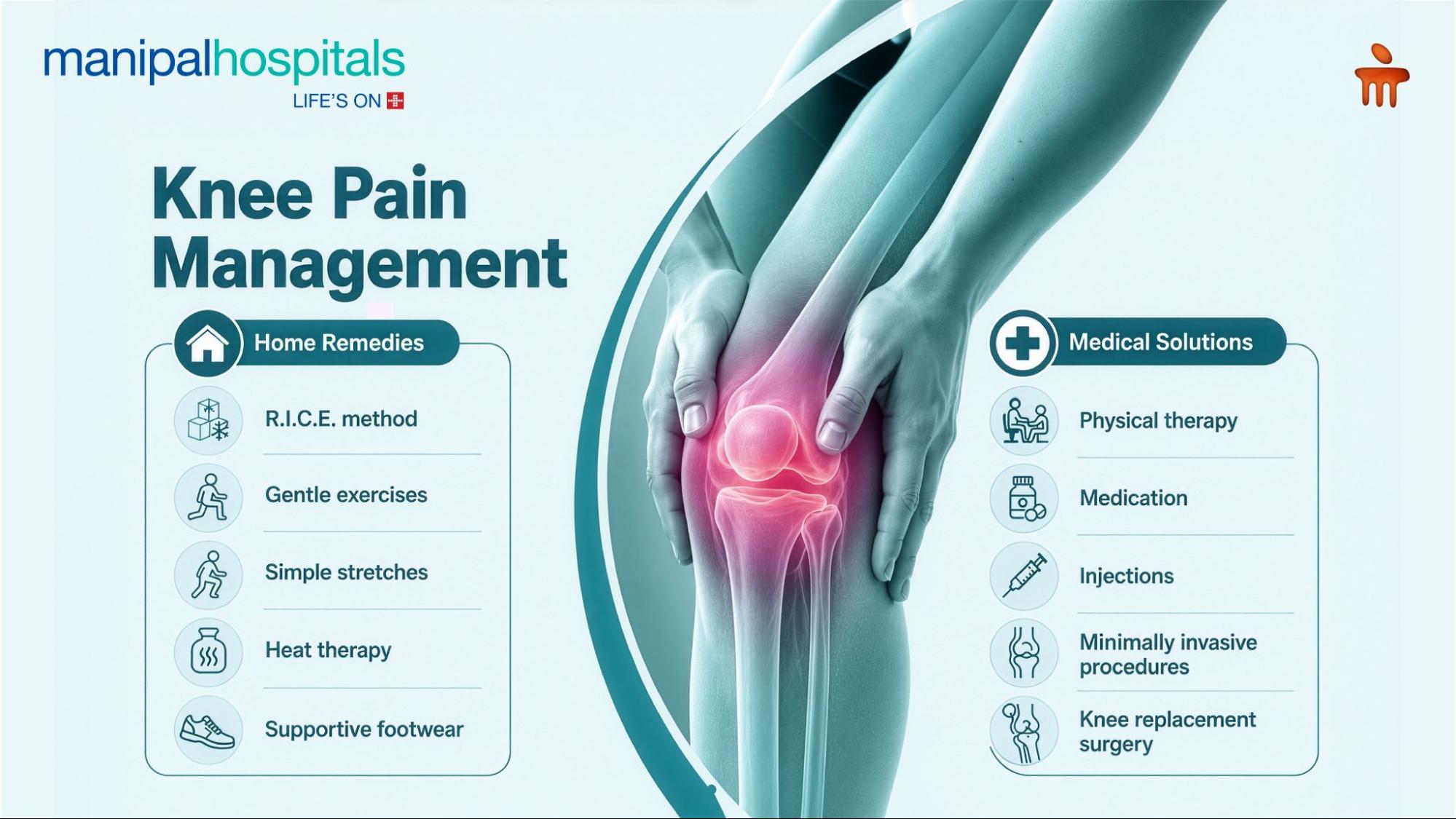
Certain home remedies for knee pain can be effective in easing mild to moderate discomfort, especially after minor injuries or overuse. These methods mainly focus on reducing inflammation and supporting the body’s natural healing process. Common knee pain treatment at home options include:
-
R.I.C.E. method - Rest, Ice, Compression, and Elevation remains the cornerstone of early injury management. Applying ice for 15-20 minutes several times a day can help reduce swelling and discomfort.
-
Gentle exercises and stretches - Once pain begins to subside, simple range-of-motion exercises and stretching can improve flexibility and prevent stiffness around the knee joint.
-
Heat therapy - Warm compresses or warm baths may help relax muscles, improve circulation, and ease chronic stiffness or soreness.
-
Supportive footwear - Wearing well-cushioned and supportive shoes can reduce strain on the knees by improving alignment and shock absorption.
While these methods can provide temporary knee pain relief, they may not address the underlying cause of persistent pain. Home remedies are most effective for short-term management and should not replace medical evaluation when symptoms continue or worsen.
When Professional Care Becomes Necessary
If knee pain lasts for several days, becomes more severe, or is accompanied by symptoms such as swelling, redness, instability, locking, or difficulty walking, professional medical care is important. Expert evaluation helps identify the root cause and provides a more effective long-term knee pain solution.
Accurate Diagnosis
An orthopaedic specialist can identify the exact cause of knee pain through detailed medical history, physical examination, and imaging tests such as X-rays or MRI scans. An accurate diagnosis is the foundation of effective treatment.
Physical Therapy
Physical therapy is often the first line of non-surgical treatment. It focuses on strengthening the muscles surrounding the knee, improving flexibility, balance, and movement patterns. Structured rehabilitation programmes can significantly improve mobility and reduce pain.
Medication Management
Doctors may recommend anti-inflammatory medications or pain-relief treatments to help manage symptoms while addressing the underlying condition.
Injections
In some cases, targeted injections such as corticosteroids, lubricating injections, or Platelet-Rich Plasma (PRP) therapy may help reduce inflammation and provide temporary relief or better tissue healing.
Minimally Invasive Procedures and Surgery
For severe conditions or cases where conservative treatments are ineffective, advanced procedures may be recommended. Arthroscopic surgery can repair specific joint damage, while knee replacement surgery may restore mobility and improve quality of life in advanced arthritis or joint degeneration.
Care Guidelines for Knee Health
-
Listen to your body and rest when pain occurs
-
Use cold therapy for swelling and heat therapy for stiffness
-
Maintain a healthy weight to reduce pressure on the knees
-
Avoid pushing through severe pain during physical activity
-
Do not ignore chronic or worsening symptoms
-
Seek professional medical advice instead of self-diagnosing
Conclusion
Knee pain can significantly affect mobility, daily activities, and overall quality of life if left untreated. Early and appropriate treatment can help prevent worsening joint damage, improve movement, and restore comfort and functionality. While home remedies for knee pain may offer temporary relief, persistent or severe symptoms require professional medical evaluation for long-term recovery.
At Manipal Hospital, patients receive comprehensive orthopaedic care tailored to their individual needs. From accurate diagnosis and advanced non-surgical treatments to specialised surgical interventions, the multidisciplinary team is dedicated to helping patients regain mobility and live pain-free lives. If ongoing knee pain is affecting your daily activities or quality of life, consult the expert orthopaedic specialists at Manipal Hospitals EM Bypass to take the first step towards lasting relief and better joint health.
FAQ's
Knee pain can result from ligament injuries, cartilage tears, fractures, arthritis, mechanical problems, repetitive strain, or overuse injuries.
You should seek medical advice if the pain is severe, lasts more than a few days, causes swelling or redness, limits walking, or if the knee feels unstable or locks.
Yes. Even modest weight loss can reduce pressure on the knee joints, helping improve mobility, reduce pain, and slow joint wear and tear.
No. Most knee conditions are managed with non-surgical treatments such as physiotherapy, medications, injections, and lifestyle modifications. Surgery is usually considered only when conservative treatments fail.
Maintaining a healthy weight, exercising regularly, strengthening leg muscles, wearing supportive footwear, and avoiding excessive strain on the joints can help prevent knee pain.
Share this article on: