7 Min Read
Coronary artery disease (CAD) is one of the most common forms of heart disease, and it is caused by plaque build-up (atherosclerosis). This can lead to chest pain, shortness of breath, and heart attacks. Interventions like angioplasty become necessary when lifestyle changes and medications are insufficient. This blog is a comprehensive account on how angioplasty is performed and important measures to take for a speedy recovery.
Synopsis
Understanding Angioplasty
Angioplasty, also known as percutaneous coronary intervention (PCI), is a minimally invasive procedure that widens arteries which have narrowed due to atherosclerosis. Primarily performed on coronary arteries, it improves blood flow to the heart muscle. The procedure involves inserting a balloon-tipped catheter into a blocked artery and inflating it to compress plaque. Often, a stent—a small mesh tube—is placed to keep the artery open long-term, reducing the risk of re-narrowing. Angioplasty procedure is a cornerstone in modern cardiology, offering a less invasive alternative to open-heart surgery for many patients.
Angioplasty Procedure Explained
Understanding the steps involved in an angioplasty can help alleviate anxiety and allow you to be more informed about the procedure. Angioplasty procedure typically takes between 30 minutes to a few hours, depending on complexity of the case.
Pre-Procedure Preparations
-
You will undergo a thorough medical evaluation, including blood tests, ECG, and often an angiogram to pinpoint blockages.
-
You will receive instructions on fasting and temporarily stopping certain medications, especially blood thinners.
-
After a thorough discussion, your medical team will obtain your informed consent.
Steps of Angioplasty
The angioplasty procedure is usually performed under local anaesthesia, and it involves the following steps:
-
Access Point: A small incision is made, typically in the groin or wrist, to access an artery.
-
Catheter Insertion: A guide wire is threaded through blood vessels to your heart, guided by X-ray imaging.
-
Balloon Inflation: A catheter with a deflated balloon is advanced to the blockage. The balloon is inflated, which compresses plaque and widens the artery.
-
Stent Placement: In most cases, a stent is deployed to act as a scaffold, keeping the artery open permanently. The balloon is removed, leaving the stent.
-
Completion: The catheter and guide wire are removed, and pressure is applied to the access site.
Patients who underwent angioplasty often experience relief from symptoms like chest pain shortly after the procedure, with improved blood flow noted from follow-up diagnostic tests.
Angioplasty Surgery Cost
The angioplasty surgery cost varies based on factors like:
-
Stent type (bare-metal vs. drug-eluting)
-
Case complexity
-
Number of arteries treated,
-
Hospital stay
-
Pre/post-operative care
Bypass Surgery v/s Angioplasty
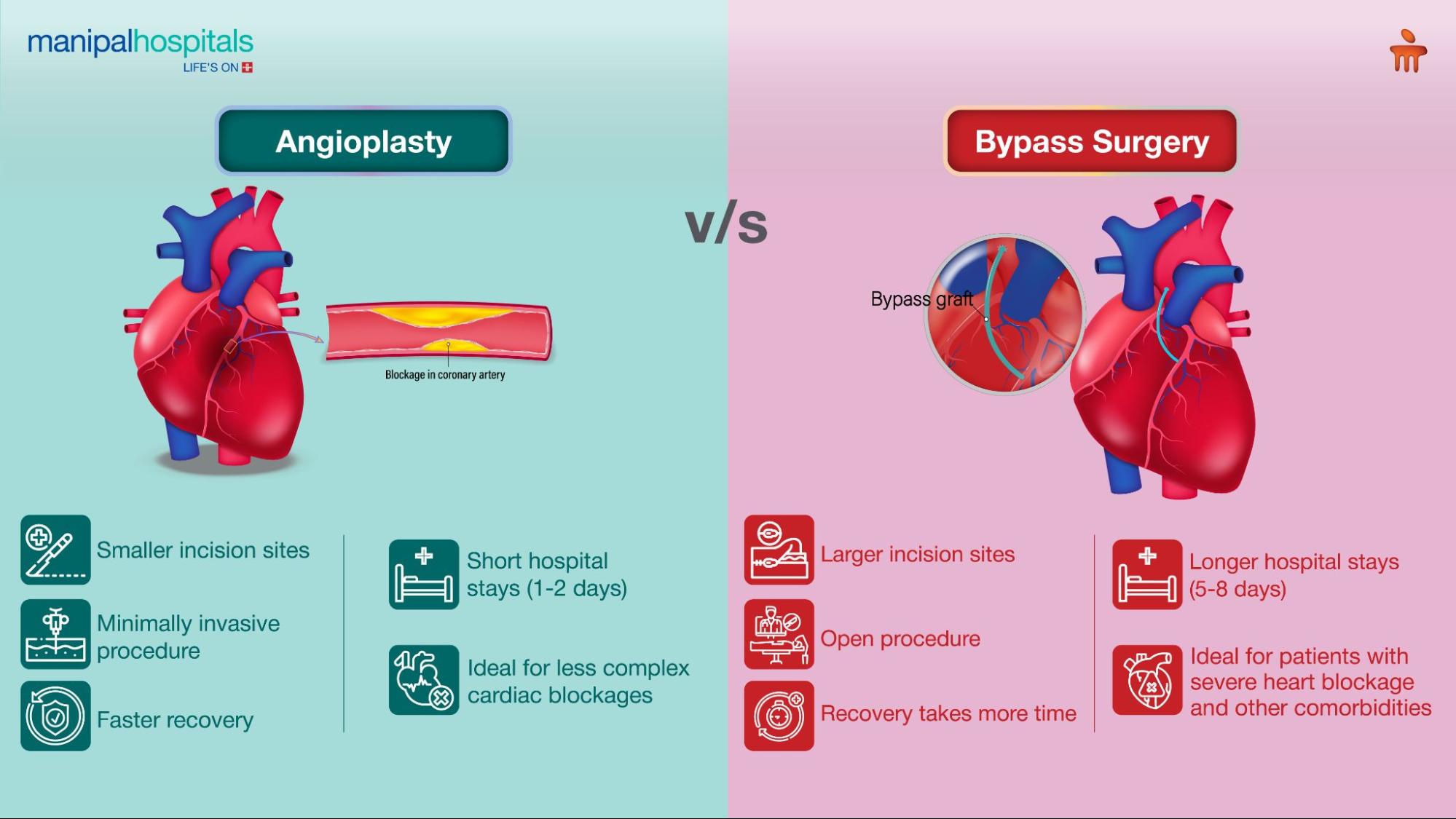
Patients with coronary artery disease often compare between bypass surgery and angioplasty. Both are effective, but differ in approach:
-
Angioplasty (PCI): Minimally invasive, preferred for single or two-vessel disease or less complex blockages. It offers faster recovery, usually a 1-2 day hospital stay, and less post-operative pain.
-
Coronary Artery Bypass Grafting (CABG) Surgery: A more invasive open-heart procedure. It involves grafting healthy blood vessels to bypass blocked coronary arteries, creating new routes for blood flow. CABG is recommended for patients with multiple severe blockages, diffuse disease, or those with diabetes, often leading to better long-term outcomes in these groups. Recovery is longer, typically a week-long hospital stay and several weeks of rehabilitation.
The decision between bypass surgery v/s angioplasty is made by your cardiology team based on a comprehensive assessment of your medical history and blockages.
Recovery and Rehabilitation after Angioplasty
Recovery from an angioplasty procedure is generally faster than open-heart surgery, allowing most patients to return to daily routines quickly. Successful recovery is crucial for long-term heart health.
Immediate Post-Procedure Care
-
You'll be monitored in recovery for a few hours or overnight.
-
The access site is dressed properly to stop bleeding and prevent infections.
-
Most patients are discharged within 24-48 hours.
Care Essentials: Do's and Don'ts
Following these guidelines supports a smooth recovery and sustained heart health:
Do's
-
Take all prescribed medications sincerely.
-
Attend all follow-up appointments and cardiac rehabilitation sessions.
-
Adopt a heart-healthy diet.
-
Engage in regular, moderate exercise as advised.
-
Monitor for unusual symptoms like chest pain or bleeding, and report them immediately.
-
Stay hydrated.
Don'ts
-
Don't lift heavy objects or engage in strenuous activities initially.
-
Don't miss any medication doses without consulting your doctor.
-
Don't ignore new or worsening symptoms.
-
Don't smoke or use tobacco products.
-
Don't consume excessive alcohol.
-
Don't immerse the access site in water until fully healed.
Conclusion
Cardiac issues can become fatal if left untreated for long. Thus, it is crucial to stay aware of the symptoms and get timely care. If you or a loved one are experiencing symptoms of heart disease or have been recommended for an angioplasty procedure, seek medical advice immediately. Consult our expert team of interventional cardiologists at Manipal Hospitals EM Bypass today for prompt care.
FAQ's
Angioplasty is a generally safe procedure, but like other procedure, it carries a few risks, such as bleeding, artery damage, and allergic reaction to dye, kidney problems, heart attack, stroke, or rarely, death. The benefits of restoring blood flow usually far outweigh these risks, especially when performed by experienced teams.
Most patients are discharged within 1-2 days and can resume light activities shortly after. Full recovery usually takes about one to two weeks, depending on individual factors.
The angioplasty procedure itself is not painful due to local anaesthesia and mild sedation. You might feel some pressure at the access site and mild post-procedure ache, which is managed with pain relief.
While stent placement significantly reduces the risk of re-narrowing, blockages can recur without proper lifestyle changes and medication adherence.
Essential lifestyle changes include adopting a heart-healthy diet, regular exercise, quitting smoking, managing stress, maintaining a healthy weight, and strictly adhering to prescribed medications.
Share this article on: