8 Min Read
A lot of changes occur in the body during pregnancy to help the baby grow in the womb. One of the most important factors that affects the health of the mother and the growth of the baby is what she eats. A healthy diet during pregnancy delivers the nutrients required for the growth of the baby’s brain, bones, and overall health. Many expectant mothers wonder about the right foods to eat during pregnancy, the nutrients they should prioritise, and which foods to avoid during pregnancy. Following a structured pregnancy diet plan helps maintain healthy weight gain for the baby and the mother, prevents nutrient deficiencies, and reduces the risk of complications such as anaemia or gestational diabetes.
By understanding how pregnancy nutrition works at each stage, mothers can make informed food choices that benefit both themselves and their babies. This blog features expert insights from experienced obstetricians and gynaecologists in Doddaballapur, Bangalore, combined with a comprehensive guide to trimester-wise nutritional needs, essential nutrients, and practical food recommendations through a simple pregnancy food chart.
Synopsis
- What Is a Healthy Diet During Pregnancy?
- How Nutritional Needs Change by Trimester
- Key Nutrients Needed During Pregnancy
- Foods to Eat During Pregnancy
- Foods to Avoid During Pregnancy
- Sample Pregnancy Food Chart
- Managing Common Pregnancy Issues Through Diet
- Practical Nutrition Tips for Expectant Mothers
- Conclusion
What Is a Healthy Diet During Pregnancy?
A healthy diet during pregnancy is about eating foods that are high in nutrients, not just eating more calories. During pregnancy, the body needs more vitamins, minerals, and protein to support the baby’s growth, the expansion of the mother’s tissues, and the increase in blood volume.
An effective diet plan during pregnancy balances carbohydrates, proteins, healthy fats, vitamins, and minerals. It also emphasises whole foods rather than processed meals. A balanced intake ensures proper pregnancy nutrition and allows for sustained, stable energy levels throughout the day.
Key characteristics of a healthy diet for expectant mothers include:
-
Regular meals and nutritious snacks
-
Adequate protein intake for foetal development
-
Iron-rich foods to support increased blood production
-
Calcium and vitamin D for bone health
-
Fibre-rich foods to prevent constipation
Eating a variety of foods to eat during pregnancy, like fruits, vegetables, whole grains, dairy products, and lean proteins, helps you get the right amount of nutrients.
How Nutritional Needs Change by Trimester
Nutritional requirements evolve during pregnancy. Adjusting the diet plan according to each trimester helps meet these changing demands.
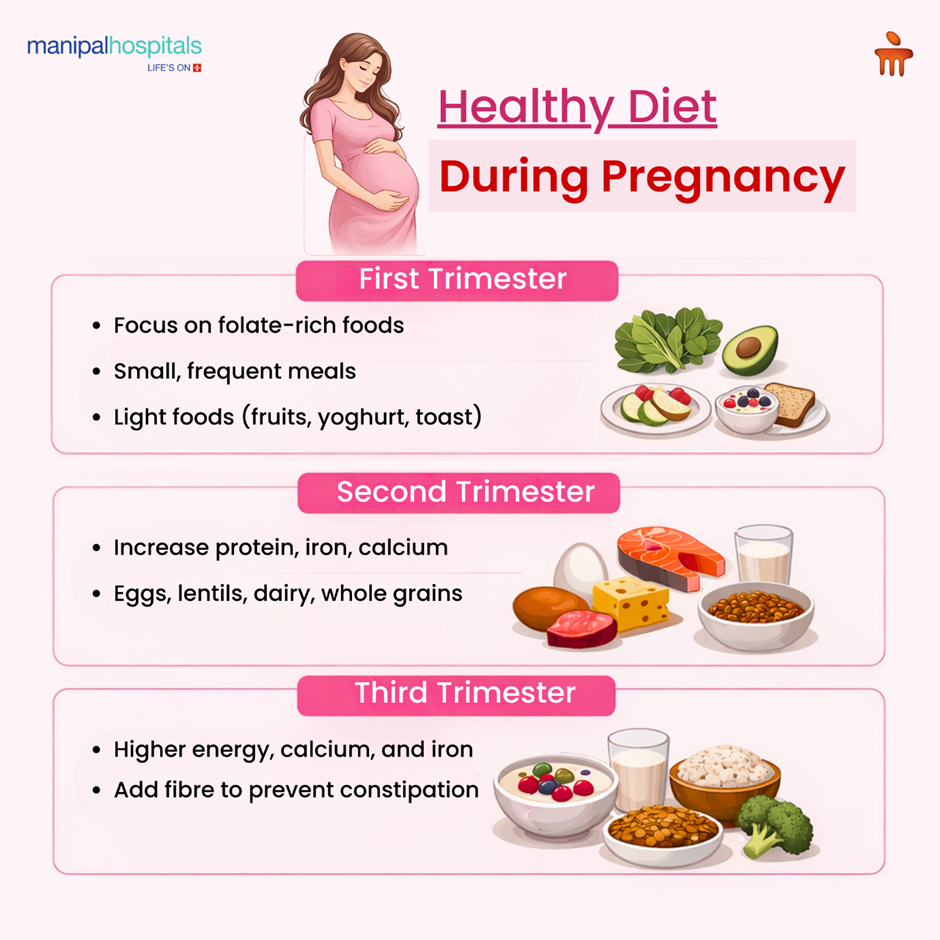
First Trimester
The first trimester is more about the quality of the nutrients than the number of calories. During this time, it's common to feel sick and have changes in your appetite.
Important dietary tips include:
-
Eat small, frequent meals
-
Prioritise folate-rich foods
-
Include light foods to eat during pregnancy, such as fruits, yoghurt, and whole-grain toast
A balanced diet at this stage reduces the symptoms of morning sickness that the mother may face and helps the foetus grow.
Second Trimester
During the second trimester, the baby grows rapidly, increasing the need for protein, iron, and calcium. At this stage, key additions to the pregnancy diet plan may include:
-
Protein-rich foods such as eggs, lentils, and poultry
-
Dairy products for calcium
-
Whole grains for sustained energy
Using a structured pregnancy food chart during this time helps make sure you get enough nutrients and eat balanced meals.
Third Trimester
The last trimester needs more energy and nutrients to help the baby grow quickly and get ready for birth. Some dietary changes recommended at this stage are:
-
Getting more calcium for bone growth
-
Eating iron-rich foods to reduce the risk of anaemia
-
Including fibre-rich foods to help manage digestive discomfort
Consistent nutrition intake during this stage ensures both mother and baby remain healthy before delivery.
Key Nutrients Needed During Pregnancy
Knowing what nutrients are important can help you make a realistic pregnancy diet plan.
Folate
Folate is essential for early foetal development and helps prevent neural tube defects.
Sources include:
-
Spinach and leafy greens
-
Lentils and beans
-
Citrus fruits
-
Fortified cereals
These are among the most important foods to eat during pregnancy, especially in the early stages.
Iron
Iron red blood cells carry oxygen throughout the body and help control anaemia. Iron-rich foods to eat during pregnancy include:
-
Lean red meat
-
Spinach
-
Lentils
-
Pumpkin seeds
Combining these foods with vitamin C-rich foods improves iron absorption.
Protein
Protein supports tissue growth for both mother and baby. Protein-rich foods to eat during pregnancy include:
-
Eggs
-
Fish
-
Poultry
-
Dairy products
-
Legumes
Calcium
Calcium is vital for foetal bone and teeth development. Sources include:
-
Milk
-
Yoghurt
-
Cheese
-
Almonds
-
Calcium-fortified plant milk
Fibre
Fibre improves digestion and reduces constipation. Fibre-rich foods include:
-
Whole grains
-
Fruits
-
Vegetables
-
Beans
These nutrients collectively contribute to an effective diet for expectant mothers.
Foods to Eat During Pregnancy
Planning meals with a structured pregnancy food chart makes it easier to remember what you eat every day. A balanced diet should have:
-
Vegetables and fruits: Provide vitamins and antioxidants
-
Whole grains: Supply energy and fibre
-
Protein sources: Sources, such as eggs, poultry, legumes, and tofu, help in the growth of foetal tissue
-
Dairy products: They are good sources of calcium, essential for the foetal bones
-
Healthy fats: Supply essential fatty acids that are important for foetal brain, eye, and nervous system development
These foods to eat during pregnancy support steady energy levels and give vital nutrients for foetal growth. Changing the foods you eat every week helps you get a wider range of nutrients and keeps your pregnancy nutrition balanced.
Foods to Avoid During Pregnancy
It is just as important to know what foods to avoid during pregnancy to maintain the health of both the mother and the baby. Some foods can be hard to digest during pregnancy and may pose health risks. Common foods to be avoided during pregnancy include:
-
Raw or undercooked meat and seafood
-
Unpasteurised milk and soft cheeses
-
High-mercury fish such as swordfish and shark
-
Alcohol and excessive caffeine
Avoiding these foods while pregnant lowers the risk of foodborne infections and exposure to toxins. Maintaining safe eating habits is an essential part of a healthy diet during pregnancy.
Sample Pregnancy Food Chart
A simple pregnancy food chart can help ensure proper foetal development and maternal health.
|
Meal |
Example |
Nutritional Benefit |
|
Breakfast |
Oatmeal with milk, banana, and almonds |
Fibre, calcium, and healthy fats |
|
Mid-morning snack |
Apple with peanut butter |
Energy and vitamins |
|
Lunch |
Brown rice, grilled chicken, vegetable curry, salad |
Protein, iron, fibre |
|
Afternoon snack |
Yoghurt with berries |
Calcium and antioxidants |
|
Dinner |
Lentil soup, whole wheat roti, sautéed vegetables |
Protein, fibre |
|
Bedtime snack |
Warm milk with dates |
Calcium and iron |
This sample pregnancy food chart can be changed to fit your tastes and the advice of your doctor. Following such a structure helps maintain consistent pregnancy nutrition.
Managing Common Pregnancy Issues Through Diet
Certain pregnancy discomforts can be managed through a thoughtful pregnancy diet plan.
-
Morning Sickness: Having proper knowledge of foods to eat during pregnancy can reduce morning sickness. Small meals, ginger tea, and bland foods can help reduce nausea.
-
Constipation: Increasing fibre intake and hydration supports digestive health. Whole grains and fruits are essential parts of a healthy diet during pregnancy.
-
Heartburn: Stay away from spicy foods, eat smaller meals, and don't lie down right after eating.
-
Gestational Diabetes: A balanced diet during pregnancy with controlled portions of carbohydrates and regular meals helps keep blood sugar levels stable.
These changes to your diet will make sure that you get the nutrients you need during pregnancy, even if you have common pregnancy symptoms.
Practical Nutrition Tips for Expectant Mothers
Maintaining consistent pregnancy nutrition can be easier with a few practical habits:
-
Prepare healthy snacks in advance
-
Drink enough water throughout the day
-
Include a variety of foods to eat during pregnancy
-
Follow a weekly pregnancy food chart to organise meals
These simple strategies help maintain a balanced diet during pregnancy, even during busy schedules.
Conclusion
A balanced diet during pregnancy supports both foetal development and maternal health. Following a structured pregnancy diet plan, choosing nutritious foods to eat during pregnancy, and understanding foods to avoid during pregnancy help meet nutritional needs throughout each trimester. Using a simple food chart can help maintain balanced and varied meals while meeting increased nutritional requirements. Proper pregnancy nutrition supports healthy weight gain, strengthens immunity, and promotes healthy foetal growth.
For personalised guidance and pregnancy care, consult the experienced obstetrics and gynaecology specialists at Manipal Hospital Doddaballapur for expert antenatal support and nutrition advice.
FAQ's
Fruits, vegetables, whole grains, lean protein, dairy products, and healthy fats should all be part of a healthy diet during pregnancy. Balanced meals make sure that both the mother and the baby get enough nutrition during pregnancy.
During the second and third trimesters, most women need about 300 more calories a day. A carefully planned pregnancy diet plan can help you meet these needs without putting on too much weight.
Certain foods to avoid during pregnancy may carry harmful bacteria or toxins that could affect foetal development. Avoiding raw meats, unpasteurised dairy, and alcohol reduces potential risks.
Yes, vegetarian diets can support healthy pregnancy nutrition when properly planned. Including lentils, dairy products, nuts, seeds, and fortified foods ensures adequate protein, iron, and calcium intake.
A pregnancy food chart ensures a balanced nutrient intake throughout the day, ensuring healthy weight gain for the baby and the mother.
Share this article on:


.webp "Healthy foods for pregnancy")